
Author: Tipsy Batta
Estimated Read Time: 12 minutes
Introduction
If you care about keeping your car looking glossy, clean, and protected for years, you have probably come across two major paint protection options: ceramic coating and paint protection film, often called PPF.
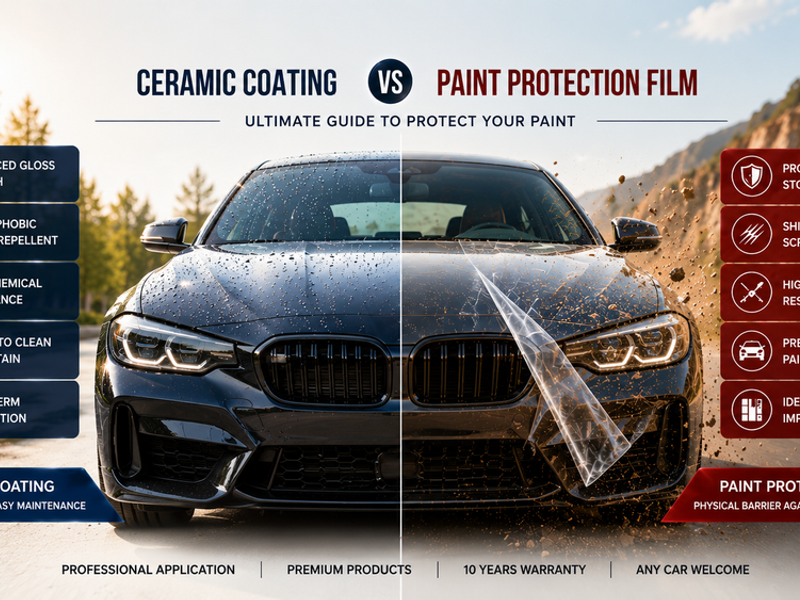
Both are designed to protect your vehicle’s paint, but they work in fundamentally different ways. Ceramic coating creates a hard, hydrophobic nano-layer chemically bonded to the paint, while paint protection film is a physical clear film applied over painted panels to absorb road debris and impact.
The right choice depends heavily on your car, your budget, how you drive, where you park, and what kind of protection you expect. A daily driver parked outside in Western Sydney has vastly different needs compared with a Porsche, Ferrari, Lamborghini, prestige SUV, or weekend-only exotic stored in a climate-controlled garage.
In this guide, we’ll break down ceramic coating vs paint protection film in a practical, detailer-friendly way so you can understand what each option does, where each one performs best, and how Gleamoo’s ceramic coating process helps protect and enhance your vehicle’s finish.
For a deeper explanation of how ceramic coatings bond to paint, you can also read Gleamoo’s guide on how ceramic coating really works and our full Ultimate Ceramic Coating Guide for Australian Cars.
Ceramic Coating vs Paint Protection Film: What Is the Difference?
The main difference between ceramic coating and paint protection film (PPF) is that ceramic coating is a liquid polymer that hardens to protect against environmental damage and enhance gloss, while PPF is a thick polyurethane film that provides a physical layer of armor against physical impacts like stone chips.
Understanding Ceramic Coating
Ceramic coating is a liquid polymer applied to the exterior paintwork. Once cured, it chemically bonds with the clear coat and forms a slick, glossy, hydrophobic protective layer.
A professional ceramic coating helps protect against:
-
UV damage and oxidation caused by harsh sun exposure
-
Water spotting when maintained properly
-
Bird droppings and bug splatter damage when cleaned quickly
-
Road grime and light chemical contamination
-
Chemical staining from industrial fallout
-
Loss of gloss and paint dullness
-
Dirt sticking strongly to paint, which simplifies maintenance
-
General environmental exposure
It also makes the vehicle significantly easier to wash because water, dirt, and grime have a harder time bonding to the slick surface. Ceramic coating is ideal for drivers who want long-term gloss, easier maintenance, stronger environmental protection, and a premium finish.
Understanding Paint Protection Film (PPF)
Paint protection film is a clear polyurethane film applied directly to the car’s painted panels. It acts as a physical barrier between the paint and the outside world.
PPF helps protect against:
-
Stone chips and flying gravel
-
Light scratches and key marks
-
Road rash from highway debris
-
Scuffs and parking lot scrapes
-
Minor impact marks
-
High-contact wear areas like door edges and luggage zones
-
High-speed bug impact on front-end panels
PPF is commonly applied to front bumpers, bonnets, mirrors, guards, door cups, side skirts, and sometimes the full vehicle. It is ideal for drivers who want impact protection, especially on high-value cars, highway-driven vehicles, performance cars, and vehicles exposed to heavy road debris.
The Simple Way to Think About It
-
Ceramic coating is like a long-term gloss and cleaning shield.
-
Paint protection film is like a clear physical armor layer.
A ceramic coating will not stop a sharp stone from chipping your paint. PPF is better for that. But PPF does not usually deliver the same slick hydrophobic behavior, deep gloss, and easy-clean finish as a quality ceramic coating unless it is also coated.
That is why many high-end vehicle owners choose both: PPF on high-impact areas, then ceramic coating over the remaining paintwork and sometimes over the film itself.
If you’re still comparing ceramic coating with more traditional protection, Gleamoo’s guide on ceramic coating vs wax explains why coatings last much longer than waxes and sealants.
Which Paint Protection Option Protects Better?
The answer depends entirely on the specific types of damage you want to prevent.
For Stone Chips: PPF Wins
If your main concern is stone chips, especially on the front bumper, bonnet, headlights, mirror caps, and lower panels, paint protection film is the stronger choice.
This is especially important for:
-
Highway drivers who travel at high speeds
-
Performance cars and low-slung sports cars
-
Luxury SUVs and family haulers
-
4WDs exposed to gravel paths
-
Exotic cars with rare factory finishes
-
Vehicles with expensive custom paintwork
-
Cars regularly driven behind trucks or on loose roads
Ceramic coating is hard, but it is not thick enough to absorb stone impact. It can reduce staining and make cleaning easier, but it will not act like a physical film.
For Gloss and Water Repellency: Ceramic Coating Wins
Ceramic coating is excellent for creating a deep, glossy, slick finish. It enhances paint clarity and helps water bead and sheet away from the surface effortlessly.
This is especially useful in Australian conditions where cars are exposed to:
-
Strong UV rays that fade paint
-
Heavy dust and airborne soil
-
Rain minerals that leave stubborn spots
-
Bird droppings and acidic tree sap
-
Pollen and organic matter
-
Coastal salt air that accelerates corrosion
-
Road grime and industrial fallout
-
Harsh summer heat
For drivers who want the car to stay cleaner for longer and look freshly detailed after maintenance washes, ceramic coating is often the better value. You can learn more about why regular washing still matters in Gleamoo’s article on how often you should wash your car.
For Ease of Maintenance: Ceramic Coating Wins
Ceramic coating makes the surface easier to wash because dirt and grime do not cling as strongly to the paint.
However, it still needs proper maintenance. Poor washing habits can still create swirl marks, even on a coated car. For best results, use safe washing methods like those explained in Gleamoo’s guides on why hand washing is still the safest car wash choice, the two-bucket wash method, and why microfiber towels matter for car paint.
For High-Impact Driving: PPF Wins
If you regularly drive on highways, country roads, construction zones, or behind heavy vehicles, PPF offers stronger impact resistance.
For example, a Porsche 911, Ferrari, Lamborghini, Mercedes-AMG, BMW M car, Audi RS, or high-end Tesla used on long highway drives may benefit from PPF on front-facing panels. Ceramic coating can then be used on the remaining surfaces to enhance gloss, water behavior, and cleaning performance.
Choosing Paint Protection Based on Vehicle Class
Different cars need different protection strategies. A professional detailer should never treat every vehicle exactly the same.
Standard and Daily Drivers
For standard daily drivers, ceramic coating is often the most practical and cost-effective choice. Most everyday vehicles deal with outdoor parking, UV exposure, rain marks, dust, road film, bird droppings, tree sap, and shopping center grime.
Ceramic coating helps by making the vehicle easier to clean, improving gloss, and adding long-term environmental protection. For many owners, this delivers the best balance between cost, appearance, and maintenance benefits.
A daily driver does not always need full PPF unless it is brand new, highly expensive, driven heavily on highways, or the owner wants maximum protection from chips. For cars used every day, washing technique matters just as much as protection. A coated vehicle should still be cleaned carefully, especially if using waterless methods. Gleamoo’s guide on when a waterless car wash can damage your paint explains when extra caution is needed.
Luxury and Exotic Vehicles
Luxury and exotic vehicles need a preservation-first mindset. Cars like Ferrari, Porsche, Lamborghini, McLaren, Aston Martin, Bentley, Rolls-Royce, Maserati, high-end Mercedes, BMW M, Audi RS, and prestige EVs often have more sensitive finishes, expensive panels, complex materials, and higher asset value.
With these vehicles, the goal is not just to make the car shiny. The goal is to preserve originality, paint thickness, panel condition, trim quality, and resale value.
Special care may be required for:
-
Softer or fragile clear coats
-
Carbon fiber panels and accents
-
Gloss black trims that scratch easily
-
Matte or satin factory finishes
-
Alcantara interior surfaces
-
Leather and contrast stitching
-
Delicate badges and emblems
-
Polished exhaust tips
-
High-performance brake dust
-
Ceramic-coated wheels
-
PPF edges and seams
For luxury or exotic vehicles, PPF is often recommended on high-impact areas, especially the front bumper, bonnet, mirrors, guards, and side skirts. Ceramic coating is then used to enhance gloss and make cleaning safer and easier.
If the car already has PPF, a ceramic coating may still be suitable, but the film must be inspected first. Old, lifting, yellowing, or damaged film should not simply be coated over without proper assessment.
4WDs, SUVs, and Adventure Vehicles
SUVs and 4WDs often face harsher contamination than standard sedans. They are frequently exposed to mud, sand, gravel roads, heavy bug splatter, tree sap, salt spray, and heavy brake dust around wheel arches and lower panels.
For these vehicles, PPF can be useful on high-impact lower sections and front-facing areas to prevent stone damage. Ceramic coating is excellent for making mud, dust, and grime easier to remove during cleanup. Wheel and tyre cleaning is also important. Brake dust and road grime can bond strongly to wheels, especially on European SUVs. A good ceramic coating process should include proper wheel and tyre cleaning before paint protection work begins.
EVs and Modern Vehicles
Electric vehicles often have large painted panels, gloss black trim, aerodynamic front ends, and sensitive sensors or cameras. Ceramic coating is popular for EVs because it helps maintain gloss and makes washing easier.
PPF may be valuable on the front bumper and bonnet because many EVs have broad, smooth front surfaces that collect bug splatter and road impact easily. Care must also be taken around cameras, sensors, badges, charge ports, and gloss trims during installation.
Australian Climate: Why Local Paint Protection Matters
As detailers working with Australian vehicles, we see how quickly local conditions affect automotive paintwork.
In Sydney and Western Sydney, intense heat, UV rays, dust, storm rain, and bird droppings can quickly reduce gloss and leave permanent marks if the car is not maintained. In coastal suburbs, salt air can add another layer of corrosive contamination. In Melbourne, changing weather patterns and rain minerals can leave severe water spotting. Brisbane’s humidity, heat, and storms can accelerate grime build-up, while Adelaide and Perth drivers often deal with intense sun, dust, dry heat, and local water restrictions.
A car does not need to be old to show damage. Even a new car can quickly collect iron fallout, tar, bug splatter, and embedded contaminants. That is why preparation is one of the most important parts of ceramic coating. The coating is only as good as the surface underneath it.
For more information on safe exterior washing before protection work, read Gleamoo’s Ultimate Hand Car Wash Guide and Ultimate Waterless Car Wash Guide.
Ceramic Coating: Key Benefits Breakdown
-
Long-Term Gloss: Ceramic coating enhances the paint’s depth and clarity. On darker colors like black, blue, grey, and deep red, the difference can be dramatic. On white and silver cars, the coating helps create a clean, crisp, reflective finish.
-
Hydrophobic Protection: A ceramic coating creates a water-repelling surface. Water beads and sheets more easily, helping reduce how strongly dirt and grime stick to the vehicle. This hydrophobic protection also makes maintenance washing much more efficient.
-
Easier Cleaning: Because the surface is slicker, washing becomes easier. Dirt, dust, road grime, and bug splatter are generally easier to remove when the coating is maintained correctly. However, ceramic coating is not a substitute for washing. Neglect can still cause contamination build-up. Gleamoo’s article on the hidden cost of neglecting regular car washing explains why leaving grime on paint for too long can become expensive.
-
UV and Chemical Resistance: Australian UV can fade, oxidize, and weaken paint over time. Ceramic coating helps add a protective layer against UV exposure and chemical contamination. Bird droppings, tree sap, bug splatter, and acidic grime should still be removed quickly. A coating gives you more protection, but it does not make the paint invincible. For related care tips, see Gleamoo’s guides on removing tree sap safely and bird droppings on paint.
-
Strong Value for Many Drivers: Compared with full-vehicle PPF, ceramic coating is usually more affordable and gives benefits across the entire exterior surface. For many Australian daily drivers, ceramic coating offers the best balance of appearance, protection, and ease of maintenance.
Paint Protection Film: Key Benefits Breakdown
-
Physical Impact Protection: The biggest advantage of PPF is impact resistance. It helps protect paint from chips, scuffs, and road rash. This is the main reason PPF is common on luxury, exotic, and performance vehicles.
-
High-Value Panel Preservation: Front bumpers, bonnets, side mirrors, and guards can be expensive to repair or repaint. PPF helps preserve original paint, which is important for resale value and collector appeal.
-
Useful for Track and Highway Use: Cars driven at higher speeds are more exposed to stone chips and debris impact. PPF is useful for drivers who regularly travel on motorways, country roads, or performance driving routes.
-
Can Be Combined with Ceramic Coating: PPF and ceramic coating work incredibly well together. A common high-end protection setup is PPF on high-impact areas, ceramic coating on exposed paint, and an optional coating over suitable PPF for easier cleaning and gloss. This gives the car both impact protection and hydrophobic performance.
Ceramic Coating vs PPF: Summary Comparison
To help clarify how these options stack up across different categories, let's look at their core traits side-by-side:
Main Purpose
-
Ceramic Coating: Gloss, hydrophobic protection, and easier cleaning.
-
Paint Protection Film: Physical impact protection.
Best For Protecting Against
-
Ceramic Coating: UV rays, grime, water behavior, and chemical resistance.
-
Paint Protection Film: Stone chips, scuffs, and road rash.
Visual Finish
-
Ceramic Coating: Ultra-high gloss and slickness.
-
Paint Protection Film: Clear film finish, depending on the quality of the material.
Layer Thickness
-
Ceramic Coating: Thin nano-layer.
-
Paint Protection Film: Thicker physical polyurethane film.
Stone Chip Protection
-
Ceramic Coating: Limited protection.
-
Paint Protection Film: Strong protection.
Water Repellency
-
Ceramic Coating: Excellent performance.
-
Paint Protection Film: Moderate performance unless coated.
Ongoing Maintenance
-
Ceramic Coating: Requires safe, regular washing habits.
-
Paint Protection Film: Requires careful film-edge cleaning.
Project Cost
-
Ceramic Coating: Usually lower than full PPF installation.
-
Paint Protection Film: Usually higher, especially for full-vehicle coverage.
Best Suited For
-
Ceramic Coating: Daily drivers, prestige cars, and owners prioritizing simple maintenance.
-
Paint Protection Film: Luxury cars, exotic cars, highway commuters, and performance vehicles.
Can You Combine Both?
-
Ceramic Coating: Yes.
-
Paint Protection Film: Yes.
Gleamoo Ceramic Coating Process: Step-by-Step Walkthrough
At Gleamoo, ceramic coating is not just a quick wipe-on product. Proper preparation is what separates a professional result from a rushed job. Gleamoo Shield Protection includes a 10-year warranty, and any car is welcome, with buffing performed where needed to properly prepare the paint.
1. Initial Paint and Vehicle Inspection
The first step is assessing the vehicle’s paint condition. We look for swirl marks, scratches, oxidation, water spots, tar deposits, iron fallout, previous waxes, bird dropping marks, tree sap, faded trims, and existing PPF or decals.
For luxury and exotic cars, this stage is even more important. Paint thickness, clear coat softness, carbon fiber panels, and existing protection films must be treated carefully. A preservation-first approach means we aim to improve the finish without unnecessary aggressive correction.
2. Thorough Exterior Wash
The vehicle receives a thorough exterior wash to remove dirt, dust, and road grime. This step is essential because any loose contamination left on the surface can create scratches during later stages.
A professional wash focuses on safe contact, proper lubrication, and careful drying. This is why hand washing is preferred for paint-sensitive vehicles. Automatic brushes can create micro-marring and swirl marks, especially on dark or soft paint. For more detail, read Gleamoo’s article on hand wash vs automatic car wash.
3. Wheel and Tyre Cleaning
Wheels and tyres are cleaned before coating preparation continues. This matters because wheels hold heavy brake dust, road grime, tyre dressing residue, and iron contamination. If not handled properly, this contamination can transfer back onto the paint during washing or drying. European cars, performance vehicles, and SUVs often produce heavy brake dust, so this stage requires extra attention.
4. Iron and Tar Removal
After the wash, the paint is chemically decontaminated. Iron fallout comes from brake dust, rail dust, and industrial contamination. It can embed into the clear coat and create roughness, orange specks, and staining. Tar comes from road surfaces and often sticks to lower panels, side skirts, rear bumpers, and wheel arch areas.
Iron and tar removal helps clean the paint below the surface level. This is critical before applying ceramic coating because the coating must bond to clean paint, not contamination.
5. Clay Bar Treatment
A clay bar treatment removes embedded contaminants that washing and chemicals may not fully remove. After clay barring, the paint should feel smoother to the touch. This creates a better foundation for polishing and coating. Clay must be used carefully with proper lubrication. Used incorrectly, it can mar the paint, which is why extra care is taken on black cars, soft clear coats, luxury vehicles, and exotic finishes.
6. Microfiber Drying
The vehicle is dried with quality microfiber towels. Drying is not just about removing water; it is about doing it safely. Poor-quality towels, dirty towels, or rough wiping can create fine scratches. Microfiber towel quality matters even more after decontamination because the paint is clean and exposed. This is why Gleamoo strongly recommends safe towels and correct technique. You can read more in why microfiber towels matter for car paint.
7. Buffing and Paint Preparation
For any car requiring correction, buffing is performed to restore depth and clarity in the paint. This step helps remove or reduce swirl marks, light scratches, oxidation, haze, dullness, minor wash marks, and old protection residue while significantly improving final gloss.
This is where professional judgment matters. A daily driver may need practical enhancement rather than heavy correction, while a luxury or exotic car requires a careful preservation-focused approach to protect paint thickness. For heavily used vehicles, a more complete preparation may overlap with the principles in Gleamoo’s Ultimate Full Car Detailing Guide.
8. Surface Wipe-Down
Before coating, the paint must be completely free of polishing oils, residue, dust, and fingerprints. A proper wipe-down ensures the coating bonds correctly to the paint. If this stage is skipped or rushed, the coating may not perform as expected.
9. Professional-Grade Ceramic Coating Application
The ceramic coating is applied evenly across the paintwork. Once applied, it creates a protective nano-layer bonded to the paint that enhances gloss, improves water repellency, and helps protect against environmental contamination. Application requires controlled technique; too much product, uneven leveling, or incorrect timing can cause high spots, streaking, or a patchy finish.
10. Curing and Final Inspection
After application, the coating needs time to cure. During this stage, the vehicle should be protected from water, dust, and contamination as much as possible. A final inspection ensures the coating is perfectly even, glossy, and beautifully finished.
Can You Put Ceramic Coating Over PPF?
Yes, ceramic coating can be applied over paint protection film, provided the film is suitable for coating and is currently in good condition.
Coating over PPF can help:
-
Improve hydrophobic water behavior and sheeting
-
Make bug splatter and bird droppings easier to remove
-
Add extra surface slickness
-
Reduce grime and road film build-up
-
Improve overall cleaning efficiency
-
Enhance gloss on gloss-finish PPF
However, the PPF should first be inspected for lifting edges, yellowing, cracking, peeling, adhesive failure, staining, or poor installation marks. Coating over damaged or poor-quality film will not fix the underlying issues; it may simply lock in the visual flaws.
Which Should You Choose?
Choose Ceramic Coating If:
Ceramic coating is usually the better choice if you want a glossier finish, easier washing, water-repelling protection, UV resistance, chemical resistance, long-term paint enhancement, and better value across the whole vehicle. This is the best option for many daily drivers, family cars, prestige vehicles, and owners who want their car to look newer for longer.
Choose PPF If:
Paint protection film is usually the better choice if you want stone chip protection, road rash protection, impact resistance, protection for expensive body panels, track or highway protection, and maximum preservation for high-value cars. This is often recommended for exotic, luxury, performance, and collector vehicles, especially on front-facing panels.
Choose Both If:
You may want both if you own a high-value sports car, performance EV, luxury SUV, or a vehicle regularly driven on highways that you want to preserve long-term. In this setup, PPF protects impact zones, while ceramic coating enhances gloss, water behavior, and easy cleaning on the rest of the car.
Maintenance After Ceramic Coating
A ceramic coating is strong, but it still needs proper care.
-
Wash Regularly: Do not wait until the car is heavily contaminated. Dirt, dust, rain minerals, bird droppings, and tree sap should not sit on the paint for too long.
-
Avoid Harsh Chemicals: Use pH-balanced products where possible. Harsh detergents can reduce coating performance over time.
-
Use Safe Towels: Always use clean microfiber towels. Dirty or low-quality towels can scratch coated paint.
-
Remove Bird Droppings Quickly: Bird droppings can be highly acidic. Ceramic coating gives protection, but it does not make the paint immune to etching.
-
Avoid Automatic Brush Washes: Brush washes can still create swirl marks on coated vehicles. Ceramic coating helps protect the surface, but it cannot stop poor washing technique from damaging the finish. Gleamoo’s guide on hand washing mistakes that can damage car paint explains what to avoid.
-
Be Careful with Waterless Washing: Waterless washing is excellent for light dust and maintenance cleans, but it must be used correctly. If the vehicle is too dirty, a traditional hand wash is safer. For a comparison, read Gleamoo’s guide on waterless vs hand car wash.
Pro Tip: The Best Protection Starts Before the Coating
The biggest mistake many car owners make is focusing only on the coating product. In reality, preparation is everything. A high-quality ceramic coating applied over contaminated, scratched, or poorly prepared paint will not deliver the best result.
For luxury and exotic vehicles, always think preservation first. Do not chase aggressive correction if it removes unnecessary clear coat. The goal is to protect the asset, not just create short-term shine.
Common Paint Protection Mistakes to Avoid
-
Mistake 1: Thinking Ceramic Coating Stops Stone Chips. Ceramic coating does not replace PPF. It is not designed to absorb stone impact.
-
Mistake 2: Applying Coating Without Decontamination. If the surface is not properly cleaned, the coating may bond poorly and the final finish may look dull or uneven.
-
Mistake 3: Coating Over Scratches Without Correction. Ceramic coating can enhance gloss, but it does not remove scratches. Paint correction or buffing is required first.
-
Mistake 4: Using Automatic Brush Washes After Coating. A coated car can still be scratched. Safe washing is essential.
-
Mistake 5: Ignoring Interior and Trim Care. Paint protection is important, but interior materials also age under Australian heat. Leather, vinyl, plastics, rubber, and trims need care too. Gleamoo’s guides on protecting plastic and vinyl car surfaces, interior detailing, and interior detailing checklists are useful if you want full-vehicle preservation.
Frequently Asked Questions
Is ceramic coating better than paint protection film?
Ceramic coating is better for gloss, hydrophobic protection, UV resistance, chemical resistance, and easier cleaning. Paint protection film is better for stone chips, road rash, and physical impact protection. The best option depends on your goal; for everyday gloss and easier maintenance, ceramic coating is usually ideal.
Can ceramic coating and PPF be used together?
Yes. Many owners use PPF on high-impact areas and ceramic coating over the rest of the vehicle. In some cases, ceramic coating can also be applied over suitable PPF to improve water repellency and cleaning ease. This combination is highly popular for luxury, exotic, performance, and brand-new vehicles.
Does ceramic coating mean I never need to wash my car?
No. Ceramic coating makes washing easier, but it does not eliminate the need for washing. Dirt, bird droppings, sap, brake dust, and water minerals should still be removed regularly. A coated car must be maintained with safe washing methods to preserve gloss and hydrophobic performance.
Professional Assistance from Gleamoo
DIY paint protection can be rewarding, but professional ceramic coating requires proper preparation, safe decontamination, buffing where required, controlled application, correct leveling, and proper curing time. Gleamoo provides the professional process, premium products, specialized equipment, and experience needed to reduce the risk of damage and deliver a high-quality finish, especially on high-value, prestige, or exotic vehicles where paint preservation matters.
If you want long-term gloss, hydrophobic protection, easier maintenance, and professional-grade paint protection, our most suitable option is the Shield Protection package.
If your car needs thorough preparation before coating, or if you are looking for ongoing maintenance, you may also consider:
-
Deep Detailing for a more complete clean and preparation-focused service
-
Traditional Wash for safe, regular hand-wash maintenance
-
Waterless Wash for light maintenance cleans when the vehicle is not heavily soiled
To learn more about Gleamoo’s approach, our background, and our commitment to quality car care, visit our About Us page.
About the Author
Tipsy Batta, Team Gleamoo
Tipsy Batta is part of Team Gleamoo and is passionate about helping Australian drivers keep their cars cleaner, glossier, and better protected for longer. With a practical understanding of mobile car wash, mobile detailing, ceramic coating, and everyday vehicle care, Tipsy focuses on making professional detailing advice easy to understand for daily drivers, families, prestige car owners, and automotive enthusiasts alike.