
Author: Tipsy Batta
Estimated Read Time: 4 minutes
Introduction: The Sticky Threat to Your Car's Finish
Tree sap might look like a minor cosmetic annoyance when it first drops onto your vehicle, but it is a ticking clock for your paintwork. If left untreated, sap hardens, bonds tightly to your clear coat, and becomes incredibly difficult to extract safely.
The good news is that a high-quality waterless wash product can safely dissolve and lift fresh or lightly bonded tree sap. However, success depends entirely on using the correct technique. Using the wrong approach will simply drag sticky, abrasive resin across your panels, causing fine scratches and severe swirl marks.
How do you safely remove tree sap from a car with a waterless wash?
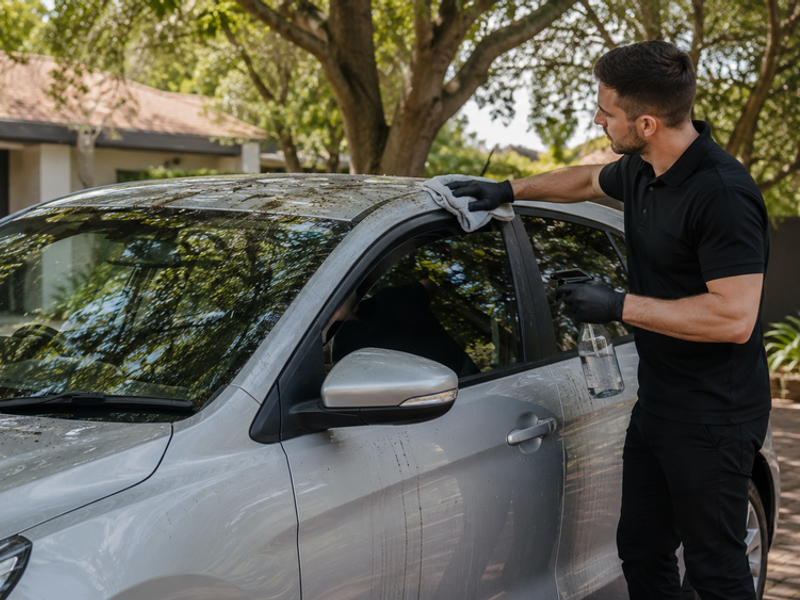
To remove fresh tree sap safely, spray a generous amount of high-lubricity waterless wash directly onto the sap spot and let it dwell for 2 to 5 minutes to break down the sticky bonds. Next, place a clean microfibre towel over the spot and use light, straight-line pressure to lift the softened residue away without scrubbing.
Why Tree Sap Destroys Car Paint Faster Than You Think
Tree sap is entirely different from ordinary organic contaminants like dust, mud, or road film. It is an aggressive, resin-based substance that cures, shrinks, and hardens when exposed to heat and sunlight.
In Australia, this issue is incredibly common. Drivers across Sydney regularly battle heavy sap deposits from parking under gum trees, jacarandas, and bottlebrushes. Once the hot sun bakes this resin into the clear coat, it undergoes a chemical reaction that can actually etch directly into your paintwork. Attempting to wipe it off dry will immediately scuff your finish.
A professional waterless wash product handles this by encapsulating and lubricating the contaminants. For general upkeep, our ultimate waterless car wash guide for Aussie drivers explains why lubrication and clean microfibre towels matter so much. When dealing with sap, patience is your most important tool; you must allow the product time to liquefy the resin before touching it.
Can a Waterless Wash Safely Remove Tree Sap?
Yes, a waterless wash is highly effective, but it is primarily designed for fresh, soft, or lightly bonded sap. If the sap has already hardened into a crystalized, amber-like node, waterless wash lubrication alone won't dissolve it completely. In those advanced stages, you will need a dedicated automotive sap solvent, a clay bar treatment, or professional machine polishing.
Your choice of cleaning product dictates the safety of your clear coat. Using a low-grade household cleaner or an overly aggressive industrial degreaser can instantly strip your protective wax layers, dull your plastic trim, or leave permanent chemical stains. We covered this risk in detail in what happens if you use the wrong waterless wash product.
Step-by-Step Guide to Removing Tree Sap Without Scratching Your Paint
Required Detailing Tools
-
Premium high-lubricity waterless wash spray
-
Several clean, ultra-plush microfibre towels (400+ GSM preferred)
-
A spray bottle filled with warm water
-
An automotive-safe sap remover (for stubborn spots)
-
Nitrile gloves and clear, direct lighting
The Safe Extraction Process
-
1. Move the Car Into the Shade: Never attempt to remove tree sap from hot body panels. Extreme surface heat causes your cleaning products to evaporate instantly, making the sap even stickier and harder to manage.
-
2. Pre-Soak the Sap Spot: Spray a heavy amount of waterless wash directly onto the sap spot. Allow the product to dwell for 2 to 5 minutes. This gives the specialized lubricants time to break down the sticky resin structure.
-
3. Use Gentle, Vertical Pressure: Take a plush microfibre towel, fold it into quarters, and place it flat over the pre-soaked sap. Apply light, downward pressure with your fingers to let the towel absorb the softened residue. Do not scrub in circular motions.
-
4. Wipe in a Single, Straight Direction: Gently pull the towel toward you in a straight line. If the sap begins to smear across the panel, stop immediately, flip your towel to a perfectly clean section, and re-soak the area with more product.
-
5. Prioritize Repeat Passes Over Heavy Force: Multiple light, lubricated passes are infinitely safer than trying to force the sap off with one aggressive wipe. This careful approach is absolutely vital on dark paint finishes, where micro-scratches show up instantly.
-
6. Deploy an Automotive-Safe Solvent for Hardened Spots: If the sap remains firmly bonded after a few attempts, apply a small amount of dedicated automotive-safe sap remover to your microfibre towel. Always test a small, hidden area of your vehicle first to ensure chemical compatibility.
-
7. Clean and Neutralize the Residual Area: Once the sap is completely gone, spray the panel one final time with your waterless wash and wipe it dry with a fresh microfibre towel to remove any leftover solvent chemical tracking.
-
8. Inspect the Clear Coat: Feel the paintwork with your fingertips. If it still feels rough, microscopic resin particles are still attached. If you notice a dull patch where the sap sat, the clear coat may have suffered minor acid etching.
Professional Detailing Insight
Do not use harsh household chemicals like rubbing alcohol, acetone nail polish remover, raw eucalyptus oil, or mineral turps without fully understanding the risks. While these household liquids can dissolve resin, they can also quickly dissolve your car's underlying wax, paint sealants, plastic trims, or factory clear coat. If your vehicle has a protective layer installed, read our ultimate ceramic coating guide for Australian cars before using any strong solvents near your paintwork.
When Waterless Wash Reaches Its Limits
If your car has been parked under a tree for weeks and is completely covered in a thick layer of sap, dust, and environmental grit, a waterless spot treatment is no longer safe. Wiping a heavily contaminated car without a full wash will inevitably drag abrasive dirt across the paint. Our guide on when a waterless car wash can damage your paint explains why heavy contamination should not be wiped dry.
For severe, widespread sap contamination, your car requires a mechanical decontamination process. This involves a safe hand wash, followed by a clay bar treatment to pull embedded contaminants out of the pores of the clear coat. To learn how to execute the safest wash sequence at home, see the ultimate guide to washing a car in the right order.
Professional Mobile Detailing Solutions
Tackling baked-on tree sap at home can be stressful, especially when balancing the risk of scratching delicate clear coats. If the sap has hardened across multiple panels, windows, and trims, letting professionals handle the decontamination is the safest option.
For light sap management and routine upkeep, Gleamoo’s Waterless Wash service offers a highly convenient, scratch-free mobile cleaning option. For vehicles suffering from hardened, heavily bonded sap or visible clear coat etching, we highly recommend booking our comprehensive Deep Detailing service. This package provides the deep decontamination, safe clay bar treatment, and chemical extraction needed to restore a glass-smooth finish. After removing the sap, adding our specialized Shield Protection layer will help create a slick barrier that prevents future resin drops from bonding tightly to your paint.
At Gleamoo, we provide Sydney car owners with premium, paint-safe mobile detailing that eliminates environmental damage without risking your car's finish. Learn more about our team and commitment to vehicle preservation on our About Us page.
Frequently Asked Questions
Can I remove rock-hard, dried tree sap using only waterless wash?
While a waterless wash can easily dissolve fresh sap, rock-hard, dried sap usually requires a dedicated automotive solvent or a mechanical clay bar treatment. The waterless wash is excellent for lubricating the surface afterward to clean up residual smears.
Will tree sap permanently ruin my car's paintwork?
Yes, if it is left exposed to the hot sun for an extended period. As tree sap cures under UV heat, it contracts and generates highly acidic compounds that can etch permanent, dull craters straight into your car’s clear coat finish.
Is tree sap more damaging to paintwork than bird droppings?
They damage your paintwork using different chemical mechanisms. Bird droppings are highly acidic and cause rapid, localized chemical burns on the clear coat. Tree sap, on the other hand, is a sticky, resin-based glue that bakes onto the surface and pulls at the paint clear coat as it expands and contracts with daily temperature changes. For a detailed comparison, see our article on bird droppings and waterless wash.
About the Author
Tipsy Batta is passionate about practical, safe, and professional automotive care. Through Gleamoo, Tipsy helps everyday car owners understand how to protect their vehicles, avoid common paint damage, and choose the right cleaning method for the situation.