
Author: Tipsy Batta
Estimated Read Time: 4 minutes
A waterless car wash is one of the most convenient ways to keep your vehicle looking fresh, especially if you live in an apartment, park on the street, or lack easy access to a garden hose. But here is the honest detailer’s truth: waterless washing is not suitable for every dirty car. Used at the wrong time or with poor technique, it can trap grit against the surface, dragging sharp particles across the clear coat to leave fine scratches, permanent swirl marks, or dull patches.
The good news is that most wash-induced paint damage is entirely avoidable once you know when to stop, how to wipe, and exactly when your car requires a proper high-pressure rinse instead.
Can a waterless car wash damage your paint? Yes, a waterless car wash will damage your paint if it is used to clean heavy mud, coarse sand, thick road grime, or dried bird droppings. Because waterless washes rely entirely on chemical lubricants rather than running water to encapsulate dirt, wiping abrasive or heavily soiled panels with a microfiber cloth will grind grit into the clear coat, acting like fine sandpaper.
What Is a Waterless Car Wash Best For?
A waterless car wash spray is explicitly formulated for light surface dust, fresh fingerprints, minor road film, and regular maintenance cleaning between deeper detailing sessions. The specialized product works by surrounding fine particulate dirt with high-lubricity polymers, suspending the contaminants so they can be safely lifted away using a plush, clean microfiber towel.
To gain a comprehensive understanding of the science behind this low-moisture technique, reading Gleamoo’s Ultimate Waterless Car Wash Guide for Aussie Drivers is a helpful place to start.
Professional detailers emphasize that waterless washing is not designed for scrubbing a heavily soiled car without water. Instead, it is a highly specialized preservation method meant to maintain a vehicle that is already reasonably clean.
When Should You Avoid a Waterless Car Wash?
1. When the Car Has Heavy Mud or Sand
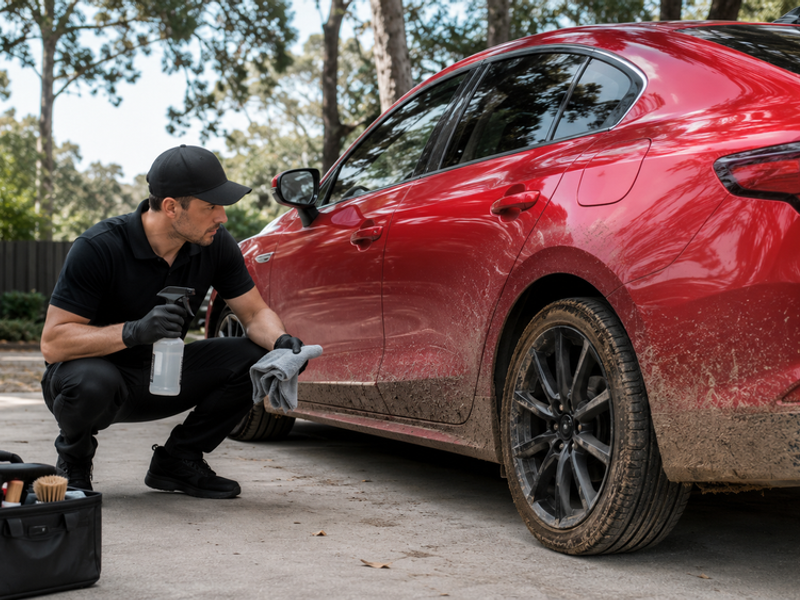
If your vehicle has thick mud from rural roads, abrasive beach sand, construction site dust, or heavy grime encrusted around the lower rocker panels, you must avoid a waterless wash entirely. These coarse, sharp earth particles cannot be sufficiently lubricated by a spray formula. Wiping them across your panels will score deep scratches directly into your clear coat.
This is where a proper pre-rinse is absolutely vital. Opting instead for a traditional hand car wash allows loose, heavy dirt to be flushed away safely before any physical contact wash begins, preserving the structural integrity of the paint finish.
2. Immediately After Driving on Wet Roads
Rainwater does not wash your car; it actually deposits a highly concentrated layer of dirty road film, metallic brake dust, oily residues, and grit thrown up by surrounding tyres. Even if your vehicle does not look terrible from a distance, the lower doors, side skirts, and rear bumper can be heavily loaded with invisible, highly abrasive contamination.
In Sydney, we regularly witness this severe buildup after a few wet days on congested roads like Parramatta Road, the M4, or around coastal suburbs where salt air mixes with traffic film. Going straight in with a waterless spray and cloth on these surfaces will quickly mar the paint.
3. When Bird Droppings, Tree Sap, or Bug Splatter Have Dried Hard
While a fresh, isolated bird dropping can occasionally be treated carefully with a dedicated spot-cleaning technique, dried bird droppings, hardened tree sap, and baked-on bug splatter demand a completely different approach. Bird droppings are highly acidic and cause severe chemical etching in the clear coat if scrubbed aggressively with a dry towel.
Never use friction to remove these hardened organic contaminants. Let a specialized product dwell to soften the spot gently. If it does not release easily, stop immediately. For drivers looking to safeguard their clear coat against environmental acids, reviewing Gleamoo’s Ultimate Ceramic Coating Guide for Australian Cars provides expert insight into long-term paint preservation.
4. When the Paint Surface Feels Rough to the Touch
Before attempting any low-moisture cleaning, perform a simple tactile test: run the back of your fingers lightly across a clean-looking section of the paint. If the surface feels gritty, sandy, or rough, a waterless wash is the wrong approach. This rough texture indicates the presence of bonded contaminants, such as industrial fallout, rail dust, tar spots, or paint overspray.
At this stage, your car requires a thorough mechanical wash, chemical decontamination, or a professional full detail. Reading Gleamoo’s Ultimate Guide to Full Car Detailing Done Right explains when a basic maintenance wash is no longer sufficient to restore a vehicle's finish.
5. When Your Microfiber Towels Are Stiff or Contaminated
Even the highest-quality waterless chemical formula cannot protect your clear coat if your microfiber cloths are dirty, stiff, or overloaded with residual grit from previous washes. A contaminated towel will introduce spiderweb swirl marks across an entire vehicle within minutes.
Always utilize multiple, ultra-plush, clean microfiber towels and fold them into clean quadrants. The moment a section of the cloth picks up dirt, flip it to a fresh, unsoiled side. Never continue wiping with a dirty cloth simply to finish the task faster.
DIY Safe Check Before Waterless Washing
Tools Needed for a Safe Clean
-
Premium-grade waterless wash spray solution
-
At least 4 to 6 clean, high-GSM microfiber towels
-
A dedicated set of separate towels for wheels and lower panels
-
Protective nitrile gloves (optional)
-
Good ambient lighting or clear, shaded daylight
-
A soft detailing brush for badges and tight gaps (optional)
Estimated Time Commitment
A safe, methodical waterless maintenance wash generally takes 25 to 40 minutes, depending on the size of the vehicle and how carefully you handle the lower panels.
Step-by-Step Execution Guide
-
Inspect the Car First: Walk around the entire vehicle, checking the lower doors, rear bumper, wheels, and inner wheel arches. If you see visible mud, sand, or thick road film, swap your waterless spray for a traditional rinse-based wash.
-
Work Exclusively in the Shade: Ensure all body panels are cool to the touch. High surface heat causes waterless products to flash and evaporate too quickly, which instantly strips away the required surface lubrication.
-
Spray the Solution Generously: Do not lightly mist the surface to save product. The panel must be completely wet with the solution to adequately soften and encapsulate surface dust.
-
Let the Product Dwell Briefly: Give the formula a brief moment to dwell on the panel, allowing the polymers to break the bond between light dust and the clear coat.
-
Wipe in Single, Straight Lines: Avoid circular rubbing motions at all costs. Use a straight-line wipe in one direction with very light, lifting pressure.
-
Flip Your Microfiber Towel Frequently: After each individual pass, fold your towel to an entirely fresh, clean section of microfiber. This single habit is the main boundary between a safe waterless wash and permanent paint marring.
-
Leave the Dirtiest Areas Until Last: Clean the cleanest upper panels first (roof, glass, bonnet), then move down to the lower doors, bumpers, and wheels. Always use separate towels exclusively for the wheels and tyres.
-
Buff Gently to a High Gloss: Once all dust and dirt are safely removed, use a clean, dry microfiber towel to buff away any remaining product residue and restore a streak-free, glossy shine.
Expert Pro-Tip: The "One-Wipe Rule"
Here is a simple, golden rule used by professional detailers: if one gentle, linear wipe with a well-lubricated microfiber towel does not completely lift a surface mark, stop immediately. Do not apply extra physical downward force or keep rubbing the area harder.
Waterless cleaning relies entirely on chemical lubrication, never physical force. If a mark remains stuck, it is bonded, gritty, or hardened, meaning the vehicle requires a safer, rinse-based cleaning method. This rule is especially critical for owners of black cars, vehicles with soft factory clear coats, or cars being prepared for private market presentation. To see how professional washing builds value prior to a sale, consult Gleamoo’s Ultimate Pre-Sale Detail Guide for Australian Cars.
When a Traditional Wash Is the Safer Choice
While a waterless wash is an exceptional tool for quick dust removal and maintenance, a traditional hand wash is always the superior, safer choice whenever a vehicle is heavily soiled, caught in heavy rain, or covered in abrasive grit that needs to be completely flushed away prior to towel contact.
If you are trying to determine which cleaning method perfectly matches the current state of your vehicle, Gleamoo’s Guide on Waterless vs Hand Car Wash: Which Protects Your Paint provides an absolute breakdown. You can also dive deeper into safe contact wash standards by reading Why Hand Washing is Still the Safest Car Wash Choice.
Professional Assistance & Call to Action
DIY waterless washing is a smart, effective option when your car is only lightly dusty or sitting in a clean garage. However, if your vehicle has braved heavy rain, muddy roads, or extended neglect, attempting a waterless clean risks inflicting expensive paint defects.
At Gleamoo, we prioritize safe, scratch-free decontamination methods designed to preserve your clear coat over long-term ownership. If your vehicle is too dirty for a simple waterless wipe-down, we recommend booking our professional mobile service to safely flush away abrasive grit:
If your paintwork feels rough, contains embedded tar spots, or has lost its original showroom shine, our advanced interior and exterior reset package is the ideal choice:
To learn more about our scratch-prevention workflows, convenient mobile service delivery, and detailing philosophy, visit our dedicated About Us page.
Frequently Asked Questions
Can a waterless car wash scratch my car's paint?
Yes, a waterless wash can absolutely scratch your paint if it is applied over heavy dirt, mud, or sand, or if you use stiff, contaminated towels. When used correctly on very light surface dust with plush, clean microfiber cloths, it is generally safe for routine maintenance.
Is a waterless car wash safe to use on black cars?
It can be safe, but black paint reveals swirl marks and marring far more easily than any other color. If you are cleaning a black vehicle, you must use extra microfiber towels, apply zero downward pressure, and completely avoid the waterless method if the panels feel gritty or rough.
Should I use a waterless car wash immediately after it rains?
Generally, no. Rain leaves behind a sticky layer of abrasive road grime, industrial dust, and brake residue, particularly along the lower doors and bumpers. If your vehicle has been driven through wet weather, a traditional rinse-based hand wash is the much safer option to prevent scratching.
About the Author
Tipsy Batta from Team Gleamoo is passionate about helping Australian car owners navigate vehicle maintenance safely and confidently. Combining a practical, real-world detailing mindset with a deep expertise in paint protection, Tipsy delivers honest, actionable advice to help drivers keep their cars cleaner, glossier, and beautifully preserved for years to decline.