
Author: Tipsy Batta
Estimated Read Time: 4 minutes
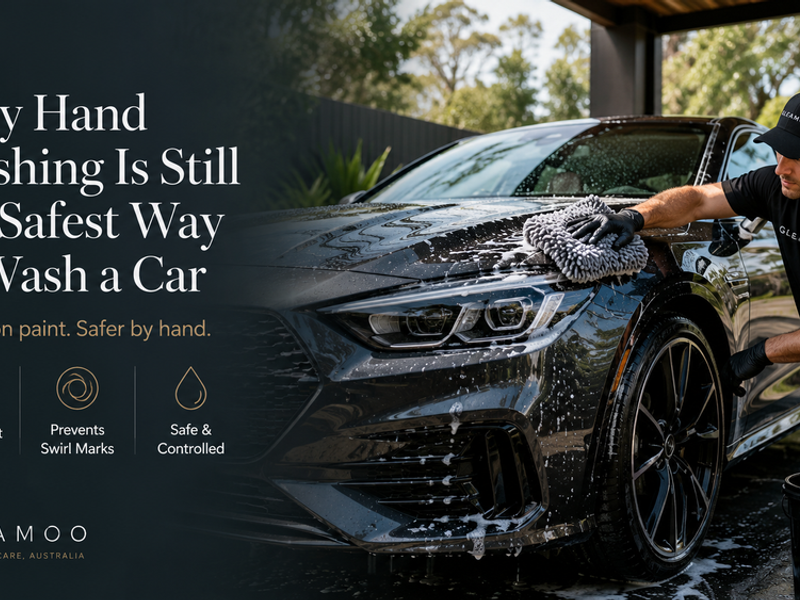
A dirty car is more than just an eyesore. Dust, road grime, brake dust, bird droppings, tree residue, and coastal salt can slowly wear down your paint if they are left sitting for too long. The problem is, not every wash method is gentle on your car. Automatic brushes, rushed wiping, and dirty sponges can create swirl marks that are hard to remove later. That is why a proper hand wash is still one of the safest and smartest ways to clean your vehicle.
Why Hand Washing Protects Your Paint Better
Hand washing gives you something machines and quick drive-through washes cannot offer: control.
A trained detailer can feel the surface, see the level of dirt, adjust pressure, and choose the right technique for each area of the car. Your bonnet, lower doors, wheels, mirrors, and rear bumper do not collect the same type of contamination, so they should not all be treated the same way.
The biggest risk during any wash is dragging dirt across the clear coat. That is what causes fine scratches and swirl marks. With a careful hand wash, dirt is loosened first, then lifted away using safe wash methods, quality shampoo, clean mitts, and soft drying materials.
For drivers who want a deeper breakdown of safe exterior cleaning, our Ultimate Hand Car Wash Guide explains the process in more detail.
The Technical Reason Hand Washing Is Safer
Paint damage usually happens because of friction plus contamination. When dust, sand, and road grit are trapped between the wash tool and the paint, they act like tiny abrasives.
A safe hand wash reduces that risk by using:
-
Pre-rinsing to loosen heavy dirt before contact
-
Lubricating shampoo to help the mitt glide safely
-
Separate cleaning methods for wheels and paintwork
-
Straight-line washing instead of circular scrubbing
-
Soft microfiber or chamois drying to avoid water spots and towel marks
This is especially important on darker cars, where even light swirl marks show quickly in sunlight. It also matters for vehicles with ceramic coating, because the coating still needs proper washing to maintain its gloss and water-repelling performance. You can learn more about coating care in our Ceramic Coating Guide for Australian Cars.
Local Experience: What We See Around Sydney
As detailers in Sydney, we regularly see cars affected by coastal salt, dusty construction zones, gum tree residue, bird droppings, and heavy brake dust from stop-start traffic. Vehicles parked near beaches, under trees, or in apartment car parks often need more careful washing because contamination builds up unevenly. A proper hand wash lets us treat those problem areas safely instead of rushing the whole car through one generic process.
DIY Hand Wash Guide
Tools Needed
-
Two clean buckets
-
pH-balanced car shampoo
-
Microfiber wash mitt
-
Wheel brush or separate wheel mitt
-
Soft drying towel or chamois
-
Hose or pressure washer
-
Microfiber cloths
-
Tyre cleaner or wheel-safe cleaner
-
Optional: grit guards for the buckets
Estimated Time
Allow around 45 to 75 minutes for a safe DIY hand wash, depending on the size and condition of your car.
Safe Steps to Follow
-
Park in shade
Avoid washing in direct sun, as shampoo and water can dry too quickly and leave marks. -
Rinse the car thoroughly
Start from the top and work down. Focus on wheel arches, lower panels, and bumpers where heavy grime collects. -
Clean wheels first
Wheels hold brake dust and gritty contamination. Use separate tools so that dirt does not transfer to the paint. -
Wash from top to bottom
Use a clean microfiber mitt and gentle pressure. Wash the roof, windows, bonnet, upper doors, then lower sections last. -
Rinse your mitt often
Do not keep wiping with a dirty mitt. This is one of the most common causes of swirl marks. -
Final rinse carefully
Make sure all shampoo is removed from trims, badges, mirrors, and panel gaps. -
Dry gently
Pat or glide the towel across the surface. Do not scrub. Drying is where many scratches happen. -
Check the finish
Look for missed water spots, bird droppings, or tar marks. If contamination remains, avoid aggressive scrubbing and consider professional help.
For lighter maintenance cleans where water access is limited, our Waterless Car Wash Guide may also help.
Pro-Tip: Your Wash Mitt Matters More Than You Think
Never use one sponge or mitt for the entire car. The lower panels collect the harshest grit, while wheels carry brake dust that can be highly abrasive. Keep wheel tools separate and wash the cleanest areas first. This small habit can prevent a lot of unnecessary paint damage.
When Hand Washing Is Not Enough
Hand washing is ideal for regular maintenance, but it cannot always fix deeper paint issues. If your car already has swirl marks, water spots, oxidation, tar, or stubborn contamination, scrubbing harder will only make things worse. In that situation, professional detailing becomes the safety net that protects your investment.
For a more complete clean inside and out, you may find our Full Car Detailing Guide helpful.
Professional Assistance & Call to Action
DIY washing is a great first step, especially when done carefully. But when time is limited, your car is heavily soiled, or you simply want a safer professional finish, Gleamoo is here to help.
For this topic, the best-suited option is our Traditional Wash, because it focuses on a careful hand wash process designed to clean the exterior safely and properly. If your vehicle needs more than a maintenance wash, such as interior cleaning, polishing, or deeper contamination removal, our Deep Detailing service may be more suitable.
To learn more about who we are and how we help Australian car owners, visit our About Us page.
Frequently Asked Questions
Is hand washing always better than an automatic car wash?
For paint safety, a careful hand wash is usually the better option because it gives more control over pressure, tools, and technique. Automatic washes can be convenient, but dirty brushes or harsh contact can increase the risk of swirl marks.
Can I hand wash my car every week?
Yes, if you use safe products and proper technique. Weekly washing can help prevent dirt, bird droppings, and road grime from bonding to the paint. The key is to avoid scrubbing and always use clean wash tools.
Will hand washing remove scratches?
No. A hand wash can safely clean the surface, but it will not remove scratches or swirl marks. Those usually require polishing or professional paint correction.
About the Author
Tipsy Batta from Team Gleamoo is passionate about helping car owners keep their vehicles clean, protected, and looking their best. With hands-on detailing experience and a practical understanding of Australian driving conditions, Tipsy focuses on simple, honest advice that helps everyday drivers care for their cars with confidence.