
Author: Tipsy Batta
Estimated Read Time: 14 minutes
Introduction
A proper interior detail is about much more than simply making a car look tidy. It is a comprehensive process designed to restore cabin hygiene, driver comfort, deep freshness, and long-term material protection inside one of the spaces you occupy most frequently. Over weeks of driving, your vehicle’s cabin acts as an enclosed trap for airborne dust, body sweat, food crumbs, greasy sunscreen oils, pet dander, abrasive beach sand, spilled coffee, smoke film, persistent odours, bacteria, and microscopic grime that a basic vacuum cleaner cannot remove.
At Gleamoo, we treat professional interior detailing as a precise combination of decontamination and materials restoration. Our systematic mobile workflow pairs meticulous deep interior cleaning with customized material preservation, complemented by a premium exterior wash to guarantee the entire vehicle is completely refreshed, not just the surfaces you notice first.
Whether you drive a hard-working daily hatchback, a busy family SUV, a rugged trade ute, a high-frequency rideshare car, or an elite high-performance supercar like a Porsche, Ferrari, or Lamborghini, employing the correct detailing methodology is critical to preserving your vehicle's environment. To explore our customer-focused mobile car care standards and discover our service areas across Australia, visit the official Gleamoo About Us page.
Why Interior Detailing Matters for Vehicle Longevity
What are the main benefits of professional interior detailing?
Professional interior detailing eliminates deeply embedded bio-contaminants, neutralises stubborn odours, sanitises high-touch surfaces, and applies critical UV inhibitors to protect cabin materials from cracking. Unlike a casual surface wipe, detailing extracts ground-in grit from carpet fibres, dissolves oils on leather faces, and cleans deep inside the air ventilation system to drastically improve cabin air quality and increase the vehicle's long-term resale value.
Every time you slide behind the wheel, you inadvertently introduce environmental dirt, tracking in mud from shoes, transferring natural skin sebum, dropping food particles, and spreading oils onto the controls. Over months of neglect, these pollutants settle deep into seat upholstery seams, low-pile carpet backings, floor mat grooves, dashboard textures, air vent slates, steering wheel stitching, and door pockets.
A systematic professional interior detail safeguards your automotive environment by:
-
Extracting abrasive, compacted dirt from deep within seats, carpets, and mats
-
Drastically improving overall cabin hygiene and microscopic air quality
-
Eliminating foul odours caused by trapped milk spills, tobacco smoke, pets, or hidden dampness
-
Sanitising critical high-touch contact zones including steering wheels, gear selectors, and door handles
-
Restoring the original factory satin look and matte texture to dashboard plastics
-
Applying advanced UV blockers to prevent expensive leather and vinyl from drying out and cracking
-
Maximising vehicle presentation to secure top-tier financial returns during a resale or trade-in
-
Transforming the cabin into an exceptionally comfortable, stress-free environment for daily travel
How Interior Detailing Differ From a Quick Clean
What is the difference between a basic car clean and a full interior detail?
A basic car clean only addresses loose, highly visible surface debris using a standard vacuum and a generic wet wipe over the main dashboard. A full interior detail is an intensive restoration process that utilizes deep carpet extraction, targeted steam sanitisation, specialized fine-tipped detailing brushes, and material-specific chemical cleaners to thoroughly decontaminate every hidden crevice, vent, and textile layer inside the cabin.
A quick maintenance clean is perfectly acceptable for keeping up appearances mid-week, but it completely misses the underlying layer of microscopic grime. Detailing intentionally targets the hidden contamination zones that accumulate continuous debris:
-
Intricate recessed seat stitching and upholstery folds
-
Deeply twisted carpet piles and floor mat backing meshes
-
Tight metal seat rails and electronic adjustment tracks
-
The entire perimeter of door jambs and rubber weather seals
-
Deep console switch gaps, coin trays, and cup holder bases
-
The interior air distribution vents and louvres
-
Delicate woven fabric or Alcantara headliners and pillar coverings
-
Recessed boot corners, spare tyre wells, and cargo anchor tracks
If your vehicle’s current condition requires primarily exterior paint maintenance or quick exterior dust management, our dedicated guides on alternative washing processes can help you select the ideal method for your situation. Learn more by reading our Waterless Car Wash Guide or our comprehensive Hand Car Wash Guide.
Process Overview: What a Professional Interior Detail Should Achieve
The fundamental rule of a premium interior detail is to clean, sanitise, and protect the cabin without altering or damaging the underlying factory finishes. This requires extensive technical knowledge because modern vehicle interiors feature a highly complex mix of sensitive materials. Woven fabrics, natural leathers, delicate Alcantara, synthetic vinyls, gloss piano black trims, exposed carbon fibre weaves, anti-glare touchscreens, and contrast stitching each react differently to chemical pH, mechanical agitation, and moisture levels.
A professional detailing workflow is strictly governed by three core principles:
-
Prioritise Material Safety: Match the specific chemical pH, brush bristle stiffness, and microfiber plushness to the exact material being treated to ensure dirt is lifted without scratching or fraying the surface.
-
Maintain Strict Moisture Control: Excessive water use during carpet or seat cleaning is dangerous. It can lead to persistent musty smells, mold growth, or permanently short-circuit sensitive electronic modules located beneath the seats. Detailers use low-moisture cleaning techniques and high-velocity extraction to keep surfaces safe.
-
Preserve Original Finishes: A professionally detailed cabin must never look greasy, wet, or excessively shiny. Modern automotive interiors are designed with a clean, low-sheen finish. Detailers use matte or satin protectants that shield against UV rays without leaving sticky residues behind.
Vehicle Class Considerations and Detailing Mindsets
Standard and Daily Drivers
Daily commuter vehicles face a continuous barrage of heavy passenger foot traffic, school runs, morning coffee spills, gym bag odours, fast-food crumbs, and muddy shoes. The main priority for these daily drivers is delivering deep decontamination, heavy-duty stain removal, and robust interior sanitation.
Detailing technicians systematically address the highest-use areas. Fabric seats and floor carpets are frequently treated with active enzyme dirt lifters and hot water extractors to draw out deep-set drink stains and sweat oils. High-touch areas like the steering wheel rim and door handles are thoroughly degreased. The goal is to strip away months of heavy build-up and completely reset the cabin back to a healthy, pristine state.
Family SUVs and People Movers
Family vehicles require a highly structured, multi-row cleaning strategy because daily messes are distributed across multiple rows of seating. Ground-in food crumbs, spilled milk, melted crayons, beach sand, and sticky fingerprints can quickly turn a large SUV cabin into a breeding ground for bacteria if left unaddressed.
Detailers pay special attention to the hidden problem areas unique to family haulers:
-
Deep gaps beneath sliding second and third-row seats
-
The floor sections hidden directly underneath bulky baby capsules and child seats
-
Expansive door pockets and multi-tier storage bins
-
Deep cup holders and folding armrest trays
-
Seatback kick-guards and built-in tablet storage nets
-
Rear cargo carpets, luggage covers, and folding third-row hinge wells
-
Rear air vents, climate control panels, and charging ports
The primary focus when detailing a family SUV centers heavily on deep hygiene restoration, permanent odour neutralization, and using safe, non-toxic products to protect young passengers.
Work Utes, 4WDs, and Outdoor Vehicles
Trade utes, commercial fleet vehicles, and weekend 4WDs present an entirely different cleaning challenge, typically arriving coated in thick red dust, outdoor mud, crushed grass, beach sand, and grease from work gear. These vehicles demand extensive dry vacuuming, compressed air purging, and heavy-duty floor care.
Fine regional dust has a tendency to settle deep into dashboard textures, behind physical instrument switches, and deep into carpet bases. Detailers utilize high-pressure compressed air lines to blow this trapped dust out from behind panels before performing a deep vacuum. While stronger cleaning solutions may be safely used on industrial rubber floor mats and heavy-duty vinyl floors, delicate modern elements like touchscreens and instrument clusters are still handled with precise, low-pressure care to avoid damage.
Luxury and Exotic Vehicles
High-end luxury and exotic sports cars require a highly specialized, preservation-first detailing mindset. When managing elite marques such as Porsche, Ferrari, Lamborghini, McLaren, Aston Martin, Bentley, Rolls-Royce, Mercedes-AMG, BMW M, Audi RS, or premium electric vehicles, aggressive scrubbing is strictly forbidden. The sole objective is the meticulous preservation of rare, expensive, and fragile factory materials.
Technicians carefully manage these high-value interior surfaces:
-
Genuine Alcantara and ultra-soft nappa or aniline leathers
-
Unsealed suede-style trims and delicate contrast upholstery stitching
-
Exposed interior carbon fibre trim panels and lightweight composite shells
-
Highly sensitive piano black gloss plastics that scratch under minimal friction
-
Open-pore natural woods and delicate brushed aluminium accents
-
Embossed leather headrests, custom piping, and tailored floor rugs
-
Large digital displays, head-up display lenses, and anti-glare touchscreens
A single careless pass with a stiff brush or a harsh, high-pH cleaner can permanently ruin these expensive materials. For example, over-wetting Alcantara can mat the delicate fibres and destroy its texture, while aggressive scrubbing can fray custom contrast stitching.
For these elite vehicles, the detailing process is performed at a significantly slower pace using ultra-soft horsehair detailing brushes, feather-light hand pressure, pH-neutral specialized cleaners, and premium edgeless microfiber cloths to maintain the original factory appearance.
Electric Vehicles (EVs) and Modern Interiors
Modern electric vehicles emphasize a minimalist aesthetic, often featuring massive central touchscreens, sweeping digital instrument arrays, synthetic vegan leathers, and touch-sensitive gloss black controls. While these cabins look stunning, they reveal fingerprints, dust, and smudges incredibly easily.
When detailing modern EV interiors, liquid products must never be sprayed directly onto digital screens, physical switchgear, or critical steering column stalks to prevent liquid from seeping into sensitive control modules. Instead, the detailer carefully applies the cleaner to a soft microfiber towel first before wiping the panel. Synthetic leathers are treated with non-oily cleaners specifically engineered to maintain their soft texture without creating a sticky, artificially glossy finish.
How the Australian Climate Affects Cabin Materials
The intense, unforgiving Australian climate plays a major role in accelerating the aging and degradation of automotive interior materials across our major cities:
-
Sydney: High coastal humidity combined with intense UV rays creates a perfect environment for airborne glass hazing, dashboard stickiness, and leather fading. Trapped moisture inside vehicles parked outdoors can cause sunscreen oils to bake permanently into armrests.
-
Melbourne: Severe temperature swings and sudden rainstorms mean car cabins frequently experience damp footwear tracking in moisture. If this moisture is trapped deep within carpets or thick floor mats without being professionally dried, it rapidly generates musty, sour cabin odours.
-
Brisbane: Persistent subtropical heat and high humidity significantly increase the risk of mold growth and accelerate the breakdown of roof lining adhesives. Fabric seats absorb high levels of body sweat and humidity, requiring regular extraction to keep the cabin sanitary.
-
Adelaide and Perth: Extended summer heatwaves, dry heat, and fine dust create a harsh environment for interior plastics. Fine dust settles deep into textured surfaces and upholstery stitching, while intense UV rays dry out natural leather oils, causing seats to become brittle and crack prematurely.
Step-by-Step Professional Interior Detailing Walkthrough
1. Vehicle Inspection and Material Assessment
The detailing process begins with a meticulous initial inspection. The technician identifies the exact seating materials, documents any pre-existing stains, checks for pet hair or sand build-up, evaluates the condition of the roof lining, and notes any pre-existing scratches, worn leather bolsters, or fragile interior trims. This step ensures that a heavily soiled family SUV and a pristine, ceramic-coated Porsche each receive the exact customized chemical care and handling they require.
2. High-Pressure Rinse of the Entire Exterior, Including Wheel Arches
To achieve a truly professional result, an interior detail must begin with a clean exterior foundation. A thorough high-pressure rinse flushes away abrasive dirt, loose mud, sand, and heavy dust from the bodywork and inner wheel arches. This ensures that when the doors are opened for cabin cleaning, exterior dirt cannot blow inside or accidentally contaminate the technician's clean microfiber cloths.
3. Premium Exterior Shampoo Wash, Including Wheels
With loose grit safely flushed away, the vehicle receives a premium, highly lubricated hand wash. Simultaneously, the alloy wheels are detailed using non-acidic cleaners and dedicated wheel brushes to dissolve stubborn, corrosive metallic brake dust. We adjust our cleaning methods to suit the wheel type:
-
Standard alloy wheels are cleaned using safe wheel cleaners and soft brushes
-
Gloss black wheels require very gentle cleaning to avoid fine scratches
-
Matte wheels need specialized products that do not add unwanted gloss
-
Luxury and exotic wheels with carbon-ceramic brakes are cleaned with dedicated, pH-neutral solutions
4. Final High-Pressure Rinse for a Spotless Finish
Once the hand wash is complete, a final high-pressure rinse flushes all loosened film and soap suds from panel gaps, grilles, and badging. This step is particularly vital in hot Australian conditions, where drying soap residue can quickly leave behind dull chemical streaks and water spots on paintwork and exterior glass.
5. Hand Chamois Dry for a Streak-Free Shine
The exterior sheet metal and glass are carefully dried by hand using a premium chamois or an ultra-absorbent microfiber drying towel. This step eliminates hard water spotting and leaves the exterior paintwork looking clean and uniform, matching the high standard of the clean cabin.
6. Door Jambs Wiped and Hinges Thoroughly Cleaned
Door jambs, boot channels, and fuel filler pockets are notorious grime traps, gathering a mix of road spray, grease, leaves, and mud. The detailer opens all doors and manually degreases the door tracks, cleans around the hinges, and wipes down the rubber weather seals. Pristine door jambs are essential; they ensure that clean clothes are protected when entering the vehicle and preserve a high-end presentation every time a door is opened.
7. Complete Vacuum and Dusting of the Interior, Including the Boot
The interior cleaning begins with an intensive, unhurried vacuum of the entire cabin and boot area. Seats are moved fully forward and backward along their tracks to uncover hidden debris. Using a combination of specialized vacuum attachments, soft detailing brushes, and compressed air lines, the technician draws out dirt from seat rails, tight centre console gaps, cup holders, door pockets, and pedal wells, effectively clearing away loose debris before any liquid cleaning takes place.
8. Windows Cleaned to a Crystal-Clear Finish Inside and Out
Perfectly clean glass is critical for both visual clarity and driving safety. Interior glass regularly develops a stubborn, oily haze caused by plastic off-gassing, air conditioning use, fingerprints, and skin oils. The technician cleans all interior and exterior glass panels using professional, tint-safe glass cleaners and specialized low-pile microfiber glass cloths, ensuring a perfectly transparent finish that prevents dangerous blinding glare in low sunlight.
9. Deep Shampoo Treatment for Seats and Carpets
Vacuuming alone cannot remove ground-in sweat, oily spills, or deep-set odours trapped beneath the surface of fabrics. The technician treats fabric seats, floor carpets, and footwells with a specialized, fabric-safe cleaning solution. The area is carefully agitated with soft brushes to lift bound grime, followed by a professional hot water extraction machine that draws out the dirty liquid, leaving the textiles completely refreshed, clean, and sanitised.
10. Interior Roof Lining Carefully Cleaned
The vehicle's roof lining (headliner) is an incredibly fragile area, constructed from a thin fabric bonded to a rigid backing board using heat-sensitive adhesives. Aggressive scrubbing or over-wetting this area will dissolve the glue, causing the fabric to sag permanently. Detailers use a low-moisture technique, lightly misting a soft microfiber towel with a mild fabric cleaner and gently blotting away fingerprints, scuffs, or smoke residue with minimal pressure.
11. Ash Trays Cleaned and Refreshed
Small storage compartments, coin trays, and ash trays frequently trap fine residue and act as a major source of stale cabin odours. The detailer removes these compartments where possible, flushes away old debris, sanitises the interior surfaces, and treats the plastic to eliminate any lingering smells, ensuring every small storage pocket feels completely fresh.
12. Floor Mats Professionally Detailed
Floor mats bear the brunt of everyday shoe grime, mud, and sand. The detailer removes the mats from the vehicle and details them based on their material type: carpet mats are deep-shampooed and extracted, while heavy-duty rubber all-weather mats are thoroughly scrubbed, rinsed, and dried. Crucially, we never apply slippery, silicone-based dressings to rubber mats or pedals, ensuring your feet retain safe, reliable grip while driving.
13. Dashboard and Centre Console Expertly Detailed and Gloss Finished
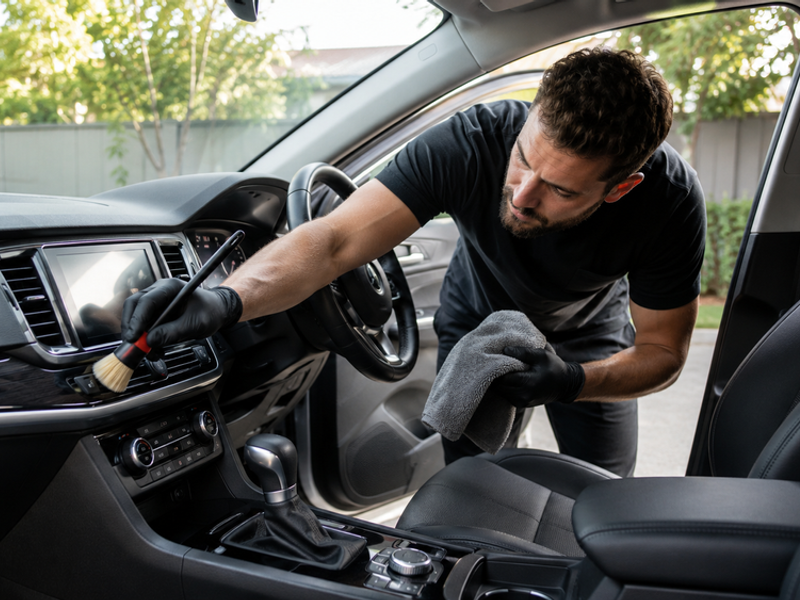
The dashboard, steering wheel, air vents, and centre console form the visual centerpiece of the cabin. The detailer meticulously cleans every button, switch, and vent louvre using soft detailing brushes and mild cleaners to remove accumulated dust, skin oils, and sunscreen marks. Once clean, a premium protectant is applied to block harmful UV rays and restore a rich, factory-fresh satin or low-gloss appearance that never feels greasy or sticky.
14. Final Interior Inspection and Finishing Touches
The entire detail concludes with a comprehensive quality control check. The technician carefully inspects the entire cabin under specialized detailing lights to verify that all seat tracks are spotless, glass is completely streak-free, dashboard lines are free of dust, and the entire cabin environment is perfectly uniform, fresh, and immaculate.
Common Interior Problems and Expert Solutions
-
Stubborn Food and Drink Spills: Liquid spills like sugary coffee, milk, or sauces quickly soak into fabric seats and carpets, creating sticky residues and sour odours. Detailers handle this by applying specialized enzymatic digesters that break down organic proteins, followed by targeted hot-water extraction to draw the residue completely out of the foam padding.
-
Embedded Pet Hair: Pet hair features tiny microscopic barbs that weave tightly into carpet and fabric fibres, making standard vacuuming highly ineffective. Detailers use specialized rubber lifting tools, static brushes, and compressed air lines to safely dislodge the hair from the weave before vacuuming.
-
Sunscreen Discoloration: Sunscreen contains heavy zinc oxide particles that leave ugly, chalky white stains on leather, vinyl, and steering wheels. If left too long under hot sun, these oils can permanently damage delicate finishes. Detailers utilize specialized, safe leather cleaners to gently lift and emulsify the zinc oils without drying out the material underneath.
-
Compacted Beach Sand: Fine beach sand buries itself deep within carpet piles and tight seat tracks, acting like an abrasive sandpaper that prematurely wears down carpet fibres over time. Detailers use high-frequency orbital percussive tools on the carpet backing to vibrate the sand grains to the surface for easy vacuuming.
Frequently Asked Questions
1. How often should I have my car interior professionally detailed?
For the majority of daily driver vehicles in Australia, scheduling a professional interior detail every 3 to 6 months is an ideal timeline to maintain optimal cabin hygiene and prevent material degradation. However, if your vehicle is heavily utilized for family school runs, carries pets frequently, is used for commercial rideshare driving, or is regularly exposed to harsh trade environments, more frequent detailing may be required.
2. Can deep shampooing remove every type of seat and carpet stain?
A professional deep shampoo and hot water extraction process can successfully eliminate or dramatically improve the vast majority of common cabin stains, including fresh liquid spills, mud tracking, food marks, and general grey traffic film. However, if a stain consists of permanent chemical dyes, ink, or has been left to bake under intense heat for years, it may have permanently altered the fabric fibers. A professional detailer will always aim for the maximum possible cosmetic improvement using safe, material-appropriate methods.
3. Is interior detailing completely safe for rare, luxury, and exotic car interiors?
Yes, professional interior detailing is completely safe for luxury and exotic vehicles when performed using a dedicated, preservation-first approach. High-end interiors featuring premium materials like Alcantara, unsealed aniline leathers, open-pore woods, gloss piano black trims, and exposed carbon fibre require specialized technical care. Detailers adjust their process by utilizing soft horsehair brushes, pH-neutral cleaners, minimal moisture levels, and zero downward pressure to ensure these high-value assets are protected.
Professional Detailing Assistance & Call to Action
While basic weekend upkeep like shaking out your floor mats and doing a quick surface vacuum is highly beneficial for general car maintenance, executing a complete deep clean requires an immense investment in commercial-grade equipment, active enzyme cleaners, hot-water extractors, and extensive technical knowledge of modern automotive materials.
This level of professional care becomes critical when managing heavy biological spills, deeply embedded pet hair, or high-value luxury interiors where a single wrong choice in chemical pH or brush stiffness can easily cause permanent, irreversible damage to expensive leather or delicate Alcantara.
Gleamoo provides a premium, fully equipped mobile detailing solution that delivers deep extraction equipment, safe pH-appropriate sanitizers, and years of technical expertise directly to your driveway—giving your vehicle a completely refreshed, healthy, and pristine cabin environment.
To give your vehicle the complete, deep interior reset and exterior refresh outlined in this guide, our highly sought-after Deep Detailing package is the absolute best-suited option for your car:
Depending on your car’s current condition and your specific long-term maintenance goals, we also provide these specialized mobile service options:
-
Traditional Wash — The perfect routine hand wash choice when your paint requires a safe, scratch-free exterior clean and a light interior tidy-up.
-
Waterless Wash — Designed for ultimate convenience and quick maintenance touch-ups when your vehicle is only lightly dusty and water access is restricted.
-
Shield Protection — The ideal service for drivers looking to complement their clean finish with durable paint sealants and robust weather barriers against harsh UV rays.
About the Author
Tipsy Batta is deeply passionate about helping Australian car owners keep their vehicles clean, comfortable, and well-protected through clear, practical, and honest advice. Bringing a detailer’s precise eye for absolute paint safety, deep cabin sanitisation, and long-term clear coat preservation, Tipsy focuses on executing advanced hand washing methods, safeguarding delicate materials, and making professional automotive mobile detailing effortless for daily commuters and passionate enthusiasts alike.