
Author: Tipsy Batta
Estimated Read Time: 11 minutes
A proper full detail is much more than a standard car wash. It is an intensive deep restoration and preservation process for your entire vehicle, inside and out. When done correctly, it improves paint clarity, removes embedded road contamination, refreshes the cabin, restores weathered trims, protects delicate materials, and helps your car feel brand new again.
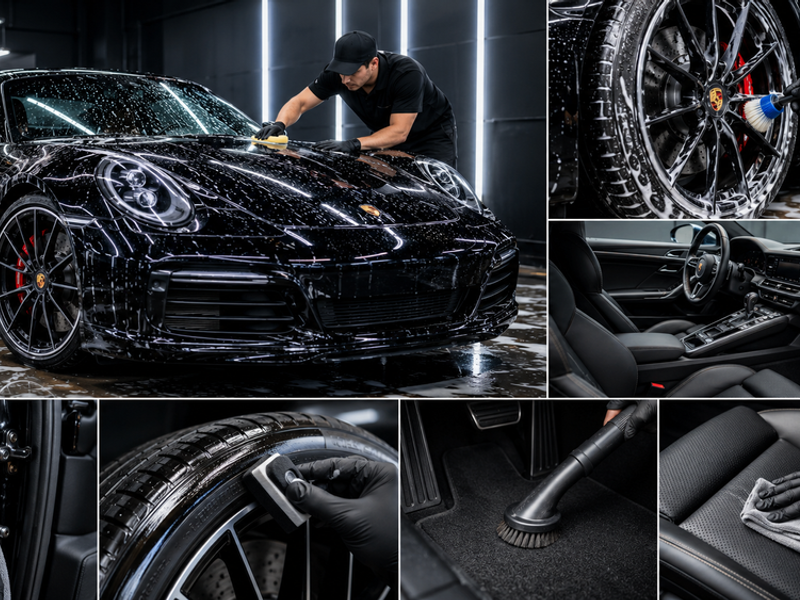
At Gleamoo, a professional full detail focuses equally on presentation and preservation. Whether you drive a daily commuter hatchback, a family SUV, a heavy-duty work ute, a prestige European sedan, or a high-end exotic supercar like a Porsche, Ferrari, or Lamborghini, the core objective remains exactly the same: to clean every single visible and commonly neglected area while treating each distinct surface with the safest, most effective technical approach.
This comprehensive guide breaks down exactly what professional full detailing includes, why each step is critical to paint correction, how different vehicle classes require specialized approaches, and how harsh Australian environmental conditions can degrade your vehicle over time if left unprotected.
What Is Full Car Detailing?
Full car detailing is a rigorous, top-to-bottom cleaning, paint correction, surface decontamination, and protective finishing service. Unlike a basic car wash that merely removes loose surface dust, full detailing penetrates deep into the vehicle’s clear coat, exterior trim crevices, wheel barrels, interior upholstery fibres, leather pores, plastics, glass seams, and boot hinges.
What Does a Full Car Detail Include?
A comprehensive professional full detail typically includes:
-
Multi-stage exterior washing and chemical decontamination
-
Mechanical paintwork preparation and clay bar treatment
-
Professional machine polishing to remove swirl marks
-
Exterior trim, rubber seal, and mudflap restoration
-
Chrome and exhaust tip polishing
-
Door jamb, boot channel, and fuel flap cleaning
-
Deep interior vacuuming, air purging, and detailed dusting
-
Hot-water extraction or shampooing of seats, carpets, and floor mats
-
pH-neutral leather deep cleaning and conditioning
-
Gentle fabric roof lining (headliner) stain removal
-
Dashboard, centre console, and door card restoration
-
Streak-free window and mirror cleaning inside and out
-
Cabin air sanitisation and deep deodorising
For drivers evaluating different tiers of vehicle upkeep, it helps to understand where full detailing fits in your maintenance calendar. A standard exterior clean is perfect for routine weekly care, which you can explore in Gleamoo’s Ultimate Hand Car Wash Guide. For light dust removal or rapid maintenance without hose access, a waterless spray workflow is incredibly efficient, as explained in our Ultimate Waterless Car Wash Guide for Aussie Drivers.
Full detailing, however, is the intensive reset you choose when your car requires total restoration.
Why Getting Your Car Fully Detailed Is Crucial
Automotive surfaces are constantly bombarded by destructive forces. In Australia, vehicles are exposed to intense UV rays, industrial fallout, metallic brake dust, coastal salt air, highly acidic bird droppings, tree sap, interior sunscreen smudges, food spills, sweat, pet dander, and microscopic cabin bacteria.
Over time, these elements cause physical and chemical damage. On the exterior, UV rays and acids dull your clear coat, fade black plastics to a weathered grey, and cause paint oxidation. Inside the cabin, ground-in dirt acts like sandpaper on carpet fibres, while body oils dry out leather, leading to premature cracking and stubborn odours.
A professional full detail counteracts this wear by:
-
Restoring deep optical clarity, gloss, and reflections to dull paint
-
Neutralizing and removing bonded chemical contaminants before they permanently etch your clear coat
-
Sanitising interior materials to dramatically improve cabin hygiene and air quality
-
Rehydrating and protecting interior leather, vinyl, and plastics against future sun damage
-
Substantially increasing the vehicle's resale value and overall aesthetic appeal
For vehicles being prepared for the private market, a full detail generates an immediate return on investment by optimizing first impressions for buyers. For long-term owners, it forms the foundation of proper vehicle preservation.
How Vehicle Class Changes the Detailing Approach
A single detailing methodology cannot be applied universally. A Toyota Corolla, a Tesla Model Y, a rugged commercial work ute, and a low-slung supercar require entirely different chemicals, mechanical pressures, and detailer skillsets based on their structural materials and typical usage patterns.
Everyday Commuters and Daily Drivers
For family SUVs, rideshare vehicles, and daily hatchbacks, the primary focus is long-term durability, intensive sanitation, and stain extraction. these vehicles bear the brunt of school runs, heavy commutes, grocery spills, pet transport, muddy shoes, and dropped coffee.
The primary goals for daily drivers are:
-
Safely removing heavily bonded road grime from lower rocker panels
-
Deeply sanitising high-touch cabin surfaces to eliminate bacteria
-
Restoring paintwork gloss and clearing out embedded wheel arch dirt
-
Shampooing deep fabric stains out of seats, carpets, and floor mats
4WDs, Commercial Utes, and Outdoor Vehicles
Vehicles used for beach driving, camping, regional touring, or trade work demand heavy-duty decontamination. Fine coastal sand, abrasive red outback dust, mud, and concrete spray frequently settle into lower chassis rails, textured exterior wheel arches, door jamb hinges, mudflaps, and deep carpet piles.
If left uncleaned, these coarse particulates bind to materials, causing premature rust on metal hinges and wearing down carpet backings. Detailing these workhorses requires high-potency, material-safe cleaners combined with immense patience. Aggressive, dry scrubbing will simply mar plastics and ruin upholstery stitching.
Luxury, Exotic, and Supercars
Prestige and exotic vehicles demand a preservation-first mindset. When working on a Porsche, Ferrari, Lamborghini, McLaren, Bentley, or high-performance Mercedes-AMG or BMW M model, the detailer isn't just washing a vehicle—they are managing a high-value asset.
These elite vehicles feature complex, ultra-sensitive materials that can be easily ruined by the wrong chemical, brush, or towel pressure:
-
Soft or Scratch-Prone Clear Coats: Require low-amplitude dual-action polishers and ultra-fine finishing compounds.
-
Alcantara and Suede: Can be permanently matted if exposed to excessive heat, hot water extraction, or harsh scrubbing.
-
Carbon Fibre Panels: Require specialized, non-abrasive cleaners to avoid micro-marring the resin finish.
-
Anodized or Matte Finishes: Will be permanently ruined (turned glossy or patchy) if touched by traditional polishes or highly acidic wheel cleaners.
-
Fine-Grain Leather and Contrast Stitching: Demand pH-neutral, non-bleaching cleansers and delicate horsehair bristle brushes.
Furthermore, if your vehicle is equipped with a modern ceramic coating, standard high-pH foam cannons or abrasive polishes can strip or weaken the coating's performance. For specialized insight into preserving these advanced liquid glass layers, explore Gleamoo’s Ultimate Ceramic Coating Guide for Australian Cars.
Local Environmental Factors: Why the Australian Climate Destroys Cars
Automotive detailing workflows must adapt directly to local weather patterns. The Australian climate is exceptionally harsh on both exterior paintwork and interior cabins.
-
Sydney & Brisbane: High coastal humidity combined with intense summer heat accelerates the breakdown of interior leather oils, leading to rapid shrinkage and cracking. Additionally, coastal salt air combines with urban traffic dust to create a sticky, corrosive film that bonds tightly to exterior glass and clear coats.
-
Melbourne: Volatile weather transitions—shifting rapidly from heavy rain to baking sunshine—create severe water spot etching. Rainwater drops trap atmospheric dust on the paintwork, and when rapid sunlight dries the droplet, minerals are baked directly into the hot clear coat.
-
Adelaide & Perth: Prolonged dry heat and extreme UV indexes cause rapid oxidation of exterior plastic trims, turning them chalky white, while drying out vital rubber door seals until they become brittle and leak.
The Step-by-Step Professional Full Detailing Process
To understand the level of meticulous care required during a premium service, here is a detailed breakdown of the 22 steps executed during a professional Gleamoo Full Detail.
1. Initial Vehicle Inspection
Before a single drop of water or compound touches the vehicle, a master detailer performs a comprehensive multi-point inspection. The specialist checks paint depth, identifies pre-existing swirl marks or clear coat thinness, notes stone chips, evaluates leather wear, detects hidden odours, and notes sensitive electronics or aftermarket vinyl wraps. This diagnostic step ensures the safest possible cleaning strategy is mapped out.
2. High-Pressure Exterior Pre-Rinse
The exterior process begins with a touchless high-pressure rinse using purified water. The detailer thoroughly flushes the paintwork, panel gaps, glass, and inner wheel arches to blast away loose grit, sand, and surface dust. Skipping this step and moving straight to hand washing is a critical mistake that causes heavy wash-induced scratch patterns.
3. Full Exterior Shampoo Wash (Multi-Bucket Method)
Next, the vehicle receives a luxurious, high-lubricity shampoo bath. Using separate, dedicated wash mitts and buckets equipped with grit guards, the detailer cleans the vehicle from top to bottom. The wheels, tyres, and brake calipers are cleaned using entirely separate tools and non-acidic iron-dissolving cleansers to ensure sharp, metallic brake dust particles are never transferred onto the delicate body paint.
4. Final High-Pressure Chemical Rinse
After hand agitation is complete, the vehicle undergoes a rigorous final high-pressure rinse. This step flushes all encapsulated road grime, breaking down lingering soap suds and wheel cleaners from intricate badges, fuel filler necks, lower rocker panels, and window trim channels before the products can dry on the finish.
5. Hand Chamois and Microfiber Sheet Dry
Drying must be performed quickly and safely to eliminate water spots. Detailers utilize ultra-soft, clean chamois sheets or high-GSM plush microfiber drying towels to lift water off the surface in single, linear passes. This prevents tap water minerals from baking into the paintwork under the sun.
6. Comprehensive Door Jamb Wipe Down
Door jambs, boot channels, and side pillars are thoroughly wiped clean of hidden dirt, grease, and stagnant water. Cleaning these high-visibility entry points immediately elevates the vehicle's presentation every time a passenger steps inside.
7. Tyre and Mudflap Gloss Finishing
Exterior rubber tyres and plastic mudflaps are treated with a premium, water-based dressing. This restores a rich, satin-black factory sheen without leaving a greasy residue that flings onto the clean side panels when driving.
8. Mechanical Paintwork Preparation (Decontamination)
To prepare the clear coat for polishing, detailers perform a deep decontamination step. This involves applying tar and iron removers, followed by a mechanical clay bar treatment to pull embedded bonded contaminants—such as tree sap, rail dust, and industrial fallout—out of the clear coat pores, leaving the paint glassy smooth.
9. Professional Machine Paint Polishing
Using precision dual-action machine polishers paired with selected foam pads and diminishing micro-abrasive compounds, the detailer gently polishes the clear coat. This process removes fine swirl marks, eliminates light oxidation, sharpens reflections, and increases paint depth and clarity.
10. Boot Hinges and Channel Clearing
The intricate channels surrounding the boot hinge mechanisms are cleared of trapped organic matter like rotting leaves, dirt, and built-up industrial grease, ensuring proper drainage and a spotless presentation.
11. Chrome Trim and Exhaust Tip Polishing
All metal badges, front grilles, chrome window surrounds, and tarnished exhaust tips are polished using specialized metal polishes to dissolve tarnish, remove exhaust carbon soot, and restore a mirror-like brightness.
12. Exterior Plastic and Rubber UV Restoration
Faded grey exterior trim components, plastic wiper cowls, and rubber weatherstripping are deeply conditioned with polymer-based UV inhibitors to enrich their color and prevent future sun-induced brittleness.
13. Deep Cabin and Boot Vacuuming
The interior phase kicks off with a powerful vacuuming and air-purging process. Using compressed air tornados and narrow crevice attachments, detailers extract sand, dust, pet hair, and debris from beneath seats, between seat rails, inside door pockets, and throughout the entire boot cargo area.
14. Streak-Free Window and Glass Clarification
All interior and exterior glass, vanity mirrors, and rear-view mirrors are cleaned with a non-ammonia automotive glass cleaner. This breaks down the oily chemical film caused by dashboard plastic outgassing, smoke, vaping residue, and condensation.
15. Interior Air Purging and Deodorisation
Rather than masking foul smells with heavy artificial perfumes, the cabin is treated with professional neutralising agents that bind to and destroy organic odor molecules at the source.
16. Seats and Carpets Hot-Water Extraction (Shampoo)
Fabric upholstery, vehicle carpets, and removable floor mats undergo deep shampooing and hot-water extraction. This process pulls out deep-set sweat, beverage stains, mud, pet odours, and bacteria locked inside the textile fibres.
17. Leather Cleaning and Deep Conditioning
Genuine leather seat coverings and leather-wrapped door inserts are cleaned with specialized leather soaps to pull out shiny body oils and dirt from the grain. A pH-balanced conditioner is then massaged into the hide to restore its matte, supple, soft-touch factory finish.
18. Gentle Roof Lining (Headliner) Restoration
The sensitive fabric roof lining is gently spot-cleaned using minimal moisture and micro-flannel cloths to remove fingerprint oils or makeup smudges without compromising the structural spray adhesive underneath, which causes headliners to sag.
19. Multi-Material Door Panel Detail
Inner door panels, armrests, speaker grilles, storage cubbies, and window switch clusters are precisely detailed using safe multi-surface cleaners and fine detailing brushes to clear out grime from plastic seams and leather stitching.
20. Ash Trays and Cubby Refreshes
Small interior storage drawers, coin slots, cup holder trays, and ash trays are opened, cleared of hidden debris, deeply cleaned, and fully sanitized.
21. Floor Mat Deep Detailing
Removable carpet or heavy-duty rubber floor mats are extracted outside the vehicle, dried completely, and re-installed. Rubber mats are conditioned with non-slip protectants to ensure occupant safety.
22. Dashboard and Centre Console Matte Finishing
The primary focal points—the main dashboard top, instrument cluster, steering column, and center console console—are detailed and finished with anti-static protectants that block UV rays while leaving a clean, glare-free matte finish.
Comparing Detailing Tiers: Which Option Fits Your Current Needs?
| Feature / Service | Traditional Hand Wash | Interior Detailing | Full Car Detailing |
| Primary Focus | Exterior surface dirt removal | Comprehensive cabin rejuvenation | Total vehicle restoration (Inside & Out) |
| Paint Polishing | None | None | Machine gloss enhancement / Swirl reduction |
| Contaminant Removal | Basic washing only | None | Mechanical clay bar decontamination |
| Upholstery Extraction | None | Deep fabric shampooing & leather conditioning | Deep fabric shampooing & leather conditioning |
| Neglected Areas Cleared | Exterior panels only | Cabin spaces only | Door jambs, boot hinges, trim restoration |
To maintain your vehicle throughout the year, you can easily rotate across these services. Utilize a premium Waterless Wash or a Traditional Wash for routine bi-weekly maintenance. Schedule dedicated interior work when cabin stains accumulate, and book a comprehensive Full Detail once or twice a year to entirely reset your car's protection.
Pro-Tips: How to Maintain Your Full Detail Long-Term
To extend the lifespan of your vehicle's newly detailed finish and protect your clear coat between professional sessions, follow these pro-detailing guidelines:
-
Avoid Automated Mechanical Wash Bays: Automated brush car washes use stiff, heavy nylon brushes that slap your vehicle, trapping grit from previous cars and completely marring your paint with severe scratch patterns. Stick exclusively to safe hand washing or waterless polymer washing.
-
Neutralize Bird Droppings Instantly: Never leave acidic bird poo or tree sap to bake on your paintwork for days. Keep a plush microfiber cloth and a bottle of high-lubricity detailing spray in your glovebox to dissolve and lift these hazards safely within minutes of contact.
-
Utilize High-Quality Sunshades: Whenever parking your vehicle outdoors under the blazing Australian sun, deploy a custom-fit reflective windshield sunshade. This simple step drops cabin temperatures significantly, preventing dashboard warping and protecting your leather seats from drying out.
-
Never Spray Cleaners Directly onto Electronics: When cleaning your dashboard screen or center console switches at home, always spray your liquid multi-surface cleaner onto your microfiber cloth first, then wipe. Spraying directly onto panels allows liquids to seep into underlying circuit boards, risking costly electronic failures.
Common Mistakes to Avoid When Detailing a Vehicle
Using a Single Towel or Wash Mitt for the Entire Car
Wiping down your dirty wheels and then using that exact same microfiber mitt on your glossy bonnet transfers highly abrasive metallic brake dust directly onto your clear coat, causing severe scratches. Always segregate your washing tools.
Over-Saturating Interior Fabrics and Carpets
Drenching seats or floor carpets with excessive water during DIY shampooing traps moisture beneath the carpet pile. In humid conditions, this creates trapped mildew, bad odours, and dangerous mould growth. Interior extraction must always feature high-vacuum suction with minimal moisture delivery.
Machine Polishing Without Clear Coat Analysis
Attacking your vehicle's clear coat with an aggressive rotary buffer without understanding paint depth or paint hardness can instantly burn through the clear coat, melt plastic edges, or leave behind heavy holographic haze that requires professional paint correction to repair.
Frequently Asked Questions
1. How often should I get a full car detail?
For the majority of daily driven commuter vehicles and family SUVs, scheduling a professional full detail once every 6 to 12 months is highly recommended. If your vehicle is parked outdoors permanently, handles heavy pet hair, or operates in coastal areas, you will benefit from quarterly scheduling. For luxury exotics or weekend-only sports cars, detailing is generally scheduled based on usage or right before entering seasonal storage.
2. Will full car detailing permanently remove all scratches?
Full car detailing significantly minimizes and eliminates minor surface defects, light swirl marks, spiderweb wash scratches, clear coat dullness, and light oxidation through precision machine polishing. However, deep scratches that have cut completely through the clear coat down into the base primer or bare metal cannot be polished out; they require localized paint repair or touch-up paint pens.
3. Is deep detailing safe for high-end luxury interiors like Alcantara?
Yes, full detailing is completely safe for advanced automotive materials like Alcantara, premium aniline leather, open-pore wood inserts, and carbon fibre, provided it is performed by experienced detailers. These materials require a preservation-first mindset, which includes using low-moisture cleaning techniques, soft horsehair detailing brushes, and dedicated pH-neutral formulas specifically engineered not to degrade exotic surfaces.
Professional Assistance & Next Steps
While executing a DIY detailing project over a weekend can be rewarding, achieving a truly flawless, swirl-free, and deep-sanitised result requires industrial-grade hot-water extractors, advanced dual-action machine polishers, specialized chemical suites, and years of hands-on technical training. This risk increases exponentially when dealing with soft European clear coats, dark black paint schemes, sensitive exotics, and advanced interior electronics.
At Gleamoo, we eliminate all the guesswork and physical labor by bringing a fully equipped, professional mobile detailing bay directly to your home or office driveway.
If your vehicle is ready for a complete bumper-to-bumper aesthetic reset, secure our premier comprehensive service:
If your paintwork is already pristine and you simply require routine exterior panels washed safely to preserve your finish, explore our specialized maintenance options:
Gleamoo makes premium mobile vehicle care convenient, fully transparent, and exceptionally easy to book online. To learn more about our commitment to paint preservation and meet our professional detailing team, head over to our dedicated About Us page.
About the Author
Tipsy Batta from Team Gleamoo is deeply passionate about helping Australian car owners maximize their vehicle investments with smarter, safer, and highly efficient car care methodologies. With extensive hands-on detailing experience across everyday hatchbacks, commercial work vehicles, family SUVs, and multi-million dollar exotics, Tipsy believes that superior car care comes down to technical patience, correct chemical chemistry, and treating every vehicle with absolute respect.