
Author: Tipsy Batta
Estimated Read Time: 11 minutes
Introduction: The Hidden Vulnerability of Your Car’s Interior
Plastic and vinyl surfaces make up a massive percentage of modern vehicle interiors and exteriors. From your dashboard, door trims, and centre consoles to exterior bumper moulds and weather seals, these materials are designed for durability. However, they are far from indestructible.
In Australia, the combination of extreme heat, intense UV exposure, dust, sunscreen residue, and daily wear can quickly degrade these surfaces. Once plastic turns chalky or vinyl becomes sticky and cracked, restoration is incredibly difficult. Preventing this damage through proper maintenance is always more effective than trying to fix it later.
This comprehensive guide shares professional detailing strategies to protect your plastic and vinyl surfaces safely, highlight products to avoid, and maintain a flawless, non-greasy factory finish.
Why Is Plastic and Vinyl Protection So Critical?
Plastic and vinyl are prone to environmental degradation because UV radiation breaks down their core polymers and surface oils over time. When combined with high cabin temperatures, these materials dry out, lose their flexibility, and eventually crack. Furthermore, unconditioned surfaces easily absorb body oils, sweat, and harsh chemical cleaners, resulting in a patchy or faded look.
For a daily driver, consistent protection guarantees a clean, hygienic cabin that is easy to wash and maintain. For luxury or exotic vehicles, protection preserves the original factory texture and prevents deprecation. Keeping these surfaces conditioned reduces dust accumulation, stops premature aging, and maintains your vehicle's long-term resale value.
If you want to establish a complete vehicle care routine, our Ultimate Interior Detailing Guide is a helpful companion because protective coatings bond best to thoroughly deep-cleaned surfaces.
Key Plastic and Vinyl Zones in Your Vehicle
To protect your car effectively, you need to look beyond the dashboard. Professional detailers divide these materials into two distinct zones.
Interior Plastic and Vinyl Zones
-
The Main Dashboard: The primary target for direct, overhead sunlight.
-
Door Cards and Armrests: High-contact areas prone to skin oils and sweat.
-
Centre Consoles and Cup Holders: Highly susceptible to food spills and scratches.
-
Steering Columns and Gear Surrounds: Subjected to constant physical friction.
-
Seat Trim Sides and Kick Panels: Frequently scuffed by boots and shoes.
These interior spaces constantly accumulate dust, sunscreen oils, and dead skin cells. For a deeper look at the easy-to-miss areas, read our guide on hidden car interior spots most drivers forget to clean.
Exterior Plastic and Vinyl Zones
-
Bumper Trims and Side Skirts: Exposed to road grime and bugs.
-
Wheel Arch Mouldings and Mudflaps: Hit by stones, mud, and road film.
-
Wiper Cowls and Mirror Bases: Traps water and bears the brunt of UV rays.
-
Door Seals and Rubber Surrounds: Keeps moisture out but dries out quickly.
Because exterior plastics lack the protective clear coat found on paintwork, they fade significantly faster. For exterior care routines, our Ultimate Hand Car Wash Guide explains how a safe wash process helps protect the entire vehicle, not just the paint.
What Causes Car Plastic and Vinyl to Fade, Crack, and Become Sticky?
What causes automotive plastic and vinyl to degrade?
Automotive plastic and vinyl degrade primarily due to prolonged UV radiation breaking down chemical polymers, combined with extreme cabin heat that evaporates internal plasticisers. This damage is frequently accelerated by harsh, alkaline household cleaners and acidic body oils.
Intense UV Radiation
The Australian sun damages unprotected polymers quickly. UV rays bleach the color pigments out of black exterior trims and dry out flexible vinyl dashboards, turning them grey, chalky, or white. This damage is especially common on SUVs, utes, and work vehicles parked outside every day.
High Cabin Heat Build-Up
When a car sits in summer heat, interior temperatures can double ambient conditions. This extreme heat forces low-grade interior dressings to evaporate, leaving a greasy, hazy film across the inside of your windscreen.
Chemical Damage from Harsh Cleaners
All-purpose household cleaners, degreasers, and alcohol-heavy sprays strip away the vital plasticisers embedded in vinyl. This creates white chemical stains and leaves the surface dangerously brittle. This is similar to the risk we explain in what happens if you use the wrong waterless wash product—the wrong formulation might look clean initially, but it causes long-term structural degradation.
Sunscreen, Sweat, and Body Oils
Sunscreen is highly destructive to automotive interiors. It transfers from skin onto steering wheels and armrests, chemically reacting with the top layer of plastics to create permanent, shiny, white stains.
Poor Washing Habits
Abrasive automatic car wash brushes and aggressive, high-pH industrial soaps strip the natural oils from exterior plastic trims. To understand why technique matters, read Hand Wash vs Automatic Car Wash and Why Hand Washing Is Still the Safest Car Wash Choice.
Tailoring Your Approach: Daily Drivers vs. Luxury Vehicles
Different vehicles require different detailing philosophies. A hard-working family SUV has vastly different needs than a delicate exotic supercar.
Standard and Daily Driver Vehicles
For commuters, rideshare vehicles, and family cars, the ultimate goal is practical, high-durability protection.
-
Primary Objective: Build a strong shield against dirt, kid-related spills, pet hair, and constant scuffing.
-
Maintenance Cycle: Requires regular cleaning and applications every few months to deal with constant usage.
Our guide on how often you should detail your car interior properly explains how maintenance frequency changes depending on usage.
Luxury and Exotic Vehicles
High-end cars require a strict preservation-first mindset to protect delicate surfaces without altering their appearance.
-
Primary Objective: Protect the surface without changing its factory gloss level or texture.
-
Key Risk Factors: Avoid getting product overspray onto sensitive neighbouring materials like Alcantara, matte carbon fibre, or fine contrast stitching.
Special Risks in Luxury Vehicles
-
Clear-Coated Carbon Fibre: Treat this material like delicate paintwork; avoid abrasive cloths that create micro-scratches.
-
Alcantara and Suede: Never spray dressings near these materials, as overspray can mat the fibres permanently.
-
Specialised Stitching: Contrast stitching absorbs thick dressings and discolours easily; apply protectants precisely with a micro applicator.
Vehicles with ceramic-coated paint still need proper care around plastic trims. Ceramic coating protects paint, but plastic, rubber, vinyl, and textured trim require their own maintenance approach. For paint protection, read our Ultimate Ceramic Coating Guide, How Ceramic Coatings Really Work, and Ceramic Coating vs Wax.
Interior vs. Exterior Protection: Understanding the Difference
You cannot use the same protective coating for both inside and outside environments because they encounter entirely different types of exposure.
Interior Protection Metrics
Interior formulations must feature advanced UV blockers without leaving an oily film. A professional dashboard finish should always be non-greasy and low-sheen. High-gloss dressings reflect intensely off the windscreen, creating dangerous driving glare and attracting airborne dust particles.
Exterior Protection Metrics
Exterior trim sealants focus on pure water, weather, and chemical resistance. They must bond firmly to porous, textured plastic so they do not streak or wash down your clean paintwork during a heavy rainstorm.
Before applying exterior trim protection, the car must be washed properly. If the vehicle is only lightly dusty, a safe waterless process may be suitable. For heavier dirt, a traditional hand wash is safer. You can compare both methods in Waterless vs Hand Car Wash and learn when not to use waterless washing in When a Waterless Car Wash Can Damage Your Paint.
Step-by-Step Professional Process for Protecting Plastic and Vinyl
Follow this exact multi-step sequence used by master detailers to prep, clean, and protect plastic and vinyl surfaces safely.
Step 1: Inspect the Surface Condition
Examine the material under clear lighting for deep fading, scratches, structural cracks, sticky residues, or old layers of silicone. For pre-sale vehicles, this inspection is especially important because plastic and vinyl condition affects buyer confidence. Our Pre-Sale Detail Guide explains how presentation can influence a car’s perceived value.
Step 2: Safe Dust and Debris Removal
Gently clear away loose debris using a vacuum paired with a soft, natural-bristle detailing brush. Never press hard or wipe dry dust with a rough towel, as fine dirt particles can scratch delicate piano black plastics and instrument clusters. This step is similar to following the correct cleaning sequence in The Ultimate Guide to Washing a Car in the Right Order. Process matters because the wrong order can create unnecessary scratches or streaks.
Step 3: Match the Cleaner to the Surface
Select a dedicated, pH-balanced automotive interior cleaner. Avoid using household chemicals or industrial degreasers that can chemically burn delicate surfaces.
Step 4: Perform an Inconspicuous Test Spot
Always test your cleaner on a small, hidden patch of the material first. Check carefully for any signs of colour transfer, dye bleeding, or changes in texture before moving to the main panels.
Step 5: Gentle Agitation and Cleaning
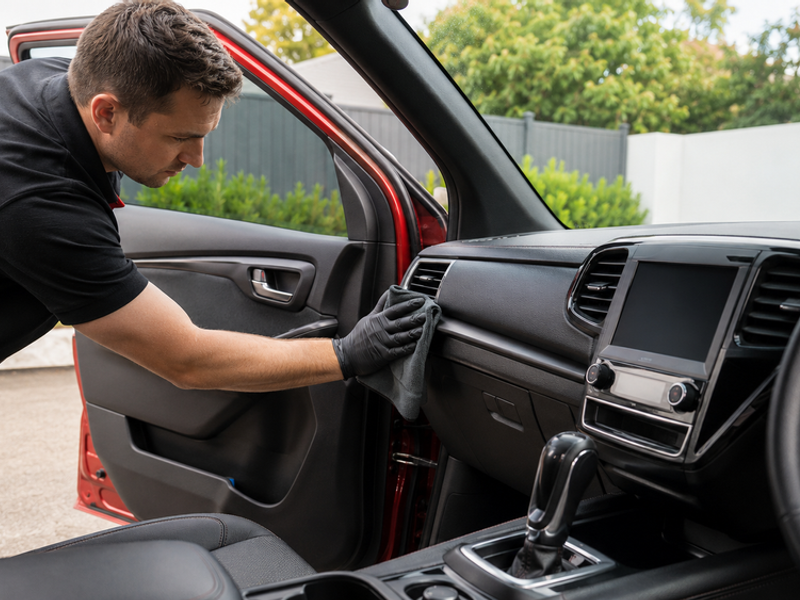
Never spray liquids directly onto your dashboard or buttons to protect underlying electronics. Instead, spray your cleaner onto a premium microfibre towel or a detailing brush, gently work it into the grain, and wipe away the emulsified dirt.
Step 6: Remove Old Dressing Build-Up
If the surface feels sticky or has an uneven, patchy shine, it likely has layers of old silicone dressing trapped on it. Clean these away entirely so your new protective coating can bond directly to the clean plastic.
Step 7: Complete Surface Drying
Ensure the surface is completely dry. Any residual moisture can dilute your protectant, causing unsightly streaks and reduced durability.
Step 8: Precise Protectant Application
Apply a high-quality UV protectant to a dedicated foam or microfibre applicator pad. Spread the product across the panel using thin, overlapping passes to ensure uniform coverage.
Step 9: Level and Buff the Finish
Allow the product to sit for the recommended bonding time, then buff the entire area with a fresh, dry microfibre towel. The final surface must feel dry to the touch and completely non-slip—especially around critical touchpoints like steering wheels, gear shifters, and door handles.
Step 10: Treat Exterior Plastic Trim
Thoroughly clean exterior plastics to remove any old wax or polish residue. Apply a dedicated exterior trim restorer or trim sealant with a microfibre applicator pad, keeping the product off adjacent paint and glass windows. If bird droppings, tree sap, or heavy contamination are present near plastic trim, remove them carefully before protection. Our article on bird droppings and waterless wash explains why fast and safe removal matters.
Step 11: Final Quality Inspection
Examine your work from multiple viewing angles using an inspection light. Look closely for high spots, uneven patches, or product trapped inside panel gaps. For a full-vehicle approach, you may also find our Full Interior & Exterior Detail FAQs and Ultimate Full Car Detailing Guide useful.
Pro Tips for Long-Term Surface Maintenance
-
Ditch the High-Gloss Shine: Choose matte or satin finishes to prevent distracting glare and keep dust from sticking to your dashboard.
-
Clean Before Coating: Never apply a protectant over a dirty surface, or you will lock the grime beneath a semi-permanent barrier.
-
Use Quality Sunshades: Deploying a reflective windscreen sunshade drops interior cabin temperatures significantly, slowing down plasticiser evaporation.
-
Clean Sunscreen Stains Instantly: Keep a microfiber towel handy to clean off sunscreen marks before they bake into your door panels.
-
Keep an Interior Checklist: Maintain a consistent cleaning routine. Our Interior Detailing Checklist is a practical guide for keeping the cabin fresh between professional details.
Adapting to the Tough Australian Climate
The local climate places immense stress on automotive materials. In Sydney and Perth, intense UV exposure quickly degrades unprotected dashboards and exterior trim. Melbourne’s shifting weather patterns and moisture cause road grime to build up around delicate rubber door seals, while Brisbane’s high humidity reacts poorly with low-grade, silicone dressings, making them sticky.
This makes regular protection a matter of preventative maintenance rather than just cosmetics. Regular washing also supports plastic and vinyl care because dirt, road grime, and chemical residue can accelerate ageing. Our article on the hidden cost of neglecting regular car washing explains how small maintenance habits can prevent bigger long-term problems.
Avoid These Common DIY Detailing Mistakes
-
Over-Applying Product: Using too much dressing causes streaking, creates a greasy surface, and stains your clothing.
-
Spraying Electronics Directly: Wires and screens behind switches can short-circuit if liquid cleaners run down into them.
-
Using Tyre Shine on the Interior: Tyre shine formulas are highly dangerous if used inside, making pedals and steering wheels slippery and unsafe.
-
Neglecting Exterior Trim: Forgetting your unpainted black plastics allows them to fade into a weathered grey colour over time. Learn more about avoiding wash errors in Hand Washing Mistakes That Can Damage Car Paint.
-
Waiting for Visible Damage: Do not wait until your dashboard cracks or your trim turns white. Protect surfaces early while they are still in good condition.
Integrating Protection Into a Complete Detail
Plastic and vinyl protection works best when built into a comprehensive detailing system:
-
Complete exterior hand wash
-
Detailed interior vacuuming and deep dusting
-
Dedicated stain and sticky residue removal
-
Complete surface drying
-
Application of tailored interior and exterior protectants
-
Final multi-angle inspection
For light exterior maintenance, a safe waterless wash may be suitable when the car is only lightly dusty. Learn more in our Ultimate Waterless Car Wash Guide. For heavier dirt or regular maintenance, traditional hand washing is often the better option. If you are unsure which wash method suits your vehicle, our Hand Car Wash FAQs can help answer common questions.
Frequently Asked Questions
How often should car plastic and vinyl surfaces be protected?
For standard daily drivers, apply a quality protectant every 2 to 4 months. Vehicles subjected to constant outdoor parking, family use, or commercial rideshare driving benefit from monthly care. Luxury and exotic cars should be evaluated regularly and maintained using a preservation-first approach.
Should my dashboard look shiny after a professional detail?
No. A professional finish should look clean, rich, and uniform with a natural satin or matte appearance. Avoid high-gloss finishes because they create blinding reflections on your windscreen, attract dust, and leave behind an oily residue.
Can faded exterior plastic trim be restored to black?
Moderate fading and light oxidation can be restored using deep-cleaning agents and professional-grade trim restorers. However, if the plastic is severely dried out, brittle, and cracked, the structural damage is permanent. Consistent protection is always easier than restoration.
Professional Car Care Solutions
While DIY maintenance keeps surface dust at bay, achieving a factory-correct finish requires specialised tools, pH-balanced cleaners, and high-grade UV protectants. Using improper products risks staining or damaging sensitive trim, especially inside luxury or vintage vehicles.
At Gleamoo, we deliver expert mobile detailing services designed to protect your vehicle without causing damage. For complete interior rejuvenation and surface conditioning, our Deep Detailing package provides thorough cleaning and surface preparation.
For ongoing care, discover our range of specialized maintenance packages:
To learn more about who we are and how Gleamoo approaches convenient mobile car care, visit our About Us page.
About the Author
Tipsy Batta is passionate about helping Australian drivers keep their vehicles clean, protected, and looking their best without the stress of traditional car wash queues. Through Gleamoo, Tipsy and the team focus on practical, professional, and convenient car care education for everyday drivers, families, car enthusiasts, and owners of high-value vehicles.