
Author: Tipsy Batta
Estimated Read Time: 5 minutes
A clean car feels better to drive, looks sharper on the road, and protects your delicate clear coat from everyday environmental damage. But one question many Australian car owners ask is simple: how often should you actually wash your car? Wash it too rarely and abrasive grime can bond permanently to the paint. Wash it the wrong way too frequently and you risk creating micro-scratches and spiderweb swirl marks. The ideal answer depends on where you park, how often you drive, and exactly what your vehicle is exposed to each week.
How often should you wash your car? For most Australian drivers, washing your car every 1 to 2 weeks is the ideal routine to protect its paint. This consistent frequency prevents ambient dust, metallic brake dust, oily road film, coastal salt air, acidic bird droppings, and sticky tree sap from sitting on the clear coat long enough to cause chemical etching, corrosion, or permanent staining.
Why Regular Car Washing Matters for Paint Protection
Your vehicle’s paint is shielded by a transparent top layer called a clear coat, but that clear coat is far from bulletproof. Airborne dirt, industrial pollution, sea salt, and organic contaminants can slowly degrade and dull the finish over time. Bird droppings and bat droppings are especially dangerous because their high acidity can chemically etch into the paint within hours when baked under the intense Australian sun.
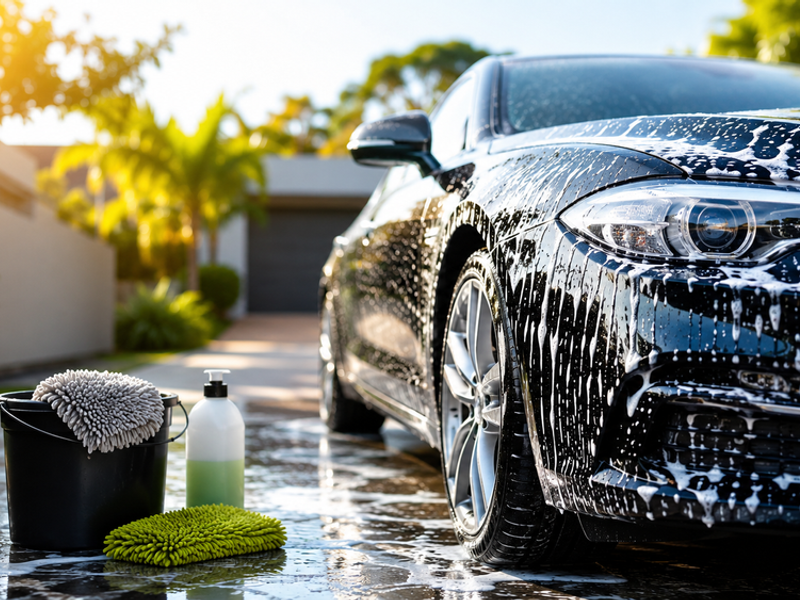
A proper hand wash safely lifts and removes these contaminants before they can bond or eat into the clear coat. This is why regular washing is not merely about appearance; it is essential paint preservation.
If you want a deeper understanding of safe, contact-based cleaning methods, exploring Gleamoo’s Ultimate Hand Car Wash Guide for Every Vehicle Owner explains why technique matters so much. Additionally, our comprehensive article on Why Hand Washing is Still the Safest Car Wash Choice covers paint-safe cleaning workflows in much greater detail.
The Best Wash Frequency Based on Your Situation
-
Daily Commuters and Street Parking: If your car is a daily driver or parks out in the open, wash it every 1 to 2 weeks. Daily driving continuously collects metallic brake dust, traffic film, fuel residues, and general road grime along the lower panels.
-
Parking Under Trees and Foilage: If you park under trees, wash your vehicle weekly or as soon as you notice tree sap, bird droppings, or sticky residue. These organic acids should never be left for multiple days, especially in warm weather.
-
Coastal and Beach Suburbs: If you live near the ocean or regularly drive along coastal roads, wash your car weekly. Airborne salt and coastal moisture settle heavily on paint, glass, wheels, and suspension components, accelerating corrosion if left unchecked.
-
Garaged Vehicles and Weekend Drivers: If your car is rarely driven and kept securely in a clean garage, washing it every 3 to 4 weeks is generally sufficient, though settled ambient dust should still be rinsed off safely.
-
Ceramic Coated Vehicles: If your car has a ceramic coating, you still need to wash it every 1 to 2 weeks. Ceramic coatings make cleaning significantly easier, maximize gloss, and improve chemical resistance, but they do not make a vehicle self-cleaning or maintenance-free. You can learn more by reading Gleamoo’s Ultimate Ceramic Coating Guide for Australian Cars or by exploring our detailed explanation in Ceramic Coating Confusing? Here’s How It Really Works.
At Gleamoo, we regularly service Sydney cars that endure a harsh combination of extreme UV exposure, heavy industrial dust, coastal sea spray, and sudden downpours. Cars parked around apartment blocks, busy train stations, coastal surf spots, or leafy suburban streets frequently accumulate harmful contamination much faster than their owners realize.
DIY Safe Hand Wash: Step-by-Step Practical Guide
Necessary Tools and Materials
-
Two clean wash buckets (ideally fitted with grit guards)
-
A premium, pH-balanced automotive shampoo
-
A plush microfiber wash mitt
-
A dedicated wheel brush or separate wheel wash mitt
-
Thick, high-GSM microfiber drying towels
-
A high-pressure washer or a garden hose with a spray nozzle
-
A premium tyre shine solution (optional)
-
An automotive glass cleaner (optional)
-
A high-lubricity waterless wash spray (if water access is completely restricted)
Estimated Time Commitment
A safe, thorough DIY exterior hand wash generally takes between 30 to 60 minutes, depending on the physical size of your vehicle and how heavily soiled it is.
Step-by-Step Execution Guide
-
Start with the Wheels and Tyres: Wheels are universally the dirtiest, grittiest part of any vehicle. Clean them first using dedicated wheel brushes and a separate wheel bucket so that sharp metallic brake dust does not spread onto your delicate body paintwork.
-
Rinse the Entire Car Thoroughly: Blast the vehicle from top to bottom with water before touching the paint. A deep pre-rinse flushes away loose sand, dirt, and surface grit, dramatically minimizing the risk of dragging sharp particles across the clear coat.
-
Wash From Top to Bottom: Submerge your microfiber wash mitt in the soapy bucket and clean the car in sections, starting with the roof, glass, bonnet, and upper panels. Save the lower doors, rocker panels, and bumpers for last because they hold the heaviest road grime.
-
Use Gentle, Straight-Line Motions: Never scrub the paint in circular motions, as circles trap grit and create classic spiderweb swirl marks. Use light, straight-line gliding movements and let the lubricated shampoo do the lifting.
-
Rinse Each Section Promptly: Do not allow soap suds to dry on the paint panels, particularly under the hot Australian sun, as this can lead to permanent chemical streaking.
-
Dry with Clean Microfiber Towels: Use a clean, plush microfiber towel to dry the car immediately. This crucial step prevents tap water minerals from evaporating on the surface and forming stubborn water spots.
-
Check High-Risk Spots: Perform a final walk-around inspection to look for remaining bird droppings, hardened tree sap, bug splatter, or road tar. If anything remains, treat it carefully with localized cleaner rather than scrubbing hard.
For car owners living in dense apartment complexes or areas where access to a traditional garden hose is unavailable, a low-moisture technique can be highly effective for light dust. Gleamoo’s Ultimate Waterless Car Wash Guide for Aussie Drivers explains exactly when this method is safe for your paint. You can also directly compare your options by reading our breakdown on Waterless vs Hand Car Wash: Which Protects Your Paint.
Expert Detailing Pro-Tip: Wash Before Your Car Looks Filthy
A vehicle does not need to look visibly caked in mud before it requires a wash. The thin, dull grey film that accumulates on your paintwork after just a week of normal driving is actually a highly abrasive cocktail of fine atmospheric dust, industrial pollution, micro-particles of brake dust, traffic film, and moisture. The longer this film is allowed to sit on the clear coat, the more it degrades your paint's gloss and the harder it becomes to safely remove without scratching.
My advice as a professional detailer is simple: do not wait until your vehicle looks completely neglected. A light, routine maintenance wash is infinitely safer for your paint than a heavy, aggressive rescue wash once dirt has built up and bonded. This rule is especially critical for owners of black, dark blue, or deep red vehicles, where imperfections, swirl marks, and mineral spots show up instantly under sunlight.
When a Standard Wash Is Not Enough
Sometimes, your vehicle requires more than just a standard maintenance wash. If your paint still feels rough, gritty, or like fine sandpaper even after a thorough wash, it suffers from embedded, bonded contamination that requires chemical iron removers or a clay bar treatment. If the shine looks hazy or faded, the clear coat needs professional machine polishing to restore its clarity. Furthermore, if the cabin is dusty, stained, or holding odors, it is highly beneficial to read our guide on How Often Should You Detail Your Car Interior.
For vehicles that require an extensive, bumper-to-bumper deep clean, Gleamoo’s Ultimate Guide to Full Car Detailing Done Right outlines exactly what a comprehensive detailing service includes. If you are currently preparing a vehicle for sale, reviewing our Ultimate Pre-Sale Detail Guide for Australian Cars can help you understand how flawless visual presentation heavily influences buyer confidence and resale value.
Professional Assistance & Call to Action
While DIY hand washing is an excellent habit, time constraints, lack of water access, apartment living, or the desire for an immaculate showroom finish can make it difficult to manage alone. That is where Gleamoo's convenient mobile detailing service fits perfectly into your schedule.
For routine paint-safe maintenance that thoroughly cleans your exterior while eliminating the risk of wash scratches, our tailored manual package is the top recommendation:
If you live in an apartment car park, face strict local water restrictions, or simply need to safely lift light surface dust and fingerprints to restore gloss, our waterless option is highly convenient:
For vehicles that have gone months between washes, feel rough to the touch, or need a massive visual and hygienic reset inside and out, consider booking our comprehensive deep rejuvenation package:
To learn more about our scratch-prevention workflows, professional equipment, and dedicated mobile team, visit the official Gleamoo About Us page.
Frequently Asked Questions
Is washing my car once a month frequent enough?
For a vehicle that is rarely driven, kept in an enclosed garage, and never exposed to harsh weather, once a month may be acceptable. However, for a daily commuter, a car parked outdoors, or any vehicle exposed to coastal salt air, tree canopy residue, and birds, a monthly wash is not frequent enough to prevent clear coat damage.
Can washing my car too frequently damage the paint finish?
Washing your car frequently is not what damages the paint; washing it with poor technique and bad tools is what causes damage. Utilizing dirty sponges, harsh automatic drive-through wash brushes, coarse drying towels, or single-bucket wash methods will rapidly introduce heavy swirl marks and scratches. A safe, lubricated hand wash routine can be performed weekly with zero risk to the clear coat.
Should I hand wash my car immediately after it rains?
Yes, you absolutely should, especially if the vehicle had a layer of dust on it before the rain started. Rain drops collect atmospheric pollution, industrial dust, and airborne acids on their way down. When that rainwater evaporates off your hot panels, it leaves behind highly concentrated mineral spots and acidic ringlets that can permanently etch into your paintwork if not rinsed off properly.
About the Author
Tipsy Batta from Team Gleamoo is deeply passionate about helping daily car owners protect their vehicles with straightforward, exceptionally safe detailing habits. Bringing extensive, hands-on automotive care experience and a practical approach to long-term paint protection, Tipsy delivers honest advice, safe detailing methodologies, and actionable tips to help Australian drivers keep their cars looking exceptionally clean, glossy, and well-preserved.