
Author: Tipsy Batta
Estimated Read Time: 4 minutes
Introduction: Stop Swirl Marks Before They Start
Most swirl marks on a car’s paintwork do not come from daily driving—they happen during the wash process. If you have ever noticed spiderweb-like fine scratches gleaming under the Australian sun after a home wash, your effort wasn't the problem; your method was.
The two-bucket wash method is the gold standard for safe automotive maintenance. It is an engineered technique designed to isolate abrasive grit and keep your vehicle's clear coat completely flawless. By making a simple change to your setup, you can dramatically reduce the risks of damaging your paintwork and preserve your car's brilliant shine.
What Is the Two-Bucket Wash Method?
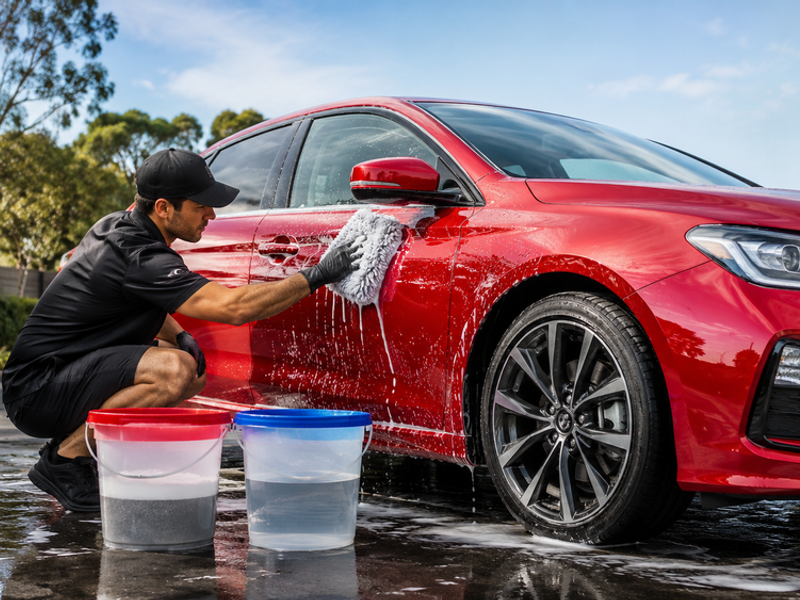
The two-bucket wash method is a safe car-washing technique that uses one bucket filled with soapy shampoo water and a second bucket filled with clean water to rinse the wash mitt. By rinsing dirt, road grime, and abrasive particles out of the mitt in the plain water bucket before reloading it with fresh soap, you prevent scratching and swirl marks on your vehicle's paintwork.
Every time your wash mitt contacts the vehicle's panels, it picks up fine dust, harsh road film, sand, and sharp brake dust particles. If those particles remain trapped inside the microfibres when you go to clean the next section, they act exactly like fine sandpaper across your clear coat.
Why a Single Bucket Damages Your Car's Clear Coat
Using a single bucket for a car wash quickly contaminates your cleaning solution. After wiping just a few panels, the water becomes filled with trapped dust, harsh road film, and abrasive grit loosened from the vehicle's body.
When you dip your wash mitt back into that same contaminated water, those sharp debris particles attach to the microfibres. As you move to the next panel, you drag that grit directly across your vehicle's delicate clear coat. This is one of the most common mistakes we see during home car care, particularly on dark paint finishes like black, deep blue, or red, where surface defects show up immediately. For more examples of what to avoid, see our article on hand washing mistakes that can damage car paint.
Professional Detailing Insight for Australian Conditions
As professional mobile detailers operating across Sydney, we regularly treat vehicles damaged by a harsh mix of airborne dust, coastal salt, sticky tree pollen, and acidic bird droppings. In areas like Western Sydney, vehicles accumulate a fine, microscopic layer of dust very quickly. Even if your car looks relatively clean from afar, rubbing that dry dust across the paintwork without a safe wash sequence guarantees microscopic scratches. This is why proper hand washing, when done correctly, remains the absolute best way to maintain your clear coat. We explain this further in our guide on why hand washing is still the safest car wash choice.
Step-by-Step DIY Two-Bucket Wash Guide
To execute this safe detailing method at home, you need to gather the correct tools. Investing in proper equipment saves you thousands of dollars in paint correction and polishing costs down the line.
Required Car Detailing Tools
-
Two clean, heavy-duty 15-litre buckets
-
A premium, pH-neutral car shampoo
-
A plush microfibre wash mitt (avoid old-school yellow sponges)
-
Two grit guards (highly recommended)
-
A garden hose or a high-pressure washer
-
A high-quality microfibre drying towel
-
A dedicated wheel brush and separate wash mitt
Estimated Time
Set aside 30 to 45 minutes for a safe, thorough home wash, depending on your vehicle's size and current dirt levels.
Step 1: Pre-Rinse the Entire Vehicle
Begin with a thorough top-to-bottom rinse using a hose or pressure washer. The objective is to blast away loose surface dirt, sand, and mud before your wash mitt ever touches the paint. Focus heavily on high-contamination areas like the lower doors, rocker panels, wheel arches, and rear bumpers. For a complete look at the perfect wash sequence, read our guide on washing a car in the right order.
Step 2: Prepare Your Two Buckets
Fill the first bucket with clean water and mix in your premium pH-neutral car shampoo according to the product label instructions (this is your Wash Bucket). Fill the second bucket to the top with plain, clean water (this is your Rinse Bucket). Place a grit guard at the bottom of each bucket. Grit guards act as a baffle, trapping heavy dirt particles at the bottom so they cannot float back up into your cleaning tools.
Step 3: Wash the Car from Top to Bottom
Dip your clean microfibre mitt into the soapy wash bucket and begin cleaning the car's cleanest zones first—the roof, glass, bonnet, and upper boot panels. Work in straight, overlapping lines rather than aggressive circular motions. Let the lubrication of the car shampoo lift the grime; you do not need to apply heavy downward pressure.
Step 4: Rinse the Mitt Frequently
After completing a small section or half a panel, do not go back into your soap bucket. Instead, plunge the dirty mitt into the plain rinse bucket. Scrub the mitt gently across the grit guard to dislodge trapped sand and road grit. Wring out the excess dirty water before dipping the cleaned mitt back into the fresh, soapy shampoo bucket to continue.
Step 5: Clean the Heaviest Contamination Zones Last
Save the lower door panels, side skirts, and rear bumpers for the absolute end of the wash, as these areas harbor the sharpest road debris. Wheels and tyres should always be cleaned using separate brushes and a dedicated bucket, as abrasive metallic brake dust will quickly ruin your paintwork. If your vehicle is only lightly covered in dust and does not require a full setup, a waterless cleaning alternative might fit your needs. You can compare both methods in our guide on waterless vs hand car wash paint protection.
Step 6: Final Rinse and Safe Drying
Rinse all remaining soap residue off the car from the top down. Immediately dry the vehicle using a premium microfibre drying towel. Never let the water dry naturally on the paintwork under the hot Australian sun, as this leaves behind unsightly, mineral-rich water spots that are difficult to remove.
Advanced Tips for Ultimate Paint Preservation
To take your wash routine to an expert level, use a multi-mitt system. Assign one premium mitt exclusively for the upper, cleaner portions of the car and a secondary mitt for the heavily soiled lower sections. This ensures zero cross-contamination of coarse grit.
This standard of care is incredibly vital if your vehicle has advanced surface protection. If your car already has a ceramic coating, careful maintenance washing is mandatory to protect your investment. While a professional coating shields against light environmental hazards, careless wash techniques can still scratch the coating and dull its reflective gloss. Learn more about maintaining that deep shine in our guide on how ceramic coating really works.
Is the Two-Bucket Wash Method Truly Worth It?
Yes, the two-bucket method is absolutely worth the minimal extra effort. For routine car maintenance, it is the single most cost-effective way to prevent paint oxidation, clear coat degradation, and unsightly swirl marks. It requires no complex machinery and can be mastered by any car owner.
However, your technique must remain consistent. Using contaminated towels, harsh household dish soaps, or washing your vehicle under direct noon sunlight can still damage your finish. If your car is heavily soiled with baked-on mud, extensive bird droppings, or industrial fallout, booking a professional touch is often the safest route.
Professional Mobile Car Detailing Solutions
While DIY washing keeps your car looking presentable, finding the time and using the exact right tools can be a challenge. At Gleamoo, we provide professional, mobile car care directly to your door, utilizing paint-safe methods designed to preserve and protect your vehicle's clear coat.
For standard maintenance and a pristine exterior, our Traditional Wash package offers an expert hand wash, wheel cleaning, door jamb wipe-downs, and a full interior vacuum. If your car's paintwork has already suffered from improper washing, resulting in visible swirl marks or oxidation, our premium Deep Detailing service provides the professional safety net required to deep-clean, decontaminate, and restore your car's true depth of gloss.
To explore our background and discover how we simplify premium mobile car care across Australia, visit About Us.
Frequently Asked Questions
Can I use the two-bucket wash method on wrapped or matte vehicles?
Yes. The two-bucket wash method is completely safe and highly recommended for all vehicle finishes, including gloss paint, vinyl wraps, paint protection film (PPF), and matte or satin clear coats. Ensure you use a dedicated, gloss-free, pH-neutral car shampoo.
Do I absolutely need grit guards for this method to work?
While not strictly compulsory, grit guards are highly recommended by professional detailers. They isolate heavy dirt and sand at the bottom of your buckets, ensuring that your wash mitt does not accidentally pick those abrasive particles back up during the rinse cycle.
Why is a two-bucket hand wash better than an automatic car wash?
A careful two-bucket hand wash is vastly superior to an automatic car wash because it completely avoids the highly abrasive nylon brushes and recycled, grit-heavy water used by automated systems, both of which cause severe swirl marks. You can read a complete breakdown in our guide on hand wash vs automatic car wash.
About the Author
Tipsy Batta is passionate about helping everyday car owners understand proper vehicle care without making it complicated. Through Gleamoo, Tipsy focuses on practical, professional, and paint-safe car care advice so drivers can keep their vehicles looking cleaner, glossier, and better protected for longer.