
Author: Tipsy Batta
Estimated Read Time: 11 minutes
Introduction
A proper hand car wash is about much more than simply making a vehicle look clean. When executed correctly, a meticulous hand wash protects your paintwork, removes highly corrosive road grime, sanitises the interior cabin, improves driving visibility, and preserves the long-term resale value of your asset.
Whether you drive a daily commuter hatchback, a family SUV, a rugged work ute, a luxury sedan, or a high-performance supercar like a Porsche, Ferrari, or Lamborghini, the exact method used to wash your vehicle matters. A rushed, careless wash routine inevitably leaves behind permanent swirl marks, unsightly hard water spots, streaky glass, muddy door jambs, and degrading chemical residue. In contrast, a professional hand car wash prioritises paint-safe techniques, controlled water pressure, pH-balanced products, and flawless detailing finishes.
At Gleamoo, our mobile detailing workflow is built entirely around practical car care experience, premium equipment, and ultimate customer convenience. To discover more about our scratch-free washing standards, service locations, and detailing philosophy across Australia, visit our official About Us page.
Why a Professional Hand Car Wash Outperforms Automatic Washes
Why is a hand car wash better than an automatic drive-through wash?
A professional hand car wash provides complete control over the cleaning environment, making it infinitely safer for your paintwork than an automatic wash. Instead of relying on high-speed spinning nylon brushes or abrasive heavy curtains that trap and drag grit from previous vehicles across your clear coat, a hand wash utilizes targeted high-pressure rinsing, lubricated premium shampoos, dedicated wash media, and scratch-free drying towels.
The primary objective of a professional hand wash is simple: completely lift and dissolve surface contaminants without inflicting micro-scratches or marring on the surfaces underneath.
Everyday contaminants like road film, metallic brake dust, acidic bird droppings, sticky bug splatter, corrosive tree sap, airborne coastal salt, sunscreen oils, and interior debris slowly degrade automotive surfaces over time. In harsh Australian driving environments, regular safe washing becomes even more critical. Sydney’s coastal salt air, Melbourne’s unpredictable weather swings, Brisbane’s intense humidity, Adelaide’s dry heat, and Perth’s extreme UV levels all accelerate paint oxidation and trim fading if a vehicle is neglected.
A systematic professional hand wash safeguards your vehicle’s critical components:
-
Clear coat paintwork and delicate gloss finishes
-
Alloy wheels, brake components, and tire sidewalls
-
Hidden door jambs, boot tracks, and rubber weather seals
-
Interior dashboard plastics, leather faces, and multimedia trims
-
Glass clarity and optical safety
-
Overall cabin hygiene and freshness
-
Exterior gloss depth and visual presentation
For everyday daily drivers, the wash focus centers heavily on durability, interior sanitation, and efficiency. For luxury, classic, and exotic vehicles, the detailing priority shifts fundamentally toward strict paint preservation, material integrity, and protecting high-value automotive assets.
Vehicle Class Considerations and Detailing Mindsets
Standard and Daily Driver Vehicles
Daily commuters are subjected to constant environmental and passenger abuse. They face school runs, tight shopping centre parking bays, dusty roadworks, sudden rainstorms, food crumbs, coffee spills, pet hair, and tracked-in mud. For these vehicles, a professional hand car wash focuses on consistent maintenance, cabin decontamination, and preventing long-term grime build-up.
A methodical washing process removes aggressive road contaminants before they can bond permanently to the clear coat. Areas like inner wheel arches, lower rocker panels, tire sidewalls, mudflaps, and door sills accumulate the highest concentration of abrasive dirt. While these hidden areas are easily overlooked during a quick home wash, cleaning them thoroughly makes a dramatic difference to the vehicle's overall longevity.
Furthermore, because Australian drivers spend hours inside their cars, interior sanitation is just as vital as exterior shine. Deep vacuuming, meticulous dusting, streak-free window cleaning, and full cabin deodorising ensure the interior remains a healthy, comfortable space.
Luxury and Exotic Vehicles
High-end luxury and exotic vehicles require a highly specialized, ultra-safe detailing approach. When dealing with precision-engineered marques such as Ferrari, Porsche, Lamborghini, Bentley, Aston Martin, Mercedes-AMG, BMW M, Audi RS, or premium electric vehicles, washing is an exercise in preservation.
These elite vehicles often present unique material challenges:
-
Ultra-soft, scratch-prone, or thin factory clear coats
-
Exposed exterior carbon fibre panels, splitters, and aerodynamic wings
-
Delicate interior Alcantara, suede, or unsealed aniline leather trim
-
High-end custom upholstery featuring intricate contrast stitching
-
Piano black exterior pillars that scratch with minimal contact pressure
-
Advanced ceramic coatings or matte Paint Protection Film (PPF)
-
High-performance carbon-ceramic brakes and sensitive forged alloy wheels
-
Extremely low ride heights and complex, recessed body lines
An expert preservation-first mindset dictates using feather-light contact, highly lubricated wash mitts, pristine drying towels, and controlled, distanced water pressure. Extreme care must be taken around complex grilles, aerodynamic vents, carbon weave lines, exposed sensors, and delicate badges.
For instance, genuine Alcantara should never be saturated with liquid or scrubbed aggressively, as this destroys its pile. Carbon fibre trims require non-aggressive, pH-neutral products and soft microfiber cloths. Vehicles protected with ceramic coatings must be washed exclusively with coating-safe, gloss-enhancer-free shampoos to avoid clogging the hydrophobic nano-pores.
A luxury vehicle may look completely clean from a distance, but poor washing habits will quickly cover its panels in fine spiderweb swirl marks, micro-marring, chemical stains, and hard water etching—ultimately reducing both its visual beauty and its collectors' value.
Comprehensive Professional Wash Process Overview
A premium hand car wash follows a strict, logical sequence. Heavy, abrasive contamination must be completely loosened, dissolved, and rinsed away before any physical contact is made with the paintwork. This step eliminates the risk of grinding trapped grit into the clear coat.
The professional workflow moves seamlessly from heavy decontamination to fine cosmetic finishing:
-
Initial paint and trim safety inspection
-
High-pressure pre-rinse of the body and wheel arches
-
Lubricated exterior shampoo wash using the two-bucket method
-
Dedicated wheel, tire, and lower-body decontamination
-
Final high-pressure water rinse
-
Hand dry using premium microfiber towels or a clean chamois
-
Detailed door jamb, boot sill, and fuel pocket wipe-down
-
Deep interior cabin and boot vacuuming accompanied by detailing dusting
-
Crystal-clear window and mirror cleaning inside and out
-
Premium satin tire dressing and mudflap gloss finishing
-
Professional interior cabin deodorising
-
Multi-point final quality assurance check
Skipping any of these steps to save a few minutes inevitably results in water streaks, missed dirt pockets, towel scratches, or an incomplete finish.
Step-by-Step Professional Hand Car Wash Walkthrough
1. Initial Vehicle Inspection
Before a single drop of water or shampoo touches the vehicle, a professional detailer conducts a thorough walk-around inspection. We carefully evaluate the paint's condition, identifying heavy mud accumulations, dried bird droppings, bonded bug splatter, baked tree sap, and severe brake dust build-up. We also log existing stone chips, deep scratches, loose trim pieces, weathered badges, and sensitive aftermarket modifications or protective films. This initial assessment ensures that a muddy 4WD, a daily commuter hatchback, and a ceramic-coated Porsche each receive the exact customized level of care they require.
2. High-Pressure Rinse of the Exterior, Including Wheel Arches
The first physical cleaning step relies entirely on controlled water pressure. A thorough pre-rinse blasts away loose surface dirt, dust, grit, and mud before a wash mitt ever touches the vehicle. The technician flushes the vehicle methodically from top to bottom, covering the roof, bonnet, glass, side panels, bumpers, wheels, and inner wheel arches.
In Australia, deep wheel arch flushing is essential. After rainy weather, roadworks, beach trips, or rural country drives, wheel arches pack tightly with corrosive mud, sand, and road salt. Rinsing this hidden debris prevents it from dropping down onto clean panels later or causing underbody rust. Water pressure is kept tightly controlled around delicate sensors, camera lenses, aftermarket graphics, and older, fragile clear coats.
3. Full Exterior Shampoo Wash Using the Two-Bucket Method
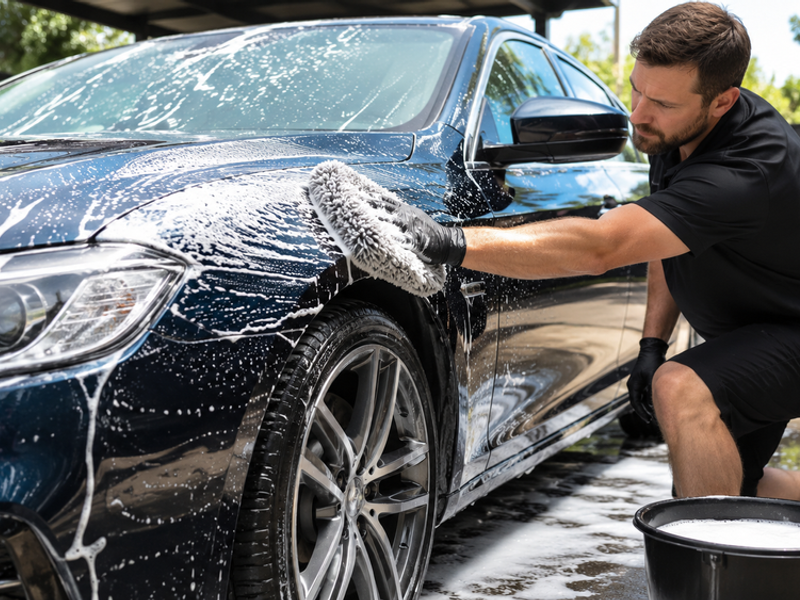
With loose grit safely flushed away, the paintwork is carefully shampooed by hand. A premium, slick automotive shampoo is utilized to create a rich layer of lubrication, allowing the plush microfiber wash mitt to glide effortlessly over the panels rather than dragging remaining film against the clear coat.
Detailers strictly follow a top-to-bottom workflow, moving from the cleanest zones to the dirtiest:
-
Roof and upper window glass
-
Bonnet, shoulders, and boot lid
-
Upper side door panels
-
Lower doors, rocker panels, and bumpers
Because the lowest third of any vehicle holds the most aggressive grit, it is washed last using a separate mitt to prevent cross-contaminating the pristine upper panels.
4. Wheel Cleaning and Lower Area Attention
Wheels require dedicated, specialized attention because they are constantly bombarded with highly abrasive, red-hot metallic brake dust and road tar. If left to sit for extended periods, brake dust chemically bonds to the alloy, causing permanent pitting and corrosion.
A professional hand wash cleans the wheel faces, accessible inner barrels, tire sidewalls, mudflaps, and lower exhaust tips using non-acidic wheel cleaners and ultra-soft specialty brushes. This process keeps expensive sport wheels and sensitive matte or diamond-cut finishes completely safe from chemical staining while restoring a brilliant, clean look.
5. Final High-Pressure Rinse for a Spotless Finish
Once the hand washing is complete, the entire vehicle receives a thorough final high-pressure rinse. This step flushes all loosened film and shampoo residue out from panel gaps, side mirrors, door handles, fuel doors, front grilles, and badging. Leaving soap residue to dry on the car will create dull chemical streaks, haze clear coats, and mar exterior glass. For ceramic-coated vehicles, this final rinse serves as an excellent health indicator—perfect water-beading or rapid water-sheeting demonstrates that the nano coating is working beautifully.
6. Hand Chamois or Microfiber Dry for a Clean, Streak-Free Shine
Why is hand drying your car immediately after a wash so critical?
Hand drying a car immediately after rinsing is crucial because allowing a vehicle to air-dry naturally causes tap water minerals to dry directly onto the paintwork, creating stubborn, etched hard water spots. A professional hand dry utilizing premium, ultra-absorbent microfiber drying towels or a perfectly clean chamois safely removes all standing water before it can evaporate under the sun.
Technicians focus on the flat upper panels first, followed by the windows, side mirrors, door handles, badging, grilles, and wheel faces. Given the intensity of the sun across Sydney, Brisbane, Perth, Adelaide, and Melbourne, rapid and effective drying techniques are paramount to preventing mineral spotting on hot automotive sheet metal.
7. Door Jambs Wiped and Refreshed
Door jambs, boot hinges, and fuel filler pockets are notorious grime collectors, gathering dust, grease, road spray, leaves, and shoe scuffs. A complete hand car wash includes opening all doors and manually wiping down these hidden entry areas. For daily commuters, this maintains excellent cabin hygiene. For luxury vehicles, pristine door jambs preserve the vehicle's premium presentation; a high-end sports car with dirty door tracks looks immediately neglected the moment a passenger steps inside.
8. Thorough Vacuum and Dusting of the Interior, Including the Boot
Because car owners spend their time inside the cabin, the interior should never be treated as an afterthought. A deep interior vacuum removes dirt, sand, crumbs, and pet hair from carpets, upholstery seams, seat tracks, door pockets, and the rear boot area. Following the vacuum, a detailed dusting session refreshes the dashboard, centre console, cup holders, air vents, and steering column.
When cleaning luxury or exotic cabins, material sensitivity is strictly respected. Delicate carbon fibre, soft leathers, and genuine Alcantara are handled with low-moisture methods, ultra-soft detailing brushes, and specialized conditioners rather than harsh, oily plastic dressings.
9. Windows Cleaned Inside and Out for a Crystal-Clear Finish
Perfectly clean glass is vital for both aesthetics and driving safety. Dirty or streaky windscreens catch low morning or evening sunlight, creating a dangerous blinding glare for the driver. Professional glass cleaners clean the interior and exterior glass panels, removing oily air-conditioning films, fingerprints, vape residue, and environmental road film. This step ensures crystal-clear vision across all Australian driving conditions.
10. Tyres and Mudflaps Gloss-Finished
An otherwise immaculate car looks completely unfinished if the tires are left faded, brown, and dry. Applying a high-quality, water-based tire dressing restores a deep, rich satin black appearance to the sidewalls and mudflaps. The dressing is applied evenly to prevent "tire sling"—a common issue where excess product slimes off the spinning tire and splatters onto your freshly cleaned side door panels. Dressing is kept entirely clear of the tire tread and brake rotors for absolute driving safety.
11. Interior Deodorised for a Fresh, Clean Scent
The final interior touch is a professional cabin deodorising treatment. This step effectively neutralizes lingering daily commuting odors, stale food smells, pet dander, and dampness caused by wet winter weather. The result is a clean, inviting cabin atmosphere that feels fresh without relying on heavy, masking perfumes.
12. Final Quality Check
Before handing the keys back to the owner, the detailing technician performs a multi-point quality inspection. We check for hidden water drips behind mirrors, inspect glass for faint streaks under lighting, verify that lower panels are entirely clear of film, and ensure an even, beautiful finish on the tires and trim. This final look is what separates a rushed car wash from a true professional finish.
Insider Pro-Tips for Long-Term Paint Maintenance
The bottom third of your vehicle is always the primary danger zone. It acts as a collection point for heavy road film, tar, mud, and sharp metallic brake dust kicked up by the front tires. Always wash this section at the absolute end of your workflow. If you wash your lower sills first and then move your wash mitt back up to your bonnet, doors, or boot lid, you will drag coarse road grit directly across your highly visible upper panels, instilling deep scratches.
Additionally, never use old household bath towels or old shirts to wash or dry your vehicle's paintwork. While worn cotton might feel soft to your hands, its woven fibers are far too stiff for delicate clear coats and act like fine sandpaper, instilling thousands of micro-scratches over time. Always opt for dedicated, edge-less automotive microfiber mitts and towels.
Common DIY Hand Wash Mistakes to Avoid
-
Washing in Direct, Hot Sunlight: Hot panels cause car shampoo and rinse water to dry instantly, creating permanent chemical streaks and severe mineral water spots. Always wash in full shade.
-
Using Dishwashing Liquid: Kitchen detergents are engineered to strip heavy grease and oils. When used on a vehicle, they completely strip away protective waxes and sealants while drying out rubber seals and plastic trims.
-
Using a Single Sponge for the Whole Vehicle: This is the fastest way to ruin a paint finish. Sponges trap abrasive grit on their flat faces and drag it across the car. Always use a plush microfiber mitt and clean it frequently using a separate rinse bucket.
-
Neglecting the Wheels and Wheel Arches: Leaving wheels covered in brake dust ruins the overall look of the vehicle and allows corrosive metals to pit the alloy surface permanently.
-
Allowing the Vehicle to Air-Dry: Leaving tap water to evaporate naturally under the Australian sun leaves behind hard calcium and magnesium rings that can require machine polishing to remove.
Frequently Asked Questions
1. Is a hand car wash truly safer than a drive-through automatic car wash?
Yes, when performed using correct professional techniques, a hand car wash is vastly safer for your clear coat than an automatic wash. A hand wash allows the detailer to adjust water pressure, thoroughly pre-rinse loose grit away before touching the panels, use pristine microfiber wash media, and gently hand-dry the car. Drive-through automatic brush washes rely on heavy mechanical friction that frequently inflicts deep swirl marks, dulling your paint over time.
2. How often should I have my vehicle hand washed?
For the majority of daily drivers in Australia, a thorough hand wash every two to four weeks is an excellent routine to prevent contaminant build-up. However, if your vehicle is regularly parked outdoors beneath sappy trees, exposed to coastal salt air, driven long distances on dusty regional roads, or targeted by acidic bird droppings, it should be hand washed sooner to protect the clear coat finish.
3. Can a professional hand car wash remove existing scratches?
No, a professional hand wash is designed to safely remove bonded surface dirt, road grime, dust, and environmental residue, but it cannot remove physical scratches from within the clear coat layer. Eliminating pre-existing swirl marks, deep scratches, chemical etching, or oxidation requires specialized machine polishing and paint correction detailing services.
Professional Detailing Assistance & Call to Action
Caring for your own vehicle on the weekend can be a highly rewarding hobby. However, achieving flawless, showroom-grade results safely requires a significant investment in commercial-grade equipment, specialized pH-neutral products, pristine microfiber media, and extensive technical knowledge.
This professional care becomes paramount when maintaining high-value luxury models, exotic sports cars, ceramic-coated vehicles, and interiors adorned with sensitive materials like Alcantara, carbon fibre, and unsealed leathers. A minor oversight during the washing or drying stages can easily instill deep marring that is far more expensive to correct through paint correction than the cost of a safe detailing wash.
Gleamoo provides a premium, fully equipped mobile detailing solution that cleans your vehicle safely, conveniently, and professionally directly in your own driveway—completely eliminating the risk of wash-induced damage.
To experience the complete, paint-safe professional hand car wash process detailed throughout this guide, our highly popular Traditional Wash is the absolute best-suited package for your car:
Depending on your vehicle's current condition and your specific long-term care goals, we also provide these specialized mobile service options:
-
Waterless Wash — The ideal choice for removing light dust and maintaining a clean look when water access or space is restricted.
-
Deep Detailing — Our comprehensive reconditioning package tailored for heavily soiled cars, stained interiors, or preparing a vehicle for sale.
-
Shield Protection — The perfect option when you want to complement your clean finish with durable paint protection and robust weather defense.
About the Author
Tipsy Batta is deeply passionate about helping Australian drivers understand proper car care through simple, practical, and honest advice. Bringing a detailer’s precise eye for flawless finishes, deep cleanliness, and long-term clear coat protection, Tipsy focuses on executing scratch-free hand washing methods, preserving delicate materials, and making professional automotive detailing effortless for everyday daily drivers and passionate enthusiasts alike.