
Author: Tipsy Batta
Estimated Read Time: 12 minutes
Introduction: How to Keep Your Car Clean During Severe Water Restrictions
When drought restrictions tighten across Australia, drivers face a challenging dilemma: "Can I still keep my vehicle clean without wasting water or scratching my paintwork?"
The short answer is yes—but only if you abandon traditional hose methods and change your approach entirely.
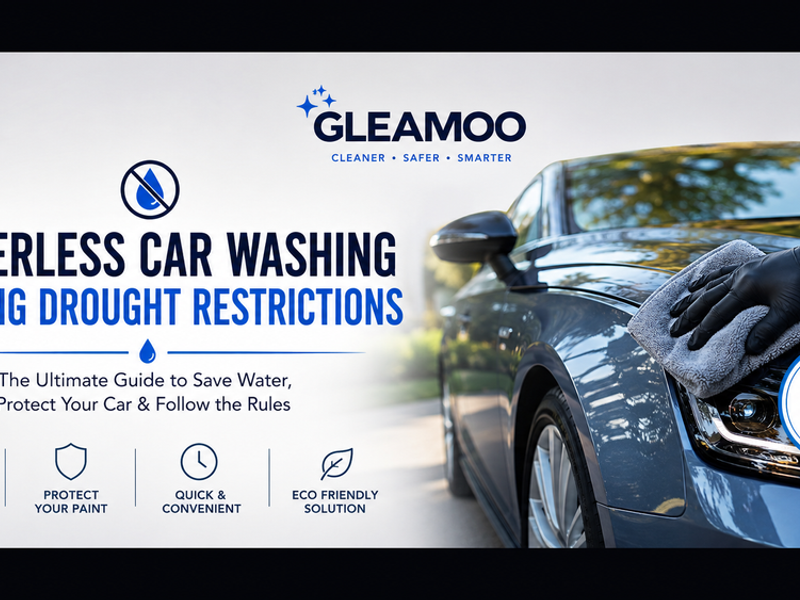
Waterless washing is the most practical, eco-friendly automotive care solution during dry spells. It allows you to maintain your car using minimal moisture, creating zero soapy runoff and eliminating the need for an open hose or pressure washer.
For daily drivers, it keeps windows clear and body panels presentable. For luxury, exotic, and ceramic-coated vehicles, a waterless wash serves as a preservation-focused maintenance routine—provided you use the right lubricants, ultra-plush microfiber towels, and precise technical execution.
This comprehensive guide breaks down how to clean your car during drought periods, when a waterless method is highly effective, when to avoid it, and how to protect your clear coat from wash-induced scratches.
Is Waterless Car Washing Safe and Allowed During Water Restrictions?
Can you use a waterless car wash during drought restrictions?
Yes, waterless car washing is fully safe and highly encouraged during drought water restrictions. Because the method relies entirely on a pre-mixed, high-lubricity spray and microfibre cloth extraction rather than an open mains water supply, it complies completely with local residential water saving regulations while preventing soapy run-off from entering native stormwater drainage networks.
Instead of drowning a vehicle in gallons of water from a garden hose, a premium waterless system uses advanced polymers to break surface tension. These chemicals safely encapsulate loose dust, light traffic film, pollen, and fingerprints, lifting them into suspension so they can be wiped clear without being ground back into the paintwork.
For Australian motorists, this strategy is indispensable. Our cars are constantly bombarded by intense UV radiation, dry agricultural dust storms, coastal salt humidity, and airborne contaminants.
Even if a vehicle looks reasonably clean from several meters away, its surface panels quickly develop a microscopic abrasive film that will scratch your paint if handled improperly. If you want a deeper baseline look at how these formulas function, explore Gleamoo’s Ultimate Waterless Car Wash Guide for Aussie Drivers.
Why Waterless Washing Is Not Just "Spray and Wipe"
A common mistake made by DIY car owners is assuming that a waterless wash is a casual, low-effort job. Simply spraying a detailing fluid onto dry paint and rubbing it off with an old rag will quickly lead to heavy swirl marks, clear coat hazing, and severe paint marring.
Professional-grade waterless detailing is a highly controlled mechanical extraction process. It relies stringently on four key variables:
-
Advanced Product Chemistry: Using dedicated encapsulation formulas that surround grit particles.
-
Abundant Lubrication: Heavily saturating panels so the towel glides seamlessly with zero friction.
-
Premium Microfiber Selection: Using ultra-high GSM (grams per square meter) towels to trap debris deep within a plush pile.
-
Linear Wiping Technique: Dragging the cloth exclusively in one direction with absolute minimal downward pressure.
It is critical to recognize the practical thresholds of this detailing style. Waterless systems are intentionally engineered for light to moderate environmental contamination. If your vehicle is heavily caked in wet mud, thick river sand, heavy winter road salt, or coarse gravel grime after an off-road trip, traditional high-pressure washing methods are mandatory to prevent severe paint damage. You can compare the protective properties of both paths by visiting Gleamoo’s guide on Waterless vs Hand Car Wash: Which Protects Your Paint?.
How Regional Australian Climates Impact Vehicle Paintwork
The unique geographical demands across Australia directly alter how contaminants bond to your vehicle's paintwork during dry seasons.
Sydney and New South Wales Conditions
Across Sydney and Western Sydney, hot, dry westerly winds carry immense amounts of topsoil dust and construction debris. When this fine grit settles on warm clear coats and combines with sudden high-humidity drops or light morning dew, it bakes hard onto the surface. Wiping this away dry is catastrophic for gloss levels, a topic we closely look at in our article detailing Why Rain Makes Your Car Dirty After a Wash.
Melbourne and Victorian Environments
Victorian weather shifts rapidly, blending fine industrial soot with oily road film. This combination creates a sticky, stubborn atmospheric layer over panels that requires heavy chemical lubrication to dissolve safely without aggressive mechanical scrubbing.
Brisbane and Coastal States
In Queensland and coastal capital areas like Perth and Adelaide, high humidity and corrosive salt air create a tacky surface film on panels. This film traps tree pollen and insect remains, accelerating clear coat degradation if left untreated on unprotected plastics, rubber moldings, and painted metals.
Customizing Your Waterless Detailing Routine by Vehicle Class
Every car requires a slightly different approach based on its paint hardness, overall asset value, and general usage patterns.
Standard and Daily Drivers
For family hatchbacks, SUVs, family sedans, and trade utes, the primary goals are maintaining visibility, preserving resale value, and preventing heavy buildup during prolonged restrictions.
A waterless wash excels at managing weekly dust buildup, removing oily finger marks around door handles, and maintaining side window visibility. Because daily commuters gather the heaviest grease along lower sills, wheel arches, and rear bumpers, these sections must be addressed last using completely fresh cloths to avoid dragging harsh debris across your clean bonnet or roof panels.
Neglecting this simple rule allows minor dust to turn into permanent surface degradation. For a breakdown of the hidden costs associated with delayed automotive hygiene, explore our guide on The Hidden Cost of Neglecting Regular Car Washing.
Luxury, Exotic, and Performance Vehicles
High-end sports cars and luxury vehicles require a specialized preservation-first mindset. Marques like Porsche, Ferrari, Aston Martin, Mercedes-AMG, and high-performance EVs feature delicate, soft factory clear coats, complex carbon fiber aero packages, extensive piano-black exterior trim accents, and highly sensitive cooling vents.
When detailing luxury finishes during water restrictions, you must use double the volume of waterless solution and separate towels for every individual panel face. Each wipe must be done with almost zero hand pressure—letting the weight of the plush microfiber towel gently lift the encapsulated grit.
Furthermore, high-end vehicles protected with long-term ceramic coatings require formulas that are entirely free of cheap gloss-enhancing waxes or heavy silicones, which can clog the coating's porous structure and ruin its water-beading traits. If your performance car has professional protection, read up on Gleamoo’s Ultimate Ceramic Coating Guide for Australian Cars and avoid the common errors listed in 6 Ceramic Coated Car Wash Mistakes to Avoid.
Four-Wheel Drives, Off-Roaders, and Heavy Commercial Work Vehicles
If your 4WD or commercial vehicle is heavily covered in heavy clay, coarse outback sand, or encrusted road mud, waterless detailing should not be attempted under any circumstances. Wiping highly abrasive mud without a thorough high-pressure water rinse will permanently scour your paint.
In these scenarios, it is vastly safer to leave the vehicle dirty until you can access a commercial wash bay that recycles its water responsibly, or call an expert team. Review the exact limits of this process in our guide on When a Waterless Car Wash Can Damage Your Paint.
Step-by-Step Guide: The Professional Waterless Wash Sequence
Follow this professional detailing sequence to clean your vehicle safely without using an outdoor tap.
Required Materials and Tools
-
1 bottle of high-lubricity waterless car wash spray
-
8–10 clean, ultra-soft microfibre towels (minimum 400 GSM)
-
2 dedicated short-pile glass microfibre cloths
-
1 separate utility microfibre towel (for wheels only)
-
1 bottle of ammonia-free automotive glass cleaner
Estimated Time Required: 20 to 45 minutes, depending on the size of the vehicle.
Step 1: Pre-Wash Surface Inspection
Walk around the entire vehicle to assess the contamination level. Look closely for bird droppings or baked-on tree sap. If you spot bird droppings, spot-treat them immediately by saturating them with waterless fluid and letting it dwell for two minutes to dissolve the acids safely before lifting them off. Learn more about this in Bird Droppings on Paint: Can Waterless Wash Fix It?. For stubborn organic residues, consult our guide on How to Remove Tree Sap from Car Paint Safely Without Scratching.
Step 2: Set Up Your Workspace in Complete Shade
Never perform a waterless wash on metal panels that are hot to the touch or under direct sunlight. Solar heat forces the chemical lubricants to dry or "flash" instantly, causing severe streaking and removing the necessary liquid cushion required to protect your paint. Work inside a domestic garage, under a carport, or early in the morning.
Step 3: Master the Microfibre Towel Fold
Take a clean microfibre towel and fold it in half, then in half again, to create four clean square quadrants yielding eight individual wiping faces. Never use old bath towels, chamois leathers, or household rags, as they cannot trap particles safely. Review our detailing text on Why Microfiber Towels Matter for Car Paint to see why towel selection changes everything.
Step 4: Follow a Top-to-Bottom Pass Order
Always clean your vehicle from the least contaminated upper surfaces down to the dirtiest lower sections. This prevents you from carrying heavy road grime from your sills upward onto your clean roof. Follow this exact sequence:
-
Roof
-
Windscreen and side glass
-
Bonnet and front grille areas
-
Boot lid and rear quarter panels
-
Upper door panels
-
Lower door sections and bumpers
-
Wheels and tires
To learn why this exact flow path prevents cross-contamination, read The Ultimate Guide to Washing a Car in the Right Order.
Step 5: Spray, Dwell, and Execute One-Directional Wipes
Mist your chosen panel generously with your waterless wash product until the surface is completely covered in fine droplets. Allow it to sit for 30 seconds to fully encapsulate the dust.
Take your folded microfibre towel and wipe the panel gently across the surface in straight, overlapping lines. Never scrub in circular motions, as circular marks trap light and become highly visible. As you finish a pass, flip the cloth to a completely fresh, unused quadrant.
Step 6: Use a Secondary Buffing Towel
Immediately after removing the grime with your primary towel, take a completely separate, dry, high-GSM microfiber cloth to gently buff away any remaining structural haze. This leaves a clean, streak-free shine. Inspect the panel from various angles to ensure no residue is trapped.
Step 7: Complete Glass Cleaning and Clarity check
Spray your specialized automotive glass cleaner directly onto your dedicated short-pile glass cloth rather than soaking the window itself. Clean the windscreen, side mirrors, and reversing camera lens thoroughly to optimize driving safety. For a full cabin detailing template, follow our Ultimate Interior Detailing Guide along with our downloadable Interior Detailing Checklist for a Fresh Cleaner Car.
Step 8: Clean Wheels Safely Last
Alloy wheels collect razor-sharp metallic brake dust. Spray the wheel faces heavily with your waterless solution, and use a dedicated utility towel to wipe the rims clean. Never use this wheel towel on your painted body panels later, as trapped metallic grit will cause severe scratching.
Step 9: Treat Exterior Plastics and Moldings
Harsh drought conditions and dry dust can quickly fade external rubber door seals and vinyl trim panels. After completing your exterior wipe down, examine your window rubbers, side mirror bases, and wiper cowls, treating them with a non-greasy protectant to prevent long-term UV damage. For complete instructions, see our walkthrough on How to Protect Plastic and Vinyl Car Surfaces.
Knowing When to Skip a Waterless Clean and Use a Traditional Wash
While waterless wash products are exceptionally effective for removing dust, they cannot replace physical water flow when dealing with heavy contamination. Attempting to use a waterless spray on caked-on mud, heavy road grime, or thick salt crust will overload the microfiber cloth, turning it into a abrasive pad that damages your finish.
When your car is heavily soiled, you must wait until water rules allow for a gentle, controlled hand wash using high-pressure rinses and specialized foam cannons, or rely on a professional detailing setup that captures and treats its runoff water safely. To understand the safety mechanics of deep dirt removal, check out our guide on Why Hand Washing Is Still the Safest Car Wash Choice.
Long-Term Maintenance Planning for Arid Seasons
The easiest way to maintain a vehicle during water restrictions is to prevent dirt from bonding to the clear coat in the first place. Applying a sacrificial barrier—such as a premium wax, polymer sealant, or professional ceramic coating—creates an ultra-smooth, low-energy surface that repels dust and environmental grime.
This makes subsequent waterless cleaning safer, faster, and much more effective. If you are trying to decide which type of protection fits your driving habits best, read our Ceramic Coating vs Wax Ultimate Paint Protection Guide.
When your vehicle requires a deeper level of care to remove embedded contaminants, iron deposits, or minor surface defects, consider scheduling a comprehensive professional treatment as detailed in The Ultimate Guide to Full Car Detailing Done Right.
Frequently Asked Questions
Will a waterless car wash scratch my clear coat?
A waterless car wash will not scratch your paint if it is used on light dust or moderate road film, provided you apply plenty of product, wipe gently in straight lines, and use fresh, clean microfibre towels. Scratches occur when people try to clean heavily muddy cars or reuse dirty cloths.
How many microfiber towels do I need to clean a whole car without water?
For a standard medium-sized sedan, you should have at least 8 to 10 clean, plush microfibre towels on hand. Using too few towels forces you to drag trapped dirt back across the paint, which is the main cause of swirl marks during a waterless detail.
How do I clean my microfiber towels after a waterless wash?
Wash your detailing towels in a washing machine using a dedicated microfibre detergent or a mild liquid soap free of perfumes. Never use powdered detergents, bleach, or liquid fabric softeners, as these leave residues that clog the fibers and destroy their absorbency. Air-dry them or tumble dry on a zero-heat setting.
Professional Mobile Detailing Solutions
Safely maintaining a car during drought restrictions requires patience, high-quality products, and a large collection of fresh microfibre towels. If you are short on time, dealing with heavy road film, or want to avoid the risk of scratching a luxury finish, letting an expert team handle the maintenance is a smart investment.
At Gleamoo, we deliver paint-safe, eco-friendly detailing services directly to your home or office. If your vehicle has light dust or everyday grime and you want to conserve water while maintaining a brilliant gloss, book our mobile Waterless Wash package.
If your vehicle has collected heavy mud or road grit that requires a safe, multi-stage hand wash with proper waste-water management, schedule our signature Traditional Wash service. For cars needing deep paint decontamination, interior detailing, or thorough pre-sale preparation, choose our Deep Detailing package. To give your vehicle an ultra-slick, hydrophobic shield that repels dust and makes drought maintenance a breeze, explore our advanced Shield Protection options.
To learn more about our commitment to water-wise detailing and high-end paint care, visit the Gleamoo About Us page.
About the Author
Tipsy Batta is passionate about making professional car care more convenient, safer, and smarter for Australian drivers. Through Gleamoo, Tipsy focuses on helping car owners understand the “why” behind proper detailing — from waterless washing and hand washing to interior care, ceramic protection, and long-term paint preservation. The goal is simple: help every driver keep their vehicle cleaner, protected, and looking its best without unnecessary hassle.