
Author: Tipsy Batta
Estimated Read Time: 4 minutes
Introduction: The Frustrating Irony of Post-Rain Grime
It is a scenario every car owner knows too well. You spend your weekend meticulously cleaning your vehicle, only for a brief rain shower to leave it looking completely filthy the next day. It feels counterintuitive—if clean water is falling from the sky, shouldn't it naturally rinse your vehicle?
The reality is that rainwater is far from pure, and its interaction with your car's exterior is a recipe for a dull, spotted finish. Understanding exactly how rain alters your car's cleanliness is the first step toward protecting your paintwork and maintaining that freshly detailed gloss for much longer.
Why does rain make your car look dirty again so quickly?
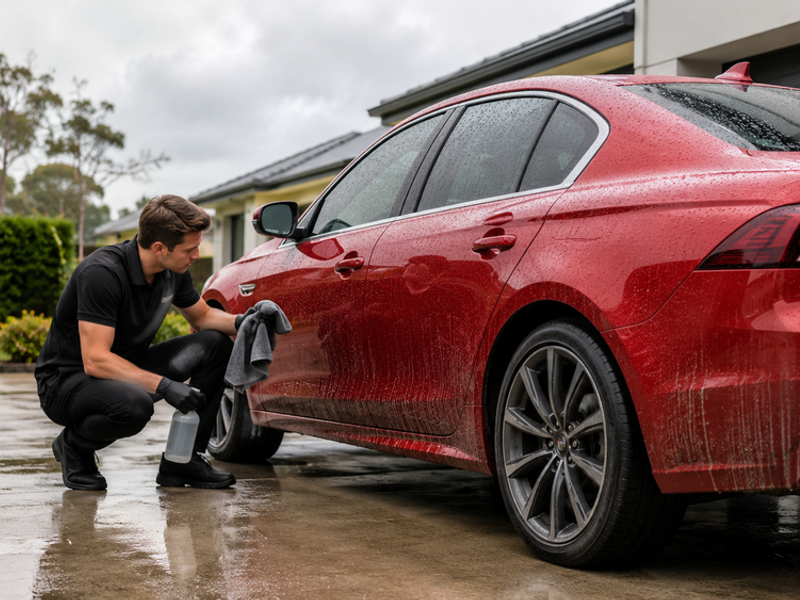
Rainwater collects atmospheric dust, pollen, and industrial pollution as it falls. When these droplets land on your car, they mix with existing surface dirt and metallic brake dust. As the rainwater evaporates under the sun, it leaves behind concentrated rings of minerals, grime, and road film known as water spots.
Rain vs. A Professional Car Wash: Understanding the Science
Rain lacks the two foundational components required for a safe automotive clean: high-lubricity cleaning agents and physical dirt extraction. A proper car wash utilizes specialized pH-balanced shampoos to break down surface tension and encapsulate dirt particles, allowing them to slide off safely without abrading the clear coat.
Rain simply wets the surface of your vehicle. When a shower passes through the atmosphere, it carries down airborne particles. When this mixture hits your car, it acts as a magnet for existing surface contaminants like tree pollen, exhaust soot, and industrial fallout.
As the water cascades down your vehicle, this muddy slurry tracks into the tight crevices around your side mirrors, door handles, badges, lower door sections, and rear bumpers. Once the clouds part and the Australian sun hits those damp panels, the water evaporates instantly, trapping hard minerals and concentrated grit directly onto your clear coat. Wiping this dried film away with a dry cloth will immediately ground the dirt into the finish, causing micro-scratches. To understand safer cleaning mechanics, explore our guide on why hand washing is still the safest car wash choice.
4 Critical Ways Rain Destroys Your Vehicle's Clean Finish
1. Mineral Water Spots and Clear Coat Etching
Rainwater is highly mineralized. When these atmospheric droplets evaporate on warm automotive panels, they leave behind circular mineral deposits. On dark vehicle finishes like gloss black, deep navy, or charcoal grey, these white spots stand out immediately. While fresh rain spots can be washed away relatively easily, allowing them to bake under intense UV rays causes the mineral rings to bond permanently, leading to deep clear coat etching that requires mechanical correction.
2. Heavy Road Spray and Lower Panel Contamination
The most severe grime doesn't always come from the sky—it splashes up from the ground. Wet roads are covered in a slick cocktail of engine oil residues, microscopic tire rubber particles, abrasive brake dust, mud, and raw bitumen. When you drive through wet conditions, your tires throw this aggressive road film directly onto your lower doors, side skirts, wheel arches, and rear bumper, leaving behind a thick, greasy residue.
3. Hazy Windscreens and Blurry Driving Visibility
Rain quickly creates streaks across your glass if your windshield is already holding a layer of fine dust, sap mist, or leftover wiper fluid film. When your wiper blades move across a rain-soaked windshield without deep cleaning agents, they spread an oily haze across the glass, causing dangerous glare during nighttime driving. For a total visual rejuvenation, our ultimate interior detailing guide also covers glass, vents, and cabin areas that often get overlooked.
4. Clogged Ceramic Coatings
Many drivers assume that an advanced paint protection layer eliminates rain dirt entirely. While a ceramic coating creates an incredibly slick, hydrophobic surface that forces water to bead up and sheet off, it is not completely self-cleaning. Fine environmental dust can still settle on top of the coating after a rain shower. However, the true benefit is that a coated car remains significantly easier to clean and dry safely without damaging the underlying paint. If your vehicle is coated, read more in ultimate ceramic coating guide for Australian cars.
Step-by-Step DIY Post-Rain Cleaning Guide
If you want to clear away light post-rain tracking at home before it hardens into permanent mineral scaling, follow this safe detailing sequence.
Essential Cleaning Tools
-
Premium pH-neutral automotive shampoo or a high-lubricity waterless wash spray
-
At least three plush, high-GSM microfiber towels
-
A dedicated microfiber drying towel
-
A soft, wheel-safe brush or wash mitt
-
An ammonia-free automotive glass cleaner
Estimated Time: 20 to 45 minutes, depending on your vehicle's size and the amount of accumulated road film.
The Safe Maintenance Sequence
-
Perform a Visual Surface Inspection: Check the severity of the post-rain dirt. If your vehicle is caked in heavy mud or abrasive road grit from a long highway drive, avoid a quick spray-and-wipe method; it requires a complete rinse.
-
Treat High-Contamination Lower Sections First: Because rain channels heavy grease toward your lower rocker panels and wheels, pre-rinse these areas thoroughly to displace heavy debris before making physical contact.
-
Always Use High-Lubricity Solutions: Never use a dry towel to wipe away rain spots. Utilize a properly mixed wash bucket or a generous amount of dedicated waterless wash spray to encapsulate light dirt particles and lower surface friction.
-
Clean From Top to Bottom: Start your washing sequence on the roof, moving down to the glass, bonnet, and upper doors before touching the highly contaminated lower sections. This stops you from dragging coarse road grime up onto cleaner panels.
-
Dry the Panels Immediately: Leaving water to air-dry on your paintwork is the primary cause of severe water spotting. Gently glide a clean, dry microfiber drying towel across the panels to pick up residual moisture without friction.
-
Restore Glass Clarity: Finish your routine by cleaning the exterior glass surfaces to ensure crisp, safe driving visibility. Wipe down your windshield wipers with a damp cloth to remove built-up road grease.
For a deeper look into safe washing methods, read Gleamoo’s ultimate hand car wash guide or compare your choices in our guide on waterless vs hand car wash paint protection.
Pro-Tip: Avoid the Temptation of a Quick Dry Wipe
The absolute most common mistake car owners make after a brief shower is taking a dry cloth and quickly wiping down the panels because the car "only looks a little dusty." That microscopic layer of dust contains highly abrasive minerals and sharp soil elements.
Across Greater Sydney, vehicles are constantly bombarded by a mix of construction dust, coastal salt, and heavy tree pollen. These airborne particles dry exceptionally fast on warm body panels. If you choose to use a waterless wash spray for a fast post-rain touch-up, ensure you use a generous amount of product to lubricate the panel, flip your microfiber towel to a clean face frequently, and wipe exclusively in straight lines rather than circular motions.
When Rain Marks Turn into Permanent Paint Damage
For most vehicles, a standard post-rain cleanup is a simple maintenance task. However, if you notice stubborn, chalky white rings or dull, rough-textured patches that remain bonded to your clear coat even after a thorough wash, the minerals have crystallized and begun eating into your paintwork. Attempting to scrub these away with an aggressive sponge or heavy pressure will permanently scratch your finish.
At this point, professional decontamination is required. A trained detailer can safely evaluate whether your panels require a specialized chemical wash, clay bar treatment, mechanical machine polishing, or a fresh layer of protective sealant. If you have had to skip regular washing due to a busy schedule, our article on the hidden cost of neglecting regular car washing explains why small issues can become expensive over time.
Professional Mobile Detailing Solutions
While a DIY maintenance wash is an excellent way to handle light rain tracking, restoring a truly flawless finish after heavy wet-weather driving requires specialized equipment, safe chemicals, and considerable time.
At Gleamoo, we bring premium, paint-safe mobile detailing solutions directly to your driveway. For comprehensive post-rain maintenance that eliminates traffic film and restores your exterior clarity, book our signature Traditional Hand Car Wash package. This service thoroughly cleans your paintwork, wheels, wheel arches, exterior glass, and door jambs while incorporating a full interior vacuum.
If your vehicle has only suffered minor spotting from a brief summer shower, our mobile Waterless Wash service offers a fast, eco-friendly maintenance option. To prevent minerals and road spray from bonding to your clear coat in the future, consider adding our high-performance Shield Protection layer to create a sacrificial, ultra-hydrophobic barrier.
To discover more about our detailing philosophy and how we keep Australian vehicles looking their absolute best, visit the Gleamoo About Us page.
Frequently Asked Questions
Does a heavy downpour of rain actually clean my car?
No. While a heavy downpour can rinse off loose, superficial dust, it cannot break down or remove oily road film, metallic brake dust, or bonded environmental contaminants. In fact, rain usually introduces new atmospheric pollutants to your paintwork, leaving streaks and water spots behind once it dries.
How quickly should I wash my car after it rains?
Ideally, you should wash your car within a few days of driving in the rain, especially if you commuted on wet roads. Washing your vehicle promptly removes road spray, atmospheric acids, and mineral deposits before they have an opportunity to bake under the sun and etch into your clear coat.
Can acid rain permanently damage my car's factory paint?
Yes. Atmospheric pollution mixes with moisture to create acidic rain droplets. If these droplets are allowed to dry completely on unprotected paintwork under direct sunlight, the concentrated acids will slowly eat away at the clear coat, leaving permanent, dull craters that require professional paint correction.
About the Author
Tipsy Batta is passionate about helping Australian car owners keep their vehicles clean, protected and looking their best. Through Gleamoo, Tipsy focuses on making professional car care more convenient, practical and accessible, whether it is a quick maintenance wash or long-term paint protection.