
Author: Tipsy Batta
Estimated Read Time: 4 minutes
Introduction: Why Your Ceramic Coating Isn't a "Wash-Proof Shield"
A professional ceramic coating is one of the premier investments you can make to protect your car’s exterior finish. However, a common misconception is that these liquid glass coatings act as an indestructible, maintenance-free shield. They do not.
Using the wrong automotive shampoo, scrub brushes, dirty drying towels, or poor contact wash techniques can degrade the coating's hydrophobic properties, clog its pores, and introduce severe swirl marks to the clear coat underneath.
Fortunately, maintaining a ceramic-coated vehicle is simple when you avoid a few critical mistakes. By modifying your maintenance washing routine, you can ensure your paintwork remains slick, ultra-glossy, and protected for years to come.
Why Your Ceramic Coated Car Needs a Specialized Wash Routine
A high-quality ceramic coating creates a semi-permanent, micro-thin, hydrophobic (water-repelling) barrier directly over your vehicle's factory paint. This slick surface prevents road grime, tree sap, and brake dust from bonding heavily, allowing your car to stay significantly cleaner between washes.
However, because this defensive coating sits on the very top of your clear coat, it bears the brunt of all environmental and mechanical exposure. Abrasive cleaning tools, heavy mineral deposits, and harsh detergents will quickly compromise its structural integrity.
At Gleamoo, we regularly treat vehicles throughout the Sydney region that look completely dull despite having an expensive coating installed. The culprit is almost always a layer of road film, hard water spots, industrial fallout, and dried soap residue clogging the coating's surface.
This issue is amplified by extreme heat—especially across Western Sydney—which bakes water droplets and cleaning chemicals into the finish if the car is washed under direct sunlight.
To master the foundational principles of this advanced paint protection technology, read our guide on how ceramic coating really works or explore our ultimate ceramic coating guide for Australian cars.
The Most Common Ceramic Coated Car Wash Mistakes to Avoid
How do you wash a ceramic coated car safely without damaging the finish?
To clean a ceramic coated car safely, use a dedicated pH-neutral car shampoo, a plush microfibre wash mitt, and the two-bucket method to isolate dirt. Always wash the vehicle out of direct sunlight, pre-rinse the body thoroughly from top to bottom before making physical contact, and dry the panels completely with an ultra-soft microfibre towel to prevent mineral deposits from clogging the coating.
To protect your investment, avoid these high-risk washing mistakes during your DIY maintenance routines:
-
Using High-pH or Harsh Alkaline Cleaners: Heavy-duty degreasers, strip washes, and common dishwashing liquids chemically degrade the top layer of the coating, stripping away its slickness.
-
Choosing Wash-and-Wax Shampoos: Traditional gloss-enhancing car soaps leave behind gloss agents, waxes, and silicones. These additives fill in the microscopic valleys of your ceramic layer, effectively masking its hydrophobic properties and causing water to sit flat.
-
Visiting Automatic Brush Car Washes: The heavy, fast-spinning nylon brushes at standard mechanical car washes act like sandpaper, scouring the coating and filling your clear coat with fine swirl marks.
-
Washing or Drying in Direct Sunlight: Surface heat evaporates water instantly, trapping calcium and mineral deposits directly on top of the coating to form stubborn water spots.
A ceramic coating does not make your car immune to wash-induced scratches. That is why your choice of technique is just as critical as your choice of product. Our article on hand washing mistakes that can damage car paint explains why technique is just as important as product choice.
How to Wash a Ceramic Coated Car Safely: A Step-by-Step DIY Guide
Essential Tools for a Paint-Safe Hand Wash
-
Premium pH-neutral car shampoo (free from waxes or sealants)
-
Two heavy-duty wash buckets equipped with grit guards
-
A plush, high-GSM microfibre wash mitt
-
A dedicated wheel cleaning brush and separate bucket
-
A high-pressure washer or garden hose
-
An ultra-absorbent, clean microfibre drying towel
-
A ceramic-safe quick detailer or dedicated drying aid
Estimated Time Needed: 45–75 minutes, depending on the size of the vehicle and the level of road grime contamination.
The Professional Step-by-Step Washing Process
-
Find Complete Shade: Park your vehicle entirely out of direct sunlight. Ensure the body panels are completely cool to the touch before applying water or cleaning chemicals.
-
Execute a Thorough Pre-Rinse: Use a high-pressure washer or hose to blast away loose dust, sand, bird droppings, and loose road film. This critical step removes the heavy grit that causes scratching during the manual contact wash phase.
-
Clean the Wheels and Tyres First: Wheels harbor highly abrasive metallic brake dust. Clean them thoroughly using dedicated wheel brushes and a completely separate bucket so this dangerous grit never transfers over to your delicate body panels.
-
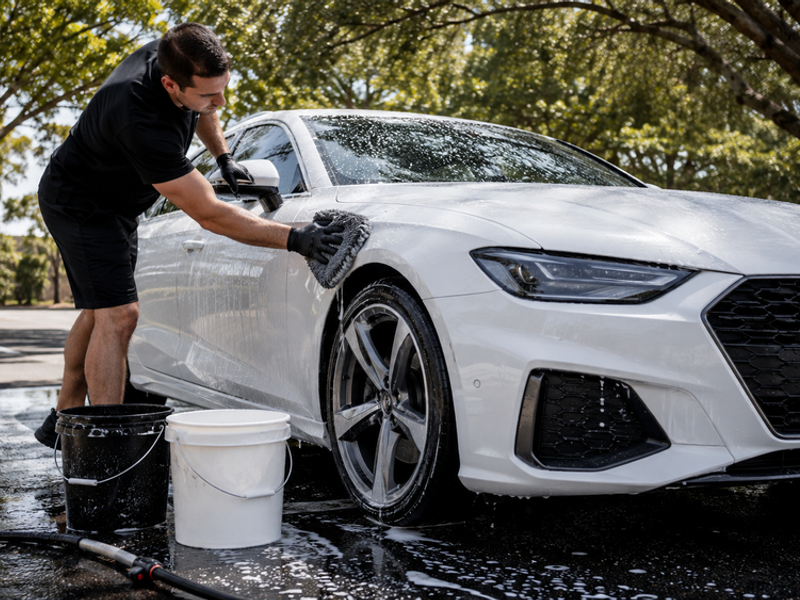
Deploy the Two-Bucket Method: Fill one bucket with clean water and your pH-neutral car shampoo, and fill the second bucket with pure, clean water. Always rinse your dirty wash mitt in the plain water bucket and scrub it against the grit guard before dipping it back into the clean shampoo water. For more detail, see our guide on the two-bucket wash method.
-
Wash Panel by Panel in Straight Lines: Start from the highest points of the vehicle (the roof and glass) and work downward to the dirtier lower sections. Wipe gently in straight, overlapping lines rather than circular scrubbing motions, letting the shampoo's lubrication lift the dirt safely.
-
Rinse Frequently: Do not allow the soapy shampoo solution to dry or sit on the panels. Rinse each section immediately after washing, especially on warm days or dark-coloured cars.
-
Dry Safely with Microfibre: Never let a ceramic-coated vehicle air-dry, as this results in permanent water spots. Use a clean, plush microfibre towel to gently lift residual moisture from the surface.
-
Apply a Ceramic-Safe Drying Aid: Spray a high-quality, ceramic-infused quick detailer onto the panel while drying. This acts as a lubricant to reduce towel friction, adds a temporary layer of sacrificial slickness, and maintains optimal water-beading performance.
Monitoring the Health of Your Ceramic Protection
A healthy, high-functioning ceramic coating should display instant water-sheeting behaviour and tight, uniform water beads. If you notice that water is beginning to pool or sit completely flat on your panels, it doesn't automatically mean your coating has failed. More often than not, the surface is simply choked by an accumulation of environmental pollutants or improper wash residues.
This problem occurs frequently after extensive motorway driving, parking under sappy trees, or using low-grade wash products. Our guide on what happens if you use the wrong waterless wash product explains how product choice can affect paint protection. A specialized decontamination wash using a dedicated iron remover or a mild acidic wash shampoo can safely unclog the pores, fully restoring the coating's original hydrophobicity.
Can You Use a Waterless Wash on a Ceramic Coated Vehicle?
Yes, you can safely use a waterless wash on a ceramic coating, but only when the car is carrying a very light, superficial layer of dust. The low surface energy of a ceramic coating allows dust particles to slide off with minimal resistance.
However, if your car is covered in heavy mud, winter road grit, sand, or thick bird droppings, you must perform a traditional pre-rinse and hand wash. Attempting a waterless wipe-down on heavy contamination will inevitably ground the abrasive grit directly into the finish. Learn more in our guide on when a waterless car wash can damage your paint.
Professional Ceramic Coating Maintenance Solutions
Maintaining a ceramic-coated vehicle requires a strict commitment to proper detailing practices. If your car has developed severe mineral water spots, stubborn road film, or visible swirl marks from previous wash errors, attempting to fix it at home without professional knowledge can permanently ruin the underlying coating.
To protect your automotive investment and save valuable time, consider booking Gleamoo’s mobile Traditional Wash package. This service provides a gentle, expert hand wash designed to safely cleanse coated vehicles without the risk of scratching.
If your vehicle's coating requires a deep chemical decontamination, an inspection, or a high-performance top-layer refresher to restore its glassy properties, explore our specialized Gleamoo Shield Protection options.
To learn more about our experienced team and our paint-safe mobile detailing philosophy, visit the Gleamoo About Us page.
Frequently Asked Questions
How often should I wash a car that has a ceramic coating?
For the majority of drivers in the Sydney area, a routine wash every two to four weeks is ideal. If your vehicle is parked outside overnight, exposed to heavy tree sap, or driven daily through industrial zones, washing it fortnightly is highly recommended to prevent environmental contaminants from bonding to the surface.
Can automatic car washes ruin my ceramic coating?
Yes. Brush-style automatic car washes use heavy, contaminated nylon bristles that will score your coating, dull its shine, and create thousands of microscopic swirl marks. While touchless laser washes avoid physical contact, they rely on extremely high-pH chemical detergents that can slowly strip away the coating's performance over time. A careful hand wash remains the safest maintenance path.
Why has my car stopped beading water after getting ceramic coated?
Loss of water-beading is usually caused by a layer of environmental contamination—such as road film, embedded minerals, or wax detergents—clogging the top layer of the coating. A professional decontamination wash or specialized maintenance treatment will safely dissolve these bonded elements and restore its original hydrophobic properties.
About the Author
Tipsy Batta is passionate about helping Australian car owners keep their vehicles clean, protected, and looking their best. Through Gleamoo, Tipsy focuses on convenient, professional mobile car care that saves time while protecting every customer’s investment.