
Author: Tipsy Batta
Estimated Read Time: 9 minutes
Introduction: The Allure and Challenge of Alcantara Cabin Trims
Alcantara has become one of the most desirable interior materials in premium, performance, and luxury vehicles. You will often find it wrapped around high-touch surfaces like steering wheels, seats, dashboards, door inserts, gear selectors, centre consoles, and roof linings. It is a staple in cars from legendary brands like Porsche, Ferrari, Lamborghini, BMW M, Mercedes-AMG, Audi RS, Tesla Performance models, and high-end custom builds.
It looks highly sporty, feels exceptionally soft, reduces dashboard glare, and gives a cabin that premium motorsport-inspired finish. However, Alcantara is also one of the most misunderstood materials in car interiors. Many owners mistakenly treat it like leather, suede, or regular fabric, which can quickly lead to flattened fibres, shiny patches, staining, rough texture, discolouration, or permanent damage.
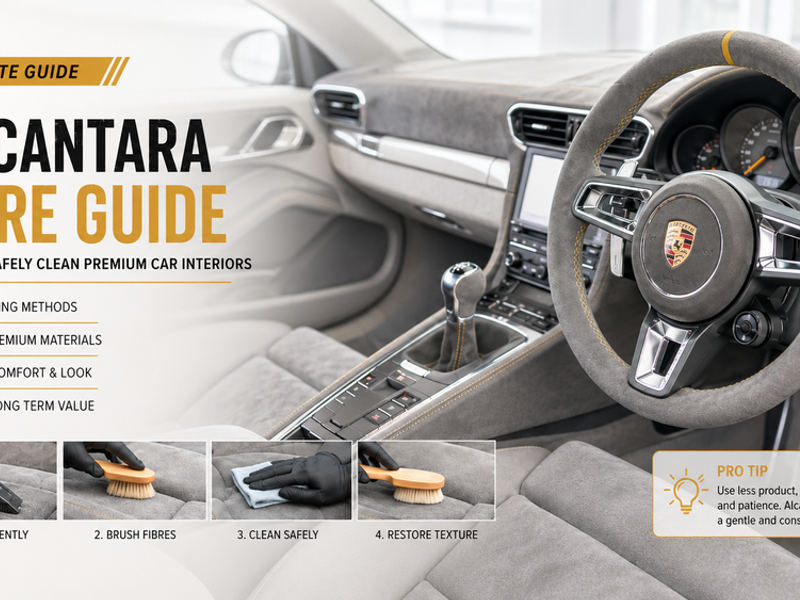
This comprehensive guide explains how to safely clean and maintain Alcantara car interiors, what products and tools to avoid, how different vehicle classes should be treated, and when professional interior detailing is the safer choice. At Gleamoo, we believe premium interiors should be cleaned with patience, the right technique, and a preservation-first mindset—especially when working on high-value vehicles.
What Is Alcantara? (And Why Does It Get Ruined?)
Alcantara is a premium synthetic microfibre material often used in performance and luxury vehicles. It is designed to look and feel similar to suede, but it is not the same as natural suede or leather. This proprietary blend of polyester and polyurethane requires a completely different cleaning approach than traditional animal hides.
Its soft, short-fibre texture acts like a magnet for everyday contaminants. The porous microfibres can easily trap:
-
Skin oils and sweat
-
Dust, dirt, and pollen
-
Sunscreen and makeup
-
Food residue and coffee spills
-
Body oils from bare hands and arms
-
General cabin grime
Over time, this accumulation of grime causes the microscopic pile to flatten and bond together. This buildup makes the Alcantara look darker, greasy, flat, or shiny. On steering wheels and gear selectors, the material often becomes matted because it is touched constantly. On seats, the bolsters and armrests usually wear out first due to consistent friction and body contact.
A proper Alcantara care routine is not about aggressive scrubbing. It is about lifting contamination gently while preserving the material's unique fibre texture.
Why Alcantara Needs Special Care
Alcantara is beautiful, but it is highly sensitive to incorrect cleaning methods. Using a regular all-purpose cleaner, stiff brush, heavy steam cleaner, or soaking the surface can easily cause permanent material failure.
The main risks of incorrect care include:
-
Fibre matting and texture hardening from over-scrubbing
-
Ugly water marks from over-wetting the fabric
-
Patchy colour variation from uneven cleaning techniques
-
Sticky residue from harsh or alkaline chemicals
-
Shiny patches from trapped oils and friction
-
Damage to delicate contrast stitching, perforation, or nearby trim
-
Deep set-in staining if liquid spills are rubbed deeper into the material
This is why Alcantara should be cleaned slowly, lightly, and evenly. The goal is not to make the area wet and foamy; instead, it is all about controlled moisture, gentle agitation, careful extraction, and correct drying.
For a broader interior maintenance routine that covers every square inch of your cabin, you can also read our Ultimate Interior Detailing Guide and check out our comprehensive Interior Detailing Checklist for a Fresh, Cleaner Car.
Alcantara Care for Different Vehicle Classes
Not every vehicle needs the same level of caution or frequency of care. The correct detailing approach depends heavily on the type of car, the material condition, and the owner’s everyday expectations.
Standard and Daily Driver Vehicles: Battling Everyday Grime
In daily drivers, Alcantara is usually exposed to more frequent use. School runs, work commutes, quick meals on the go, pets, gym clothes, sunscreen, and general daily contact all rapidly increase contamination.
For standard or daily-use vehicles, the focus should be on:
-
Material durability and hygiene
-
Odour control and deep fabric freshness
-
Regular light cleaning to prevent oil buildup
-
Keeping the cabin looking fresh and comfortable
A daily driver may not need show-car level restoration every single time, but it absolutely requires consistency. Light maintenance every few weeks is much safer than waiting until the Alcantara becomes greasy, dark, and heavily matted.
This matches the philosophy of regular interior maintenance: the more often you remove contamination safely, the easier it is to maintain the material. Our guide on how often you should detail your car interior explains this preventative maintenance mindset in more detail.
Luxury and Exotic Vehicles: A Strict Preservation-First Mindset
Luxury and exotic vehicles need an entirely different level of precision. A Ferrari, Porsche, Lamborghini, McLaren, Aston Martin, Mercedes-AMG, BMW M, or Audi RS interior should never be treated like a regular commuter car. With these high-value assets, the primary priority is absolute preservation.
When dealing with exotic materials, our goals shift to:
-
Protecting the original factory material texture
-
Avoiding unnecessary chemical strength or harsh detergents
-
Preserving delicate contrast thread and bespoke stitching
-
Preventing pile distortion or thinning of the microfibres
-
Maintaining the vehicle's resale and collector value
-
Avoiding aggressive tools around sensitive carbon fibre or piano black trim
-
Cleaning delicate instrument panels with absolute minimal moisture
In high-end vehicles, Alcantara is often combined with carbon fibre, piano black trim, leather, contrast stitching, aluminium, soft-touch plastics, and delicate switchgear. A mistake in one area can easily ruin multiple expensive surfaces.
For example, overspray from an interior cleaner may leave permanent residue on raw carbon fibre trim. Too much liquid around seat stitching can cause uneven drying or dye bleeding. Aggressive brushing on a steering wheel may permanently flatten the fibres. Harsh chemicals may dry out adjacent leather or dashboard materials.
This is why exotic and luxury interiors require a preservation-first mindset. The aim is not just to clean the car; the ultimate goal is to maintain the originality, tactile feel, appearance, and long-term value of the cabin.
If your vehicle also has premium exterior protection, our article on ceramic coating maintenance mistakes is worth reading, especially if you want to protect both the exterior finish and interior presentation of a high-value car.
How the Australian Climate Affects Alcantara Interiors
Australian environmental conditions can be incredibly harsh on premium automotive interiors. In cities like Sydney, Melbourne, Brisbane, Adelaide, and Perth, vehicle cabins regularly experience high UV exposure, intense interior temperatures, humidity, dry dust, and increased body sweat.
As professional detailers, we frequently see Alcantara heavily affected by local climate factors:
-
Hot steering wheels after parking in the direct Australian sun
-
Rapid sunscreen transfer from hands and arms onto high-touch surfaces
-
Intense sweat buildup during summer driving sessions
-
Fine dry dust and pollen entering through open windows
-
High humidity causing musty odours in poorly maintained cabins
-
Dry, dusty conditions making the fine microfibres feel rough and abrasive
-
Food and drink spills baking and becoming deeply set-in during hot weather
Sydney and Brisbane humidity can make interior surfaces feel sticky if oils and residue are not removed regularly. Perth and Adelaide’s drier heat can make dust buildup more noticeable within the fine weave. Melbourne’s changing weather can bring moisture, rain, mud, and cabin odour issues if mats, carpets, and seats are not cleaned properly.
This is why Alcantara care should be a regular part of a complete interior maintenance plan, not just a one-off emergency clean when something goes wrong. For commonly missed areas throughout your cabin, see our guide on hidden car interior spots most drivers forget to clean.
Avoid These 6 Common Alcantara Cleaning Pitfalls
Before diving into the correct detailing process, it is important to understand what behaviors can permanently ruin your material.
-
Using Leather Cleaner: Alcantara is not leather. Leather cleaners and conditioners are formulated to nourish and oil hides. On Alcantara, these products leave sticky residues, darken the fibres, and create a permanently greasy, ruined finish.
-
Over-Wetting the Material: Too much water or liquid cleaner causes deep water marks, uneven drying, and structural adhesive breakdown. Alcantara should always be cleaned with controlled moisture, never soaked.
-
Scrubbing Too Hard: Aggressive scrubbing friction creates heat that melts the synthetic microfibres, flattening them into permanent shiny patches. Always use gentle, repeated passes instead of heavy pressure.
-
Using a Stiff Bristle Brush: A stiff nylon brush will tear at the delicate microfibre loop structure, causing the material to fray or pill. Use a soft horsehair detailing brush or a dedicated Alcantara brush.
-
Cleaning Only the Dirty Spot: Spot-cleaning one small area often leaves a noticeably clean patch surrounded by older, subtle grime. For highly visible panels like seats or steering wheels, it is always better to clean the entire section evenly.
-
Applying Fabric Protector Without Testing: Some generic fabric protectants can alter the tactile feel or change the appearance of Alcantara. Always test a product in an inconspicuous area first, ensuring it is specifically rated for delicate automotive microfibre.
Professional Step-by-Step Alcantara Cleaning Process
To achieve a factory-fresh finish without risking damage, follow this professional best-practice method used by expert detailers.
Step 1: Inspect the Material First
Before applying any liquid cleaner, inspect the Alcantara carefully. Check for greasy or shiny areas, flattened fibres, stubborn stains, water marks, fraying, loose stitching, colour fading, or wear on bolsters and steering wheels.
Note any nearby leather, carbon fibre, plastic, or buttons. This first step is important because some marks may be permanent physical wear rather than dirt. If the fibres are already worn flat from years of friction, cleaning will improve hygiene but may not fully restore the original plush texture.
Step 2: Dry Vacuum the Area Gently
Start with a thorough, gentle vacuum to remove loose dust, crumbs, and dry grit before they mix with liquid cleaners. Always use a soft horsehair brush attachment with low to moderate suction and light pressure.
Never drag a hard plastic vacuum nozzle directly across Alcantara, as this can score the material or pull out the microfibres. For seats, pay close attention to seams, bolsters, and the deep gap between the seat base and backrest.
Step 3: Lift the Fibres with a Soft Brush
Use a dry, soft detailing brush to gently lift the flattened fibres before wet cleaning. Brush in multiple directions using light pressure. This pre-grooming helps loosen deeply embedded dust and sets up the material for an even clean. Avoid aggressive circular motions; think of it as gently grooming the material pile.
Step 4: Choose a Safe, pH-Neutral Cleaner
Use a dedicated cleaner that is explicitly certified safe for Alcantara or delicate automotive microfibre surfaces. Avoid heavy-duty degreasers, strong all-purpose cleaners, leather conditioners, or silicone-based dressings. For light maintenance, a lightly damp microfibre towel might be enough, but for noticeable contamination, a dedicated Alcantara cleaner is much safer. Always test on a hidden area first.
Step 5: Apply Cleaner to the Towel, Not the Surface
For maximum moisture control, always spray your cleaner onto a clean microfibre towel or a soft brush rather than spraying it directly onto the vehicle's Alcantara panels. This simple technique completely eliminates the risk of over-wetting and unwanted overspray onto surrounding carbon fibre trim, infotainment screens, drive mode selectors, or delicate seat buttons.
Step 6: Clean with Light, Even Passes
Gently wipe or brush the Alcantara in small, manageable sections. Use light pressure and repeat the process if necessary. Work panel by panel on seats, and divide steering wheels into small quadrants (top, sides, bottom, and thumb grips). If the material is heavily soiled, multiple gentle passes are infinitely safer than one aggressive, high-pressure scrub.
Step 7: Blot, Do Not Rub, Stubborn Stains
If you are dealing with a fresh spill, blot it immediately with a clean, dry microfibre towel. Never rub a stain, as rubbing pushes the liquid deeper into the microfibre core. For older stains, apply a controlled amount of cleaner to your tool and gently work from the outside edge of the stain toward the centre to prevent spreading.
Common Alcantara stains include:
-
Coffee and soft drinks
-
Chocolate and food residue
-
Grease and motor oils
-
Sunscreen and makeup
-
Accumulated sweat marks and body oils
-
Dirt transferred from outdoor clothing
Step 8: Wipe Down with a Lightly Damp Towel
After cleaning, take a separate, clean microfibre towel lightly dampened with pure water to wipe down the surface. This crucial step extracts any remaining cleaner residue, preventing the fabric from feeling sticky or stiff once it dries. The towel should be barely damp—if you can squeeze water out of it, it is far too wet.
Step 9: Allow the Material to Dry Naturally
Let the Alcantara air dry naturally in a well-ventilated, shaded area. Open the vehicle doors or windows to encourage gentle, ambient airflow. Never use high heat sources like hair dryers or heat guns, and avoid parking the vehicle in harsh, direct sunlight during the drying phase, as this can warp or harden the synthetic fabric.
Step 10: Re-Brush the Fibres Once Fully Dry
Once the material is completely dry, give it a gentle final brush to lift the nap and restore its signature velvet texture. This final grooming step makes a massive difference, erasing flat spots, evening out the look, and returning that soft, premium matte appearance to the cabin.
Deep-Dive: Caring for High-Touch Alcantara Areas
Different areas of your interior handle completely different types of daily wear and tear, meaning they require specific attention during maintenance.
Restoring an Alcantara Steering Wheel
Alcantara steering wheels require the most frequent attention because they are in constant contact with your skin. They rapidly absorb sweat, sunscreen, natural body oils, hand sanitiser, and environmental dust.
To keep an Alcantara steering wheel looking pristine:
-
Wash your hands before driving whenever possible
-
Avoid driving immediately after applying heavy hand creams or sunscreens
-
Give the rim a quick, light wipe with a dry microfibre towel every week
-
Deep clean the surface gently the moment it begins to feel sticky or look shiny
-
Never apply leather conditioners, slick dressings, or glossy interior protectants
Maintaining Alcantara Seats and Bolsters
Alcantara seats can look excellent for years when maintained correctly. The most vulnerable sections are the side bolsters, the main seat base, and areas where clothing seams create high friction.
To protect your seats long-term:
-
Vacuum the seams and inserts regularly to prevent grit from cutting the fibres
-
Clean accidental spills immediately before they dry out
-
Avoid sitting in the vehicle with damp or sweat-soaked gym clothing
-
Be highly cautious with dark raw denim jeans, which can cause intense dye transfer
-
Avoid dragging heavy belts, bags, or sharp keys across the delicate side bolsters
If your car features a mixed-material interior, remember that each surface must be isolated. Leather sections require distinct cleaning and conditioning, while Alcantara sections must be kept completely free of oily conditioning residues.
Delicate Treatment for Roof Linings and Door Inserts
Roof linings (headliners) and door card inserts are typically put together using delicate adhesives that can dissolve easily under improper cleaning conditions.
When maintaining a headliner:
-
Use absolute minimal moisture to prevent sagging
-
Avoid applying heavy upward pressure that can crease the internal backing board
-
Never use an extraction machine or heavy steam on a roof lining
-
Clean small sections at a time using gentle, controlled blotting motions
For door inserts, always watch out for nearby speaker grilles, window switches, and ambient lighting strips. Avoid cleaner overspray near electronics, and clean the fabric evenly across the entire panel to prevent patchy, drying ring marks.
How Often Should You Clean Your Alcantara Interior?
The perfect cleaning frequency depends entirely on how your vehicle is driven. Keeping a consistent schedule makes the material much easier to preserve over time.
For daily driver vehicles:
-
Gentle vacuum and dry brush: Every 1 to 2 weeks
-
Light microfibre wipe-down: Monthly
-
Targeted deep clean: Every 3 to 6 months, depending on wear
For luxury, exotic, or weekend-only vehicles:
-
Light dusting and inspection after major drives
-
Gentle vacuum and soft brush: Monthly
-
Specialized deep clean: Only when visible dullness or oil accumulation appears
-
Professional detailing: Prior to vehicle resale, car shows, or long-term storage
For high-performance track cars:
-
Wipe down the steering wheel and main contact points after every single track event
-
Remove sweat, oils, and glove residue as quickly as possible
-
Brush the microfibres gently after drying to prevent high-friction matting
The Expert Verdict: Can Mated Alcantara Be Fully Restored?
Sometimes yes, but it depends heavily on the true condition of the pile. If the Alcantara is simply dirty, oily, or compressed from regular use, a professional cleaning can improve its appearance dramatically, restoring its soft touch and uniform color.
However, if the material has been subjected to years of aggressive friction and neglect, the microfibres can become physically worn, frayed, or permanently bald. In these advanced scenarios, professional detailing can maximize hygiene and clean the remaining fabric, but a total replacement or specialist upholstery repair is required for a flawless factory finish. This highlights why a preservation-first mindset is so critical for exotic and collectible cars.
Alcantara cleaning should never be done in total isolation. The rest of your cabin environment heavily impacts the material. Airborne dust from unvacuumed carpets, dirty floor mats, greasy dashboard plastics, and clogged air vents will quickly resettle onto your freshly cleaned Alcantara.
A proper cabin maintenance routine should look at the bigger picture. For a complete care approach, read our comprehensive guide on Full Interior & Exterior Detail FAQs or explore our article breaking down the most overlooked interior spots drivers forget to clean. If you are preparing a high-value asset for the market, an immaculate interior is paramount; you can learn expert presentation tips in our Ultimate Pre-Sale Detail Guide for Australian Cars.
Your Essential DIY Alcantara Care Checklist
For safe, routine home maintenance, keep this quick checklist handy before you begin:
-
Vacuum the material gently using a soft horsehair brush attachment
-
Dry brush the pile lightly in multiple directions to loosen debris
-
Always use clean, high-quality microfibre towels to prevent cross-contamination
-
Spray your specialized cleaner onto the towel, never directly onto the car panels
-
Work systematically in small, deliberate sections
-
Avoid over-wetting or soaking the fabric layers
-
Apply light, consistent pressure rather than heavy friction scrubbing
-
Wipe away excess cleaner residue using a clean, lightly damp towel
-
Allow the entire cabin area to air dry naturally away from direct sun
-
Use a dry brush to groom and lift the microfibre nap once completely dry
For broader vehicle wash safety and long-term paint protection, you may also find our professional guides on why microfiber towels matter, common hand washing mistakes that can damage car paint, and why hand washing is still the safest car wash choice incredibly helpful.
Alcantara Maintenance Frequently Asked Questions
Can I use leather cleaner on Alcantara?
No, you should never use leather cleaner on Alcantara. Alcantara is a synthetic microfibre blend of polyester and polyurethane, not an animal hide. Leather cleaners and conditioners contain oils and smoothing agents designed to absorb into leather, which will clog Alcantara microfibres, flatten the pile, and leave a greasy, ruined residue.
Why does my Alcantara steering wheel look shiny?
A shiny Alcantara steering wheel is a direct sign of contamination from compressed body oils, sweat, dirt, and flattened fibres. When these elements accumulate, they glue the microscopic microfibre loops together into a flat, glossy shell. Gentle cleaning with a pH-neutral cleaner and a soft brush can lift these oils and restore the matte finish, provided the fibres aren't permanently worn away.
Is Alcantara hard to maintain over time?
Alcantara is remarkably easy to maintain if you practice light, regular, and gentle care. The material only becomes difficult to manage when it is neglected for long periods, allowing oils to harden, or when owners use aggressive chemicals, over-saturate the fabric, or scrub too hard. Prevention is the key to keeping it looking premium.
When to Call the Pros: Gleamoo Premium Car Detailing
While DIY maintenance works beautifully for routine dusting, deep material decontamination requires specialized tools, chemistry, and experienced patience. This is particularly true for luxury and exotic vehicles where a single mistake can result in thousands of dollars in interior replacement costs.
At Gleamoo, we understand that high-value interiors require an incredibly meticulous, preservation-first approach. Whether your vehicle is a daily commuter, a family SUV, a performance sedan, or an exotic collector car like a Porsche, Ferrari, or Lamborghini, our mobile detailing teams deliver pristine results right to your doorstep using controlled, material-safe techniques.
For premium Alcantara restoration and deep cabin decontamination, the best-suited option is our comprehensive Deep Detailing service. You can instantly book your appointment here:
If your vehicle requires comprehensive exterior care alongside interior preservation, feel free to explore our specialized packages:
If you lack the specialized gear, correct chemicals, or time required to safely clean delicate interior materials, booking a professional detail is the smartest choice to protect the look, tactile feel, comfort, and long-term market value of your vehicle.
About the Author
Tipsy Batta, Team Gleamoo, is passionate about helping Australian drivers care for their vehicles with safe, practical, and professional detailing advice. Through Gleamoo, Tipsy focuses on making high-quality car care more convenient, educational, and accessible—whether it is a daily driver, a family car, a luxury vehicle, or an exotic performance machine.