
Author: Tipsy Batta
Estimated Read Time: 4 minutes
If your car looks dull, scratched, swirled, or simply "clean but still not shiny," you are likely wondering whether it needs detailing or paint correction. While these two services are frequently confused, they solve completely different automotive problems.
In short, car detailing focuses on deep cleaning and reconditioning your vehicle inside and out, while paint correction is a specialized mechanical process that permanently removes scratches and swirl marks from your clear coat.
Understanding the differences between these two methods can save you money, preserve your vehicle's factory clear coat, and help you maintain that showroom gloss for years to come.
What Is Car Detailing?
Car detailing is an intensive cleaning, restoration, and finishing process designed to topically refresh both the interior and exterior of a vehicle. Unlike a standard car wash, detailing targets built-up road grime, environmental contamination, and embedded dirt in hard-to-reach areas to maximize cosmetic presentation.
A comprehensive detailing service typically covers door jambs, wheels, wheel arches, glass, exterior plastics, trim pieces, and a meticulous interior overhaul.
What Detailing Fixes
A quality detail is your best option if your vehicle suffers from everyday wear and tear. It breathes new life into messy cabins, eliminates stubborn seat stains, targets deep-set carpet dust, and cleans areas standard washes miss entirely. For a comprehensive look at what to expect, you can read Gleamoo’s guide to full car detailing done right or explore our deep dive into the ultimate interior detailing guide.
What Is Paint Correction?
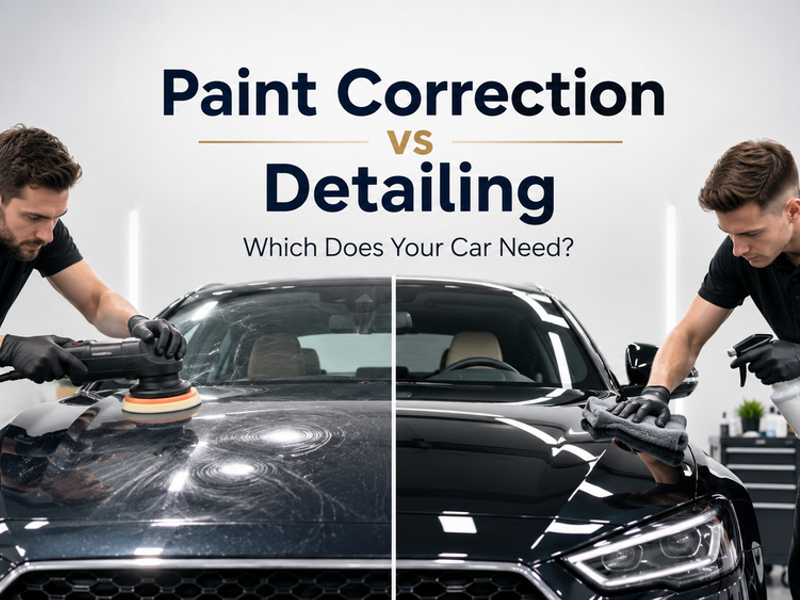
Paint correction is a highly technical leveling process that restores a vehicle’s exterior paintwork by eliminating surface imperfections. This is achieved using specialized dual-action or rotary machine polishers, heavy leveling compounds, fine polishing pads, and specialized inspection lighting.
Unlike detailing products that temporarily mask defects, paint correction physically shaves down microscopic layers of the clear coat until the surface is level with the bottom of the scratches.
Common Defects Resolved by Paint Correction
-
Swirl Marks: Circular micro-scratches caused by improper washing techniques.
-
Oxidation: Faded, cloudy paint caused by prolonged exposure to UV rays.
-
Water Spots: Etched mineral deposits from hard water or acid rain.
-
Holograms: Ghost-like trails left behind by untrained machine polisher operators.
Because it physically thins your clear coat, paint correction demands extreme patience, precision, and diagnostic experience. Done incorrectly, a machine polisher can burn through paint edges, leave permanent buffer trails, or cause irreparable clear coat failure.
Paint Correction vs Detailing: The Key Differences
The easiest way to differentiate the two is by their primary objective: detailing cleans and refreshes your car, while paint correction restores the physical paint finish.
A standard detail removes surface traffic film and bonded grime, but it will not eliminate micro-scratches or swirl marks. Conversely, a pure paint correction focus is strictly tied to clear coat enhancement, meaning it won’t address a stained carpet or a dusty dashboard.
Scenario Breakdown
-
Choose Detailing If: Your car has a lingering cabin odor, muddy floor mats, dusty air vents, or generic road film on the exterior.
-
Choose Paint Correction If: Your vehicle is freshly washed but still looks cloudy, lacks sharp reflections under direct sunlight, or is covered in spiderweb-like circular scratches.
Defect prevention is closely linked to how you maintain the exterior surface weekly. Most paint damage occurs during the wash phase. Gleamoo has analyzed this extensively in guides comparing hand wash vs automatic car wash, explaining why hand washing is still the safest choice, and uncovering common hand washing mistakes that damage paint.
Local Detailer Experience in Sydney
Operating across Sydney provides a unique perspective on paint degradation. Local vehicles face a harsh cocktail of intense coastal UV rays, heavy dust storms, industrial fallout, and corrosive bird droppings.
We frequently meet clients who believe their vehicle simply needs a thorough wash to look new again. However, once the superficial dirt layer is safely stripped away, the underlying reality of heavy swirl marks and solar oxidation becomes clear. Vehicles parked outdoors daily in Western Sydney are particularly vulnerable, experiencing accelerated clear coat dehydration and severe paint dullness due to extreme heat exposure.
DIY Paint Assessment: What You Can Safely Do First
Before booking a multi-stage machine correction, you can safely perform a baseline paint assessment and decontamination process right in your driveway.
Tools Needed
-
pH-neutral car shampoo
-
Plush microfiber wash mitt
-
Two wash buckets equipped with grit guards
-
Soft microfiber drying towels
-
A strong LED inspection light or direct sunlight
-
Paint-safe quick detailer spray
-
Clean, high-gsm microfiber cloths
-
An ultra-fine clay bar or clay mitt
-
Automotive masking tape for sensitive rubber trim
Estimated Time: 1.5 to 3 hours, depending on the condition of your vehicle.
Safe Steps to Follow
-
Perform a Safe Wash: Clean the vehicle thoroughly using the two-bucket method to prevent cross-contamination.
-
Dry Safely: Use clean, premium microfiber drying towels. Never let your car air-dry, as this leaves mineral deposits that cause severe water spotting.
-
Conduct a Visual Inspection: Position the vehicle under direct sunlight or a specialized LED light. Look closely for spiderweb patterns, deep isolated scratches, and a milky or hazy appearance.
-
Perform the Touch Test: Run your hand gently over the clean paint surface. If the panels feel rough like sandpaper, you have bonded environmental contaminants that a normal wash cannot remove.
-
Decontaminate with Caution: If needed, use a clay bar paired with ample quick detailer as a lubricant to pull embedded contaminants out of the pores of the paint. Work with light pressure.
-
Protect the Clear Coat: Avoid using heavy retail cutting compounds by hand. Modern factory clear coats vary wildly in thickness, and hand-rubbing compound into paint can create uneven, deep marring.
-
Know Your Limits: If prominent defects remain visible after a safe wash and clay decontamination, it is time to stop and consult a professional rather than experimenting blindly with a machine polisher.
Pro-Tip: Never attempt to machine polish dirty or contaminated paint surfaces. Polishing over trapped grit particles acts like sandpaper, grinding heavy scratches directly into your finish.
If you invest the time into correcting your paint, your next step should always be locking in that flawless clarity. You can learn more about preserving your finish by checking out the ultimate ceramic coating guide and reviewing our ceramic coating vs wax guide.
When Detailing Is Enough
An exterior and interior detail is completely sufficient if your primary goal is cosmetic upkeep, deep cabin hygiene, or maximizing vehicle resale value. If you want to eliminate cabin odors, remove seat stains, dress faded exterior plastics, and make your daily driver feel factory-fresh, detailing delivers the highest return on investment. If you are preparing your vehicle for the market, an aesthetic refresh is crucial, as highlighted in Gleamoo’s pre-sale detail guide.
When Paint Correction Is the Better Choice
Paint correction is the necessary path when your vehicle suffers from deep visual defects that compromise its reflection and gloss. Because this mechanical process shaves down a micro-layer of clear coat, it should be approached with precision. Entrusting this to an expert acts as a vital safety net, particularly for soft European clear coats, vintage single-stage paint, dark finishes, or vehicles that have undergone previous polishing treatments.
Professional Assistance & Call to Action
While DIY inspections and maintenance washes are excellent habits, correcting deep paint defects safely requires professional equipment and diagnostic skills.
If your vehicle needs a comprehensive, deep-cleansing reset inside and out, the ideal starting point is booking Gleamoo’s Deep Detailing package. For vehicles with paint that has already been corrected or for owners looking to maximize long-term environmental resistance, investing in our specialized Shield Protection ensures your car stays looking exceptional for the long haul.
Frequently Asked Questions
Is paint correction the same as polishing?
Not exactly. Polishing is an active step within a paint correction workflow. A true paint correction service involves deep paint depth measurement, specific pad and compound mapping, controlled machine speed adaptation, and systematic defect elimination to safely maximize gloss without over-thinning the clear coat.
Can detailing remove scratches?
No, standard detailing cannot remove physical scratches. Detailing cleans the surface and can apply fillers or waxes that temporarily mask minor flaws, but it does not level the clear coat. True scratch and swirl removal requires the mechanical leveling power of paint correction.
Should I get paint correction before ceramic coating?
Yes. A ceramic coating acts as an ultra-clear, hardened glass layer that seals your paintwork. If you apply a coating over swirl marks, oxidation, or haze, you permanently lock those defects under the protective layer. Correcting the paint first ensures maximum gloss and optimal coating adhesion.
About the Author
Tipsy Batta is an automotive care expert dedicated to helping daily drivers understand how to preserve and protect their vehicle investments. Through Gleamoo, Tipsy focuses on delivering transparent, convenient, and highly professional mobile detailing and paint protection services tailored to the demanding Australian climate.