
Author: Tipsy Batta
Estimated Read Time: 4 minutes
Why Coffee Stains on Car Seats Are So Tricky to Clean
Spilling coffee in the car is incredibly frustrating, especially when it lands directly on fabric seats, premium leather trim, porous carpets, or contrast stitching. Coffee is much more than "dirty water." It is a complex mixture of organic tannins, heavy oils, sugars, milk proteins, and artificial flavorings.
While black coffee causes deep brown staining due to its intense natural pigments, milk-based coffees create a breeding ground for bacteria and sour odours if the liquid seeps down into the dense underlying seat padding. Furthermore, sugary syrups leave behind a sticky residue that actively acts like a magnet for daily dust, sand, and shoe grime.
The good news is that if you act quickly and use a methodical process, you can safely lift coffee stains without damaging your vehicle's delicate interior materials. As explained in Gleamoo’s Ultimate Interior Detailing Guide, the safest, most successful result comes from cleaning the immediate surface layer while simultaneously extracting the liquid that has soaked deeply below it.
The Local Detailer's Experience: Why Time Is Critical in Sydney
One of the most common interior detailing emergencies we see around Sydney is a driver spilling a morning takeaway coffee due to sudden braking or unexpected traffic snarls.
In the intense Australian heat, a spill can bake into fabric fibers within just a few hours. This rapid evaporation causes the stain to bond permanently with the material. Furthermore, milk-based coffee variants begin to turn sour and emit strong odours much faster when trapped inside a sealed, sun-baked cabin. The sooner you treat the spill, the higher your chances of achieving a flawless recovery.
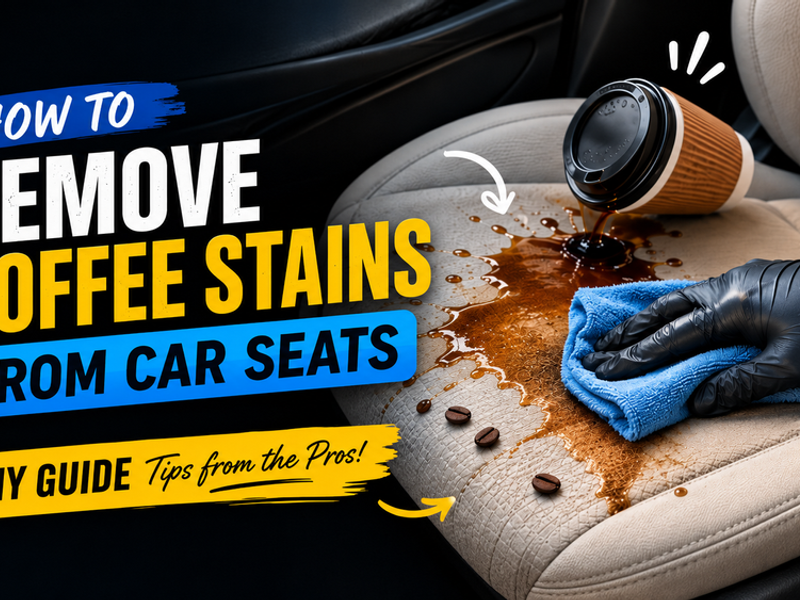
DIY Guide: How to Safely Remove Coffee Stains from Your Car Interior
Before you start cleaning, assemble the right gear to ensure you do not make the blemish worse or accidentally bleach your upholstery.
Essential Tools and Materials
-
Clean, highly absorbent microfiber towels
-
Cold water (avoid hot water, which can permanently cook and set milk proteins)
-
Mild upholstery cleaner or a dedicated pH-neutral interior cleaner
-
Soft-bristled detailing brush
-
Clean spray bottle
-
Wet/dry shop vacuum or home carpet extractor (if available)
-
Automotive leather cleaner and conditioner (for leather seating surfaces)
-
White vinegar (optional, for natural odour neutralisation)
-
Disposable gloves
Estimated Project Time
Expect to spend roughly 20 to 40 minutes treating a fresh stain. Older, dried-in coffee marks or spills that have deeply penetrated the seat cushion foam will likely require repeated applications or a professional-grade deep chemical extraction.
Step 1: Blot the Liquid Immediately—Do Not Rub
Take a clean microfiber towel, place it flat over the spill, and press down firmly to draw the coffee upward into the fabric. Always blot from the outer edges of the spill toward the center to keep it contained. Never rub or scrub a fresh liquid spill aggressively. Rubbing forces the liquid deeper into the underlying cushion foam and spreads the pigments sideways, significantly expanding the overall stain size.
For a deeper look into why specific cloth textures impact your car's surfaces, see Gleamoo’s guide on why microfiber towels matter. The exact same principles hold true inside the cabin: soft, plush, highly absorbent towels maximize liquid pickup while drastically reducing fabric friction and fraying.
Step 2: Dilute the Remaining Coffee with Cold Water
Lightly mist the stained area with clean, cold water using a spray bottle. Be careful not to completely saturate or flood the seat. The specific goal here is to thin out the remaining sticky coffee residue without driving it further down into the underlying padding. Once misted, immediately blot the surface again using a fresh, dry microfiber towel.
Step 3: Apply a Dedicated Automotive Interior Cleaner
Spray a small amount of your specialized upholstery cleaner directly onto a clean towel or your soft-bristled detailing brush—never spray chemical cleaners directly onto the seat surface itself. Work the cleaner gently into the fabric using tight, overlapping circular motions. This lifts the sticky sugars and stubborn oils out of the woven fibers.
For leather seats, utilize a pH-balanced leather-safe cleaner exclusively. Avoid harsh household multi-purpose sprays, alkaline dishwashing liquid, laundry bleach, or industrial degreasers, as these strip away natural leather oils and cause cracking.
Premium suede finishes require highly specific care to avoid ruining the delicate nap. If your car features these custom materials, be sure to read Gleamoo’s Alcantara Care Guide before you attempt any DIY stain removal.
Step 4: Blot and Extract the Residue
After the cleaner has successfully loosened the coffee particles, blot the entire zone with a clean, lightly damp microfiber cloth to remove the soap residue. If you have access to a wet/dry vacuum or a home carpet extractor, thoroughly vacuum the area using firm downward pressure. Extraction is incredibly helpful for milk coffee spills because it physically pulls the hidden liquid right out from deep inside the seat foam.
Step 5: Dry the Seat Panels Thoroughly
Park your car in a safe, well-ventilated, shaded area and leave the doors or windows cracked open for a few hours. Ensuring the seat dries completely prevents musty smells from forming. Avoid parking the car in direct, boiling sunlight while the seats are still wet, as extreme heat can accidentally set any trace coffee pigments that were missed during cleaning.
Pro-Tip: Treat the Whole Seat Panel, Not Just the Spot
If you only clean the exact circle where the coffee spilled, you will often create a conspicuously bright, ultra-clean patch surrounded by the seat's natural, everyday dust layer. Lightly cleaning the entire fabric panel ensures the seat dries with an even, seamless finish. This visual consistency is a major reason why professional detailers always clean the surrounding zones rather than spot-cleaning a lone mark.
To keep the rest of your cabin looking as pristine as your newly cleaned seat, Gleamoo’s Interior Detailing Checklist provides an excellent step-by-step roadmap for keeping carpets, air vents, and hidden storage bins fresh.
When Home Remedies and DIY May Not Be Enough
A quick DIY response works brilliantly for fresh, basic spills. However, professional detailing becomes the much safer, more reliable option when the coffee stain is old and baked in, contained high amounts of sugar and dairy, emits a distinct sour smell, or has thoroughly saturated the inner core of the seat cushion.
Deep, historical stains generally require commercial hot-water extraction machinery, advanced enzyme-based cleaning chemistry, targeted deodorizing agents, and professional air-movers to dry the cabin safely without creating structural mildew.
Furthermore, hidden coffee residue can slowly become a hygiene issue over time if it is left to rot inside the fabric weave. Gleamoo’s article on removing car interior germs and bacteria safely explains exactly why maintaining a sanitary cabin environment is about your long-term health and well-being, not just cosmetic appearance.
Professional Mobile Car Detailing Options
While DIY cleaning is an excellent immediate first aid step for your car, complex or heavily dried-in stains often demand professional tools. If the spill has spread widely across your cabin or left a persistent, unpleasant odor, Gleamoo can quickly restore your vehicle's interior.
For tough coffee spills, our specialized Deep Detailing package is the ideal solution. This service focuses on deep chemical stain extraction from fabric seats, deep carpet shampooing, and thoroughly sanitizing embedded grime from your padding.
Gleamoo takes the stress out of vehicle maintenance by bringing professional mobile detailing standards right to your doorstep, saving you time while keeping your car looking and feeling brand new. If you would like to know more about our commitment to quality mobile vehicle care across Sydney, you can learn all about our background and core service values directly on our About Us page.
Frequently Asked Questions
Can coffee stains become permanent on car seats?
Yes. If coffee contains dark roasting pigments, heavy dairy proteins, or thick sugars and is left to sit untreated, it can permanently discolor car upholstery. Daily exposure to cabin heat, direct sunlight, and the repeated physical pressure of sitting on the seat pushes the pigments deeper into the fibers, eventually setting the stain permanently.
Can I use vinegar to remove coffee stains?
A mild solution of white vinegar mixed with equal parts cold water can help break down coffee tannins and naturally neutralize sour dairy odours. However, it must be used sparingly. Flooding a seat with vinegar can leave behind a strong, pungent scent that is difficult to clear, and it can occasionally alter the color of highly sensitive, unsealed fabrics. Always spot-test a hidden area first.
Is professional detailing worth it for a single coffee stain?
For a tiny, fresh splash of black coffee, a quick DIY cleanup is usually completely sufficient. However, if you are dealing with a large milk-based spill, a sticky syrup stain, or a spill on premium leather or Alcantara upholstery, professional mobile detailing is highly recommended. It completely eliminates the risk of accidentally spreading the stain, bleaching the cloth, or causing hidden mold growth inside your seat padding.
About the Author
Tipsy Batta is an automotive care enthusiast dedicated to helping Australian vehicle owners keep their cars perfectly clean, healthy, and protected. Through Gleamoo, Tipsy provides practical, straightforward car care advice, maintains professional mobile detailing standards, and delivers convenient on-site detailing solutions that take the hard work out of routine vehicle maintenance.