
Author: Tipsy Batta
Estimated Read Time: 4 minutes
Why Cigarette Smoke Smell Is So Stubborn to Remove
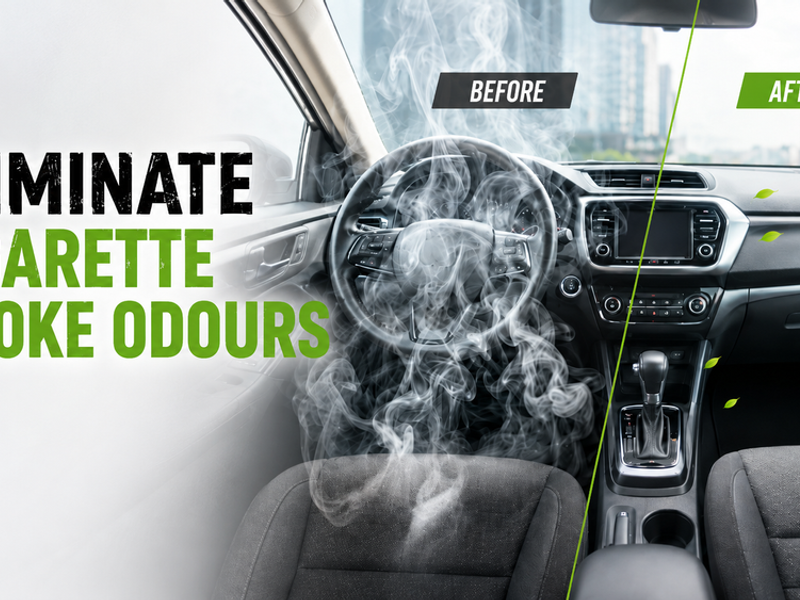
Cigarette smoke odour is notoriously one of the hardest smells to remove from a car interior. It does not just sit loosely in the air; it chemically bonds to fabrics, carpets, the roof lining, seat foam, plastics, ventilation vents, and the entire air conditioning system.
While a quick hanging air freshener or perfume spray might mask the scent for a day or two, the offensive smell almost always returns the moment the vehicle sits under the hot sun. This happens because cigarette smoke leaves behind a complex mixture of heavy tars, chemical nicotine residue, micro-ash particles, and oily vapours. These settle into soft surfaces and form a sticky, microscopic film across hard surfaces like the dashboard, steering wheel, centre console, door trims, and window glass.
Eliminating tobacco smoke requires a completely different approach from cleaning a localized spill. While a standard stain usually impacts a single patch of fabric, smoke contamination spreads completely through the entire cabin. If you have recently dealt with localized liquid spills alongside smoke issues, our guide on how to remove coffee stains from car seats properly is a highly helpful related read.
The Local Detailer's Experience: Why Sydney Heat Makes Smoke Worse
When detailing vehicles across Sydney, we frequently notice that cigarette smoke smells become significantly more overpowering after a vehicle has been parked directly in the sun. Intense cabin heat reactivates the trapped tar and nicotine molecules embedded within the seat fabric, foam cushions, and porous roof lining.
Furthermore, during humid coastal weather, the moisture in the air causes these odour particles to linger heavily in the cabin, creating a thick, stale environment. This issue is particularly problematic in regional used cars, busy rideshare vehicles, work trucks, and family cars where the windows are kept rolled up most of the time.
DIY Guide: How to Safely Remove Cigarette Smoke Odours
To completely eliminate smoke odours rather than just hiding them, you must systematically clean the oily residue off every square inch of the interior.
Essential Tools and Materials
-
Vacuum cleaner with a narrow crevice tool
-
Multiple clean microfibre towels
-
Soft-bristled detailing brush
-
Interior-safe all-purpose cleaner (APC)
-
Dedicated automotive fabric or upholstery cleaner
-
Ammonia-free glass cleaner
-
Pure baking soda
-
Commercial odour-neutralising spray (not a masking perfume)
-
A new cabin air filter replacement
-
Disposable gloves
-
A bucket of clean water
Estimated Project Time
Allow roughly 2 to 4 hours for a thorough DIY smoke odour decontamination. If the vehicle has been smoked in heavily for several months or years, a standard home cleanup will likely serve as a preliminary step before a professional interior extraction is required.
Step 1: Remove All Loose Items and Trash
Start by completely clearing out all floor mats, old trash, paper receipts, food wrappers, loose ash, and personal items. Check meticulously under the seats, inside door pockets, within the centre console storage bins, and inside the boot. Smoke particles drift and settle into the most hidden crevices imaginable. To ensure you do not miss a spot, consider reviewing our guide on hidden car interior spots most drivers forget to clean.
Step 2: Vacuum Every Surface Thoroughly
Vacuum the seats, underlying carpets, removable floor mats, the boot, seat rails, and the deep gaps between the cushions. Use your narrow crevice tool around the seat seams and right under the foot pedals. This step physically extracts dry ash particles and loose tobacco residue before you introduce any liquid cleaning sprays.
Step 3: Wipe Down Hard Surfaces and Consoles
Wipe the dashboard, steering wheel, gear selector, door panels, inner handles, buttons, cup holders, and centre console down with your interior-safe cleaner. Never spray liquids directly onto electronic screens or buttons. Because cigarette smoke leaves a sticky, tar-based film, flip your microfibre towels frequently to fresh sides so you are actively lifting the residue away rather than smearing it around.
For a broader breakdown of general cabin upkeep, see our ultimate interior detailing guide.
Step 4: Decontaminate the Interior Glass
Nicotine film builds up heavily on interior window glass, often creating a yellow, hazy fog. Spray an ammonia-free glass cleaner onto a microfibre cloth and clean the inside of all windows, paying close attention to the front windscreen and rear glass. You will likely need to clean the glass a second time because oily smoke residue tends to smear on the first pass.
Step 5: Treat Fabric Seats, Carpets, and Mats
Apply an upholstery-safe cleaner to your fabric seats, carpets, and floor mats. Work the cleaning solution gently into the fibers using a soft-bristled detailing brush, then immediately blot the area dry with a clean microfibre towel. Avoid over-wetting or flooding the seats; if moisture soaks too deeply into the internal seat foam padding, it can become trapped and create musty damp smells.
If your car features custom suede-like trim or premium Alcantara, do not scrub aggressively. Our specialized Alcantara care guide for premium interiors explains exactly why delicate materials require a much gentler touch.
Step 6: Gently Clean the Roof Lining
The car's headliner (roof lining) acts like a massive sponge for rising smoke particles, holding a significant portion of the lingering smell. However, the headliner is incredibly delicate. Introducing excessive moisture or aggressive friction can dissolve the backing glue, causing the fabric to sag permanently. Lightly mist a clean microfibre towel with your cleaner and gently wipe the surface. Never spray cleaners directly onto the roof lining itself.
Step 7: Use Baking Soda to Absorb Residual Smells
Once all surfaces are clean and damp areas have dried, sprinkle a light layer of pure baking soda over the floor carpets and fabric floor mats. Close all the windows and doors, allowing the baking soda to sit overnight to absorb lingering airborne odours. The following day, vacuum the carpets thoroughly to remove all the powder.
Step 8: Replace the Cabin Air Filter
A large percentage of cigarette smoke odour sits trapped directly inside the air conditioning system's filtration pleats. If your car has a cabin air filter, replacing it is absolutely essential to stop stale air from blowing back into the car. After replacing the filter, run your air conditioning system on "fresh air mode" with the fans on high for several minutes to flush out the ventilation lines.
Pro Tip: Do Not Just Mask the Smell
Avoid relying on hanging tree air fresheners, heavy perfumes, or highly scented aerosol sprays. These fragrances simply mix with the existing tobacco tar particles, creating an even more unpleasant, heavy smell. Your main objective must always be removing the physical residue first, followed by a dedicated chemical odour neutraliser.
When Home Remedies and DIY Are Not Enough
If a vehicle has been smoked in consistently over a long period, basic DIY cleaning steps will likely only reduce the odour rather than eliminating it completely. Smoke compounds travel deep into inner seat foam cores, seatbelt webbing, rear parcel shelves, and buried ductwork.
Attempting to scrub these areas aggressively without commercial tools can quickly lead to ruined fabrics, scratched dashboard plastics, or a sagging roof lining. Furthermore, a proper interior detail is highly beneficial before selling a car, as lingering smoke odours instantly turn potential buyers away. Pairing professional odour removal with an aesthetic presentation clean can dramatically improve your vehicle's resale value. For more tips on maximizing your car's market appeal, read our pre-sale detail guide for Australian cars.
Professional Mobile Car Detailing Options
While DIY cleaning is a fantastic starting point for light surface odours, severe or long-standing smoke contamination usually requires commercial intervention. If the tobacco smell keeps returning on hot days, Gleamoo can help restore your cabin environment.
For cigarette smoke issues, the most effective option is the Gleamoo Deep Detailing package. This comprehensive service targets the deepest layers of your cabin, utilizing advanced cleaning techniques to safely extract embedded contaminants from seats, carpets, mats, roof linings, and hard-to-reach crevices. Rather than masking the issue, our detailing philosophy focuses on removing the root source of the odour completely.
Gleamoo brings this professional level of automotive restoration directly to your location, saving you time and hassle. To learn more about our background, our team, and how we help Australian drivers keep their vehicles in pristine condition, please visit the Gleamoo About Us page.
Frequently Asked Questions
Can cigarette smoke smell be completely removed from a car?
Yes, in the vast majority of cases, cigarette smoke can be successfully removed. However, the total success rate depends heavily on how many years the vehicle was exposed to smoke. Light to moderate odours can be cleared through meticulous surface cleaning and air filter changes. Severe, long-term contamination may require commercial thermal fogging, deep hot-water extraction, and specialized chemical neutralisers to fully clear the smell.
Why does the smoke smell come back after I clean the car?
Smoke odours typically return because the invisible, oily tar and nicotine residues are still trapped deep inside the internal seat foam, inside the climate control vents, or within the delicate roof lining fibers. When the car sits parked outside, solar heat expands these materials, reactivating the trapped particles and releasing the stale smell back into the cabin air.
Is ozone treatment safe for removing smoke odours from cars?
Ozone treatments can be highly effective at breaking down organic odour molecules, but they must be handled with extreme care by a trained professional. Ozone gas is highly toxic to humans and pets, and leaving a machine running for too long can degrade internal rubber seals and delicate wiring insulation. Furthermore, ozone should only be used as a final step after all physical tar, nicotine film, and ash residue have been thoroughly cleaned from the interior surfaces.
About the Author
Tipsy Batta is a dedicated car care specialist focused on helping Australian vehicle owners keep their cars beautifully clean, fresh, and comfortable. Through Gleamoo, Tipsy provides practical detailing advice, maintains elite professional service standards, and shares straightforward, convenient solutions that simplify car maintenance for everyday drivers across the country.