
Author: Tipsy Batta
Estimated Read Time: 5 minutes
Bird droppings and tree sap are two of the most frustrating paint hazards Australian drivers face daily. While they look like minor cosmetic annoyances at first, leaving them on your vehicle for too long allows them to stain, bake, and deeply etch into your clear coat.
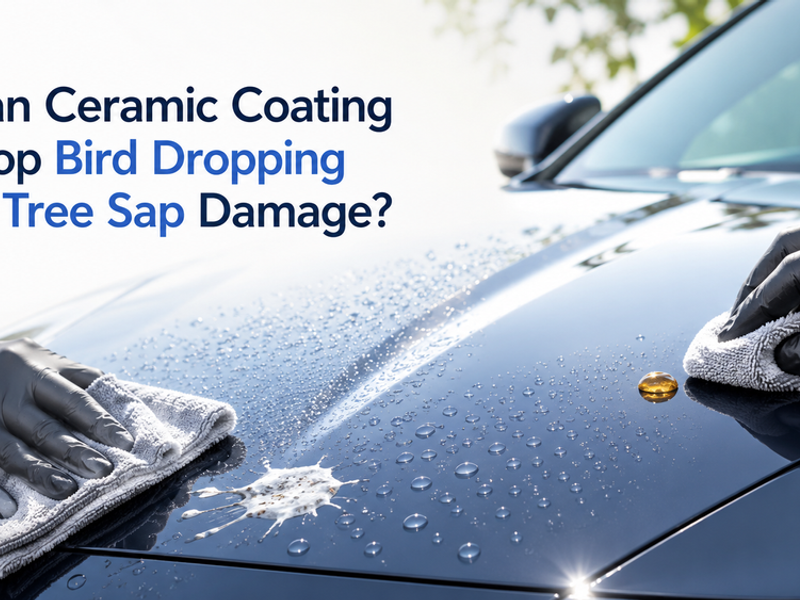
So, can ceramic coating stop bird dropping or tree sap damage completely? No, ceramic coating cannot completely stop bird poo or tree sap damage, but it acts as a highly resilient sacrificial barrier. The coating drastically slows down chemical etching and prevents contaminants from bonding aggressively, giving you a much wider window of time to clean them off safely.
While it offers elite paint protection, a ceramic coating is not completely bulletproof. Prompt cleaning and proper maintenance habits are still essential to shield your paintwork from permanent damage.
What Ceramic Coating Actually Does for Your Paint
A professional ceramic coating is a liquid polymer that chemically bonds with your vehicle's factory clear coat, creating a semi-permanent, glass-like layer of defense. This ultra-slick, hydrophobic (water-repelling) shield radically alters how environmental contaminants interact with your vehicle’s exterior.
Because the surface becomes incredibly smooth at a microscopic level, road grime, bird droppings, hardened sap, and hard water spots struggle to find a porous foothold to grip onto. This significantly reduces the chemical surface tension, making your routine maintenance washes incredibly easy and lowering the risk of permanent staining.
To understand the core science behind this liquid glass technology, read Gleamoo’s guide on how ceramic coating really works or compare your long-term defensive options in our comprehensive ceramic coating vs wax guide.
Bird Droppings: The Acid Etching Problem
Bird droppings are uniquely hazardous to automotive paint due to their high concentration of uric acid, which typically ranks between a highly corrosive 3 to 4.5 on the pH scale.
When your car sits under the intense Australian sun, the metal body panels expand. Simultaneously, the bird dropping dries, hardens, and contracts. As the panels cool down at night, the clear coat contracts around the hardened, highly acidic mass, resulting in permanent structural deformities known as acid etching.
How Ceramic Coating Intervenes
A ceramic coating serves as a tough, heat-resistant sacrificial barrier. Instead of the uric acid immediately eating into your soft factory clear coat, it has to work its way through the dense quartz layer first.
However, if bird droppings are left to bake for days in direct sunlight, they can eventually degrade the coating and reach the underlying paint. The coating buys you critical time, but it does not mean you can leave the vehicle neglected. If your daily parking spot puts you directly in the firing line, our detailed analysis on whether waterless wash can fix bird droppings on paint is a vital next read.
Tree Sap: The Chemical Bonding and Removal Danger
While bird droppings present an immediate chemical acid threat, tree sap introduces a physical bonding problem.
As organic tree sap lands on a hot car panel, it rapidly loses moisture, crystallizes, and turns into a rock-hard, glue-like adhesive. Because sap chemically fuses tightly to standard paint finishes, trying to wipe it away dry or scrape it off with a fingernail will drag the hardened particles across the panel, creating deep, localized scratches.
The Role of Ceramic Protection
A ceramic coated surface prevents the sap from penetrating deeply into the pores of the paintwork. While the sap will still land and harden on top of the coating, its structural grip is significantly weakened. This allows you to soften and lift the contaminant without aggressive scrubbing.
To ensure you don't accidentally damage your exterior during the removal process, refer to Gleamoo’s step-by-step guide on how to remove tree sap from car paint safely.
Sydney Detailer Experience
Operating an elite mobile detailing service across Sydney gives our team a front-row seat to the destructive nature of local environmental hazards. We routinely treat vehicles parked under suburban power lines, coastal trees, and high-exposure street parking spaces.
The most severe, unfixable clear coat damage we encounter rarely stems from the contaminant itself; rather, it is caused by owners waiting weeks to address the problem, or attempting to scrub the hardened spot away dry with a rough kitchen sponge or a dirty bath towel. In Western Sydney especially, the combination of extreme summer heat waves and heavy tree fallout can cause permanent paint etching in less than 48 hours if the vehicle lacks professional paint protection.
DIY Safe Cleaning Guide: Restoring Your Finish Safely
If you spot fresh contaminants on your car, you can safely resolve the issue in your driveway by using the correct, scratch-free techniques.
Tools Needed
-
Plush, high-gsm microfiber towels
-
pH-neutral car shampoo or a high-lubricity waterless wash spray
-
A clean spray bottle filled with warm water
-
A dedicated, clear-coat safe sap remover or automotive isopropyl alcohol (IPA) mix
-
Protective nitrile gloves
-
A small detailing towel for precise spot cleaning
-
A ceramic-safe quick detailer or coating topper spray
Estimated Time: 10 to 20 minutes for fresh bird droppings; 20 to 40 minutes for hardened, stubborn tree sap.
Step-by-Step: Safe Bird Dropping Removal
-
Cool the Panels: Move the vehicle out of direct sunlight into the shade and allow the paintwork to cool completely to the touch.
-
Hydrate the Spot: Generously spray the bird dropping with warm water or a dedicated waterless wash to rehydrate and loosen the dried crust.
-
Dwell Time: Soak a clean microfiber towel in warm water or wash solution and lay it directly over the spot for 2 to 3 minutes. Let the liquid do the heavy lifting.
-
The Gentle Lift: Lift the towel away slowly using a pinching motion. Do not scrub or drag the residue across the clean sections of the panel.
-
Cleanse the Area: Wipe down the isolated spot with a fresh, lubricated section of your microfiber towel.
-
Dry and Inspect: Dry the surface completely. Check the area with an LED light—if a cloudy, wrinkled mark remains embedded in the paint, it has etched through and requires professional attention.
To minimize future washing marks, implement the foundational safety principles outlined in why hand washing is still the safest car wash choice.
Step-by-Step: Safe Tree Sap Removal
-
Avoid Friction: Never attempt to scrape hardened sap off with a plastic card, fingernail, or razor blade.
-
Pre-Wash: Wash the surrounding panel thoroughly to clear away loose dirt and dust particles that could cause swirl marks.
-
Targeted Application: Dampen a small section of a clean microfiber towel with an automotive-safe sap remover or a mild isopropyl alcohol solution.
-
Dissolve the Bond: Hold the damp cloth directly against the sap spot for 60 seconds. This breaks down the sticky chemical bonds without disturbing your coating.
-
Wipe Gently: Use light, circular, localized motions to pick up the softened sap.
-
Work in Stages: For thick, layered sap deposits, repeat the soaking process multiple times rather than applying heavy physical downward pressure.
-
Neutralize: Thoroughly wash the section with pH-neutral car soap to remove any remaining chemical cleaner residue, then dry carefully.
Pro-Tip: Protection Still Requires Proper Maintenance
Even the highest-grade ceramic coating requires structural upkeep to perform at its peak. Exposing your vehicle to harsh commercial automatic brush washes or aggressive scrubbing will quickly degrade the coating's hydrophobic properties. Keep your protective layer functioning beautifully by reading up on the 6 ceramic coated car wash mistakes to avoid and discovering why microfiber towels matter for car paint.
When DIY Cleaning Is Not Enough
Driveway cleaning is highly effective for fresh deposits, but professional intervention is necessary once a contaminant breaks past the surface layer. If a bird dropping leaves a distinct, wrinkled indentation in the clear coat, or if tree sap hardens into an amber-like shell that resists safe solvent soaking, continuing to scrub at home will only create severe swirl marks and deep scratches.
When your clear coat's structural integrity is compromised, trying to fix it without paint depth gauges and machine polishers can result in permanent paint failure. Our dedicated team specializes in advanced chemical decontamination, precise paint leveling, and flawless surface preparation. You can learn more about our commitment to vehicle preservation on the Gleamoo About Us page.
Professional Assistance & Call to Action
If you park your car outdoors, under heavy tree canopies, or near industrial areas, your factory paint needs an upgraded defense system. To give your vehicle the ultimate defense against chemical etching, permanent sap bonding, and destructive UV exposure, invest in Gleamoo Shield Protection.
If your vehicle’s clear coat is already showing signs of cloudy etching, stubborn sap spots, or fine scratches from past cleaning attempts, booking our premium Deep Detailing package is the safest way to correct, restore, and prepare your paintwork before locking in long-term protection.
Frequently Asked Questions
Can ceramic coating completely stop bird poo damage?
No. A ceramic coating provides an incredibly strong sacrificial barrier that significantly delays the acid etching process, giving you plenty of time to clear the mess. However, it cannot completely stop damage if highly acidic droppings are left baking on the paint for several days under intense heat.
Can tree sap damage a ceramic coated car?
Yes, tree sap can still stick and harden on a ceramic coated vehicle. The primary benefit of the coating is that it prevents the sap from melting deeply into the pores of your clear coat, making the final chemical removal process vastly easier and much safer for your paintwork.
Should I polish my car after bird droppings or sap damage?
You should only polish the paint if a visible, cloudy mark or rough etching remains on the panel after a thorough, safe decontamination wash. Because polishing physically removes a microscopic layer of clear coat or ceramic protection, it should be performed selectively using a fine finishing polish.
About the Author
Tipsy Batta is an experienced automotive care specialist focused on educating Australian car owners on practical, high-tier vehicle preservation. Through Gleamoo, Tipsy delivers premium, hassle-free mobile detailing, paint correction, and advanced ceramic protection services engineered to survive the toughest driving conditions across Australia.