
Author: Tipsy Batta
Estimated Read Time: 4 minutes
Most drivers love the look of a clean, glossy car, but few consider the environmental impact behind a standard wash. From high water consumption and electricity usage to chemical runoff and the energy spent washing microfiber towels, your routine maintenance adds to a car wash carbon footprint.
Fortunately, you do not have to choose between a dirty vehicle and a clean conscience. By understanding how different cleaning methods impact the environment, you can significantly reduce waste, water consumption, and unnecessary emissions while keeping your car immaculate.
To determine which car wash method has the lowest carbon footprint, we must look beyond the bucket and evaluate the entire lifecycle of the wash process.
What Determines a Car Wash’s Environmental Impact?
An eco-friendly car wash is not just about how many litres of water pour out of a hose. A vehicle's cleaning footprint is driven by five core factors: total water usage, electrical energy consumption, chemical toxicity, wastewater containment, and client travel distance.
Washing your car at home on a standard concrete driveway might seem harmless, but the resulting runoff carries a toxic mix of detergents, heavy metals, oil, engine grease, and brake dust directly into local waterways.
Regulatory standards highlight the hidden dangers of home washing:
-
NSW EPA Guidelines: The NSW Environment Protection Authority (EPA) explicitly states that untreated wash runoff must never enter stormwater drains. Instead, wash areas should direct wastewater into designated sewer, treatment, or dedicated recycling systems.
-
Sydney Water Recommendations: Sydney Water advises car owners to minimise chemical usage, select biodegradable products, and recycle wash water wherever practical to safeguard local ecosystems.
As professional detailers, we look at the full picture. True sustainability requires balancing maximum efficiency with minimal environmental disruption.
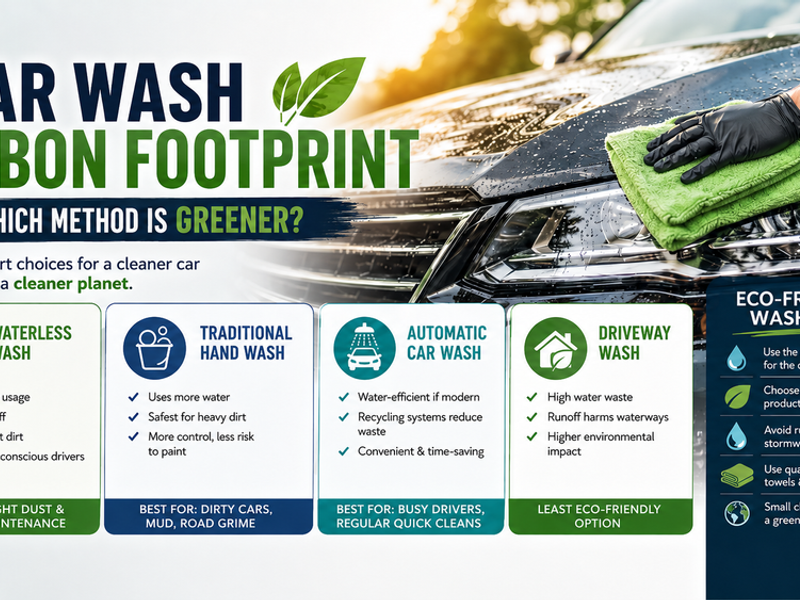
Waterless Car Wash: The Smallest Water and Carbon Footprint
A waterless car wash has the lowest carbon footprint for lightly to moderately dirty vehicles because it completely eliminates water waste and prevents toxic driveway runoff from entering local stormwater systems.
Why Waterless Washing Works So Well
This method relies on advanced, high-lubricity chemical sprays that encapsulate surface dust and light dirt particles, allowing them to be wiped away safely without a drop of running water. It is an exceptional solution for apartment residents, drought-prone areas, and quick mid-week maintenance cleans.
However, expert technique is absolutely critical. A waterless wash should never be used on thick mud, heavy grit, or caked-on road salt, as wiping abrasive contamination will cause severe micro-scratching.
To ensure you are using this method safely, our Ultimate Waterless Car Wash Guide for Aussie Drivers explains when it works best, while our guide on When a Waterless Car Wash Can Damage Your Paint covers the vital warning signs to watch out for.
Traditional Hand Wash: The Sustainable Choice for Heavy Dirt
While a traditional hand wash naturally demands more water than a waterless alternative, it remains the most responsible, paint-safe choice when a vehicle is heavily soiled with mud, sand, and gritty road grime. Wiping a heavily contaminated car without a thorough pre-rinse will destroy your clear coat.
Minimising the Footprint of a Hand Wash
You can still enjoy a traditional wash while keeping your carbon footprint low by focusing on smart conservation techniques:
-
Use a shut-off hose nozzle to prevent water from running continuously.
-
Implement the Two-Bucket Wash Method alongside grit guards to catch contaminants and prevent repetitive re-washing.
-
Use premium microfiber mitts and plush drying towels to clean efficiently on the first pass.
Choosing a controlled, deliberate hand wash protects your vehicle's finish over the long term. Our comprehensive article on Why Hand Washing Is Still the Safest Car Wash Choice highlights why a manual approach outperforms aggressive automated alternatives.
The environmental footprint of a hand wash only spikes when owners wash on hard driveways that drain directly into the street, use harsh non-biodegradable chemicals, or waste excess water through poor technique.
Commercial Automatic Car Washes: Efficient but Inconsistent
Commercial automatic car washes offer a distinct environmental advantage: they avoid the "DIY driveway runoff" trap entirely. Commercial sites in Australia are legally required to capture their wastewater, channel it through oil-water separators, and route it directly into the municipal sewer system for proper treatment.
Many modern automatic facilities also integrate advanced water recycling systems that filter and reuse up to 80% of their wash water.
The Hidden Downsides of Automated Systems
Despite their water efficiency, automatic car washes carry a hidden environmental cost:
-
High Energy Consumption: Running massive pumps, rotating brushes, and high-powered heated air dryers demands a substantial amount of electricity.
-
Aggressive Chemicals: Many automated systems rely on highly acidic or alkaline chemicals to break down dirt quickly without manual agitation.
-
Paint Degradation: The heavy brushes used in older automatic tunnels can cause severe swirl marks, which eventually require energy-intensive machine paint correction to fix.
If preserving your vehicle's gloss is your primary concern, be sure to read our comparison guide: Hand Wash vs Automatic Car Wash: Which Protects Paint?.
Your Step-by-Step DIY Eco-Friendly Car Wash Guide
Essential Tools Needed
-
A premium, pH-neutral, biodegradable car shampoo or high-quality waterless wash solution
-
Multiple clean, high-gsm microfiber towels
-
Two dedicated wash buckets fitted with grit guards (for traditional washing)
-
A soft microfiber wash mitt
-
A specialized wheel brush
-
A high-absorbency microfiber drying towel
-
A heavy-duty trigger spray bottle
-
A shaded washing area
Estimated Clean Time
Expect to spend 30 to 45 minutes for a quick, waterless maintenance wash, or roughly 60 minutes if the vehicle requires a thorough, eco-conscious traditional hand wash.
Green Washing Steps to Follow
-
Assess the Dirt Level First: If your panels are covered in thick mud, sand, or heavy grit, bypass the waterless spray and opt for a traditional hand wash.
-
Always Work in the Shade: Direct sunlight and high heat cause water and cleaning products to evaporate too quickly, leading to chemical staining and unnecessary re-washing.
-
Choose the Least Aggressive Method: If the vehicle is only holding a light layer of dust, stick to a waterless wipe-down to save water.
-
Clean from Top to Bottom: Wash the roof and bonnet first, moving down to the dirtier lower panels, wheels, and tyres last to prevent spreading heavy grease upward.
-
Rotate Your Towels Frequently: Always flip your microfiber towels to a clean side to prevent dragging trapped dirt across the paintwork.
-
Eliminate Stormwater Runoff: Never allow soapy wastewater to stream down your driveway into the street gutter. Wash your car over grass or gravel where the soil can naturally filter the water.
-
Dry the Panels Completely: Proper drying prevents mineral water spots, removing the need for a second corrective wash.
Pro-Tip: Match Your Wash Method to the Current Dirt Level
The most eco-friendly car wash is not always the one that uses the least amount of water; it is the method that cleans the car safely on the very first attempt without causing scratches that require future paint correction.
Across Sydney—particularly along busy, developing Western Sydney roads—vehicles routinely collect a harsh mix of airborne construction dust, oily road film, and dry-weather grime. In these conditions, you must accurately evaluate your paintwork before choosing between a waterless or traditional method. Selecting the wrong approach can turn a well-intentioned, eco-friendly wash into a costly scratch-repair situation.
When to Seek Professional Detailing Assistance
While DIY washing is an excellent habit, finding the time and proper space to wash a car sustainably can be challenging. If you are short on time or want to ensure your vehicle receives an environmentally responsible clean, Gleamoo can help.
For lightly dusty vehicles, you can conveniently book our eco-conscious Waterless Wash. If your vehicle is carrying heavier road grime or mud, choose our highly efficient Traditional Wash.
When a vehicle requires a complete interior and exterior reset, our professional Deep Detailing service provides a comprehensive refresh. To protect your paintwork long-term and make future eco-friendly washing significantly easier, explore our advanced Shield Protection options.
To learn more about our commitment to convenient, high-standard vehicle care, feel free to visit the Gleamoo About Us page.
Frequently Asked Questions About Eco-Friendly Car Washing
Is a waterless car wash actually better for the environment?
Yes, for lightly dirty vehicles, a waterless wash is an exceptional way to eliminate water waste and entirely prevent toxic chemical runoff. However, if a car is heavily soiled with thick mud or grit, attempting a waterless wash will scratch the paintwork and require extra energy and products to correct.
Is washing my car at home bad for the environment?
It can be highly damaging if done incorrectly. When you wash a car on a driveway, the soapy water, heavy metals, oil, and brake dust flow directly into street gutters, which lead straight into local rivers and oceans untreated. To wash responsibly at home, always wash over lawn or gravel, use minimal water, and stick to biodegradable products.
Does a ceramic coating reduce a car wash's carbon footprint?
Indirectly, yes. A ceramic coating creates an incredibly slick, hydrophobic barrier on your paintwork. This barrier prevents dirt, road film, and bird droppings from bonding tightly to the surface, making the vehicle much easier to clean. Coated cars require far less water, fewer aggressive chemicals, and less time to wash. Learn more in our comprehensive Ultimate Ceramic Coating Guide.
About the Author
Tipsy Batta is dedicated to providing practical, paint-safe car care advice that helps Australian drivers make smarter, more sustainable choices for their vehicles. Through Gleamoo, Tipsy focuses on delivering highly convenient, professional, and environmentally responsible detailing solutions that protect your vehicle's finish, preserve your valuable time, and keep local waterways clean.