
Author: Tipsy Batta
Estimated Read Time: 6 minutes
How Do You Identify Surface Rust Versus Structural Damage on a Car?
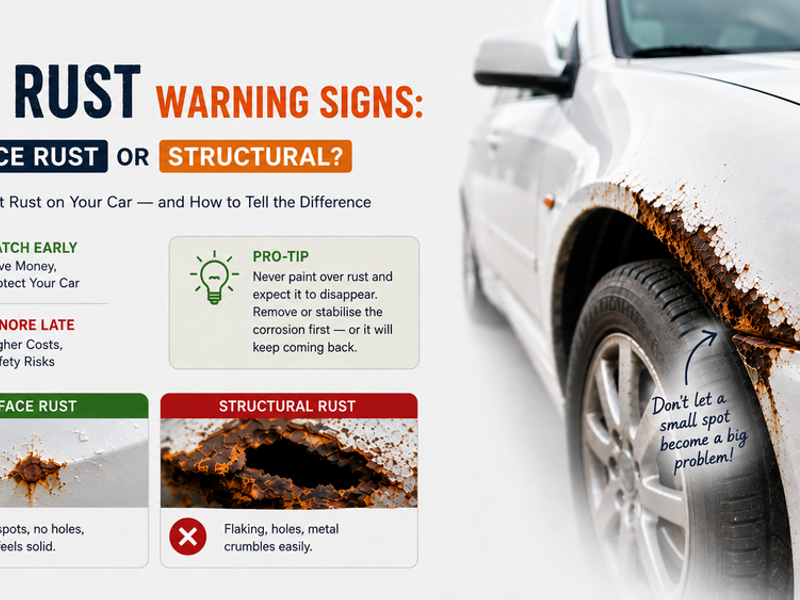
Surface rust affects only the outer layer of exposed metal without compromising panel strength, appearing as small orange spots or bubbling paint. Structural rust occurs when corrosion eats deep into the metal, creating flaking, holes, crumbling edges, or frame damage that undermines vehicle safety.
Rust often begins innocently as a tiny brown specks on a bonnet, bubbling paint along a wheel arch, or minor oxidation around an unsealed stone chip. However, ignoring initial surface oxidation allows trapped moisture to continuously attack the steel beneath.
Before attempting any rust repair, it is crucial to determine whether the corrosion is superficial surface rust that can be treated at home, or advanced structural rust requiring professional panel repair.
Why Cars Rust: Causes and Environmental Vulnerabilities
Car body panels rely on multiple protective layers: primer, base coat, and clear coat. When stone chips, road debris, or deep scratches breach these barrier layers, bare steel is exposed to oxygen and moisture, triggering oxidation (iron oxide or rust).
Several environmental factors accelerate vehicle corrosion:
-
Coastal Salt Air: Airborne salt dramatically speeds up chemical oxidation on metal panels.
-
Trapped Dirt and Mud: Damp road grime accumulating behind wheel arch liners holds moisture against raw steel.
-
Severe Weather and Rain: Persistent wet conditions keep unsealed metal damp for extended periods.
-
Neglected Paint Damage: Leaving minor paint scratches and stone chips untreated exposes raw steel to constant atmospheric humidity.
Regular washing removes corrosive grime and road salts before they break down protective paint layers. Our guide to washing a car in the right order details how controlled, methodical cleaning protects paintwork and prevents accidental surface damage.
Surface Rust vs. Structural Rust: Key Warning Signs
Identifying the depth and severity of rust is essential for determining whether a DIY repair is safe or if professional auto body restoration is required.
Key Signs of Surface Rust
Surface rust is early-stage corrosion confined to the uppermost metal surface. It typically displays these characteristics:
-
Small, scattered orange or light brown spots on top of the paint or bare metal
-
Fresh corrosion contained within a recent bonnet stone chip
-
Light surface scaling along exposed door edges or bonnet lips
-
Minor paint bubbling where moisture has just reached the metal
-
Underlying panel metal that feels completely firm and solid when pressed
When caught early, surface rust can usually be sanded back, chemically treated, primed, and repainted before it weakens the panel.
Key Signs of Structural Rust
Structural rust represents advanced corrosion where rust has degraded the metal’s thickness and structural integrity. Look out for these dangerous warning signs:
-
Heavy metal flaking, scaling, or deep pitting across the panel
-
Visible holes, perforations, or completely rusted-through sections
-
Metal that sags, bends, or crumbles under light finger pressure
-
Large, swollen blisters pushing up significant areas of paint
-
Corrosion affecting chassis rails, subframes, suspension mounts, or pillar posts
-
Rust spreading through inner and outer structural panel seams
If you discover panel holes or suspect structural frame corrosion, DIY cosmetic touch-ups are unsafe. The vehicle must be inspected by a qualified panel beater or mechanic.
Common Rust Hotspots: Bonnet Stone Chips and Wheel Arches
Certain areas of a vehicle are exceptionally prone to rapid rusting due to direct road exposure.
Bonnet Stone Chips
Stone chips on the bonnet are easy to overlook because they start small. However, once a flying pebble chips through clear coat and primer to expose raw steel, atmospheric moisture causes rust to creep silently beneath the surrounding paint edges.
Wheel Arch Lips and Seams
Wheel arches face constant bombardment from road gravel, mud, and water thrown up by tyres. Damp debris frequently collects behind plastic wheel arch liners, creating a hidden environment where rust thrives undetected. A minor paint bubble on the outside of an arch often indicates more severe corrosion on the backside of the panel.
From a detailing perspective across Sydney vehicles, wheel-arch edges and small bonnet stone chips require extra attention during routine maintenance washes to prevent hidden corrosion from taking hold.
How to Treat DIY Surface Rust: Step-by-Step Guide
For minor, non-structural rust spots on solid metal panels, a careful DIY process can halt corrosion and restore protection.
Required Tools and Equipment
-
Car shampoo and clean microfibre towels
-
Automotive masking tape
-
Fine-grade sandpaper (e.g., 400 to 1200 grit) or rust-removal abrasives
-
Automotive rust converter or chemical neutraliser
-
Rust-inhibiting automotive primer
-
Colour-matched vehicle touch-up paint
-
Automotive clear coat
-
Nitrile gloves and eye protection
When using chemicals and solvents, always follow safety instructions. Our detailing chemical safety guide provides detailed instructions on proper handling, ventilation, and Personal Protective Equipment (PPE).
Estimated Time: 1 to 3 hours of active working time (plus curing and drying time between steps).
Step-by-Step Surface Rust Treatment Process
-
Clean the Surface Thoroughly: Wash the panel to remove dirt, grease, and road grime. Allow it to dry completely.
-
Inspect Surrounding Paint: Check carefully around the rust spot for soft metal or hidden paint bubbling.
-
Mask the Repair Area: Apply masking tape around the rust spot to shield healthy paintwork from accidental sanding.
-
Sand Back to Clean Metal: Carefully sand away all loose rust until you reach bright, solid steel. Avoid unnecessarily enlarging the repair zone.
-
Clean Away Sanding Dust: Wipe the bare metal clean using solvent or residue-free cleaner and let dry.
-
Apply Rust Converter: Apply a thin layer of rust converter to neutralise any microscopic trace rust left in the metal grain.
-
Apply Automotive Primer: Coat the bare metal with high-quality primer to seal it against moisture and ensure paint adhesion.
-
Apply Touch-Up Paint: Build up thin, even coats of colour-matched paint rather than one heavy layer, allowing proper drying time between applications.
-
Seal with Clear Coat: Finish with clear coat to match the surrounding panel gloss and protect the paint layer.
Important Detailing Advice
Never apply touch-up paint directly over un-treated rust. Painting over active corrosion traps oxygen and moisture underneath, allowing rust to continue destroying the panel out of sight.
Additionally, avoid machine polishing directly over rust blisters. Compounding can improve surrounding paint gloss, but it cannot fix rusted metal underneath. Read our paint correction vs detailing guide for a clearer distinction between paint refinement and physical repair.
DIY vs. Professional Rust Repair: Knowing Your Limits
Knowing when to tackle a job yourself versus hiring a professional saves time, money, and safety risks.
-
Choose DIY Repair When: The rust spot is small, isolated to an exterior panel surface, non-structural, and the underlying metal remains completely solid.
-
Choose Professional Body Repair When: Rust keeps returning after treatment, paint is heavily bubbled, metal is perforated or crumbling, rust involves structural frame rails/mounts, or multiple metal layers are affected.
Cutting out corroded steel, welding replacement patches, and reshaping body lines requires specialist equipment and panel-beating expertise. Hiding severe rust under body filler creates a safety hazard that will fail roadworthy inspections.
How to Prevent Automotive Rust from Returning
Preventing rust is far easier and cheaper than repairing corroded steel. Protect your vehicle using these proven habits:
-
Wash Regularly: Clean wheel arches, lower sills, and underbody areas frequently to remove trapped mud and road salts.
-
Fix Stone Chips Early: Apply touch-up paint to bare metal chips immediately before rust forms.
-
Keep Wheel Arch Liners Clear: Flush out accumulated dirt from behind plastic wheel arch linings.
-
Use Safe Wash Techniques: Practice safe washing to prevent deep clear coat scratches. Our guide on why hand washing remains one of the safest car wash choices explains how careful washing protects exterior surfaces.
-
Apply Paint Protection: Once paintwork is clean and chip-free, apply protective sealants. Our ceramic coating guide details what coatings protect against. Keep in mind that ceramic coatings protect healthy paint—they do not repair active rust.
Frequently Asked Questions
Can I simply use rust converter and paint over car rust?
No, rust converter alone is not a complete fix for heavy corrosion. Loose, flaking rust must be mechanically sanded back to solid metal first. Rust converters only treat minor residual surface oxidation before priming and painting.
Is rust around a wheel arch dangerous?
Wheel arch rust can quickly become dangerous if left unchecked. What starts as cosmetic bubbling along the outer arch frequently spreads inward to inner guard structures, seatbelt anchors, and suspension mounting points.
Can ceramic coating stop an existing rust spot from spreading?
No. Ceramic coatings seal clear coat surfaces to prevent environmental staining and mild abrasion, but they cannot stop underlying metal oxidation. Existing rust must be physically removed and repaired before applying any ceramic coating.
Professional Car Care & Exterior Maintenance
While minor surface rust spots can be fixed with careful DIY work, vehicles with widespread paint damage or post-repair finish needs benefit from professional care.
If your vehicle has undergone rust repairs and you want to restore paint clarity across surrounding panels, Gleamoo's Deep Detailing service provides comprehensive exterior decontamination and refinement. For paintwork in good condition, applying Gleamoo Shield Protection helps guard panels against future atmospheric exposure.
You can learn more about our professional vehicle care approach on the Gleamoo About Us page.
About the Author
Tipsy Batta is an automotive care specialist dedicated to helping Australian car owners maintain their vehicles safely and effectively. Through Gleamoo, Tipsy provides practical, straightforward advice on vehicle maintenance, detailing safety, and paint preservation.