
Author: Tipsy Batta
Estimated Read Time: 6 minutes
Car Detailing Chemical Safety: Fumes, Skin Protection & PPE
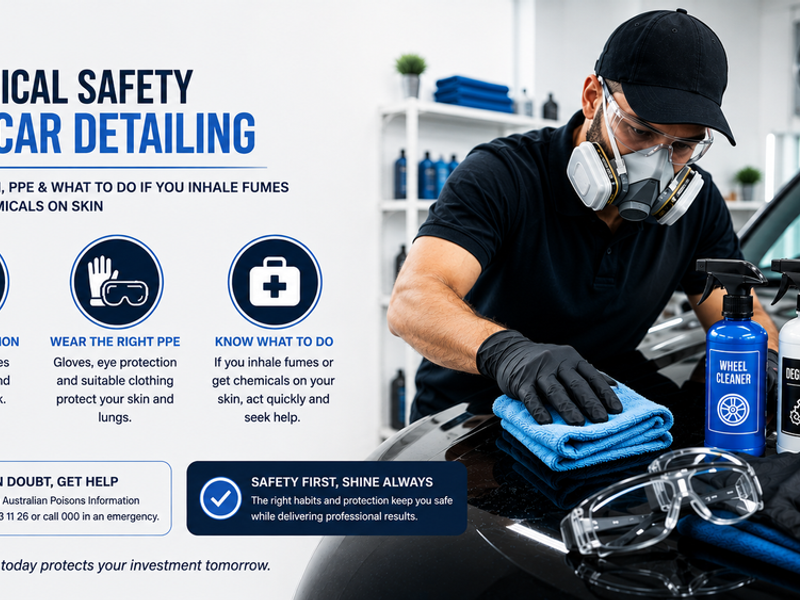
Car detailing chemicals—such as heavy-duty degreasers, acid-based wheel cleaners, iron removers, solvents, and ceramic coatings—can pose serious risks to skin, eyes, and respiratory systems if handled improperly. Practicing chemical safety in detailing requires proper workspace ventilation, wearing suitable Personal Protective Equipment (PPE), adhering to correct dilution ratios, and knowing immediate first-aid protocols for fume inhalation or accidental skin contact.
Unlike standard household soaps, auto care formulations often contain active solvents, strong acids, or alkaline compounds designed to break down stubborn road contamination. Understanding how to handle these chemicals safely protects your health while keeping your vehicle in peak condition.
Why Chemical Safety Matters During Car Detailing
Detailing work often involves using multiple concentrated chemicals within enclosed or semi-enclosed spaces. A product that is completely safe when correctly diluted and applied outdoors can quickly become hazardous when sprayed heavily, atomised, heated, or used inside a closed garage.
A common oversight among DIY detailers is relying on smell as a safety indicator. A pleasant fragrance added to a product does not mean it is safe, nor does a harsh chemical scent automatically mean it is dangerous. Chemical odour is not a reliable measure of health risk.
Before using any detailing product, always review its label and Safety Data Sheet (SDS). An SDS outlines critical safety details, including:
-
Specific physical and chemical hazards
-
Safe handling and storage instructions
-
Required Personal Protective Equipment (PPE)
-
Emergency first-aid procedures
Safe Work Australia recommends keeping SDS documentation accessible whenever hazardous chemicals are handled. This practice is essential during comprehensive vehicle cleaning sessions where several products are applied sequentially.
Workspace Ventilation: Your First Line of Defence
Proper ventilation should always be your primary hazard control when detailing—not an afterthought.
Indoor & Garage Ventilation
When working inside a home garage or workshop:
-
Open all main doors and side windows to establish continuous cross-ventilation.
-
Position an exhaust fan to pull contaminated air out of the room rather than relying on a standard fan that simply circulates stagnant fumes.
-
Avoid leaning directly over open bottles or standing directly in spray mists during application.
Safe Work Australia highlights local exhaust and ambient ventilation as primary controls for airborne chemical hazards. PPE should always supplement good airflow, never replace it.
Outdoor & Mobile Detailing Considerations
Working outdoors provides excellent natural air movement for mobile detailers. However, pay close attention to wind direction. Always stand upwind so overspray and atomised chemical mists blow away from your face, body, bystanders, and neighbouring property.
Choosing the Right PPE for Car Detailing
Personal Protective Equipment must be selected based on the specific chemical hazard and application method.
-
Chemical-Resistant Gloves: Standard disposable gloves are not universal. Heavy-duty nitrile gloves offer excellent resistance against most detailing soaps, degreasers, and iron removers. Check the product SDS for solvent-heavy chemicals.
-
Safety Glasses or Goggles: Essential when using spray bottles, high-pressure washers, or applying aggressive wheel cleaners that can splash back into your eyes.
-
Respiratory Protection: Disposable paper dust masks do not filter chemical vapours. If working with volatile solvents or ceramic coatings, use a half-face respirator equipped with appropriate organic vapour cartridges as specified by the product SDS.
-
Protective Clothing: Wear long sleeves, long trousers, and chemical-resistant aprons when mixing concentrates to prevent skin contact.
-
Closed Footwear: Sturdy, chemical-resistant shoes prevent liquid spills from soaking through to your feet.
The Detailer's Golden Rule: Never Mix Detailing Chemicals
Combining different detailing products to create a "stronger" cleaner is extremely dangerous and should never be attempted.
Mixing household or detailing chemicals can trigger severe chemical reactions, release toxic chlorine or ammonia gases, or damage your vehicle’s paintwork. Always use products strictly as directed by the manufacturer, following recommended dilution ratios, dwell times, and application techniques.
Using the right product for the right task is vital for both safety and finishing quality. For a clear breakdown of safe, structured washing workflows, refer to our guide on washing a car in the right order.
What to Do If You Inhale Detailing Chemical Fumes
If you inhale a high concentration of chemical fumes, vapours, or spray mists, stop working immediately—even if you feel fine initially.
Emergency Response Steps for Inhalation:
-
Stop application: Immediately cease using the chemical and step away from the work space.
-
Move to fresh air: Walk outdoors or into a well-ventilated, clear area.
-
Ventilate the site: If safe to do so, open all doors and windows to clear remaining vapours.
-
Identify the chemical: Have the product bottle, label, or SDS ready for medical reference.
-
Seek guidance: In Australia, call the Poisons Information Centre on 13 11 26 for immediate expert advice.
-
Emergency assistance: If someone experiences severe difficulty breathing, collapses, or becomes unresponsive, call 000 immediately.
The NSW Poisons Information Centre emphasizes immediate relocation to fresh air following any inhalation exposure. Never deliberately inhale or sniff a container to test fume strength.
What to Do If Detailing Chemicals Contact Your Skin or Eyes
Prompt action is critical to prevent chemical burns, tissue irritation, or systemic absorption.
Skin Contact Protocol:
-
Stop work immediately and step away from the chemical source.
-
Carefully remove any contaminated clothing, footwear, or jewelry to prevent further skin contact.
-
Flush the affected skin area thoroughly with cool, clean running water for at least 15 minutes.
-
Do not apply neutralizing chemicals, ointments, or home remedies, as this can worsen skin irritation.
-
Consult the product SDS and call the Poisons Information Centre on 13 11 26 for tailored medical advice.
Eye Contact Protocol:
If chemical overspray or splashes enter your eyes:
-
Flush the eye continuously with gentle, cool running water or dedicated eyewash solution for at least 15 minutes.
-
Hold eyelids open to ensure thorough rinsing behind the lids.
-
Do not rub the eye.
-
Contact 13 11 26 or seek urgent emergency medical treatment immediately.
Sydney Detailer Insights: Managing Hazards in Confined Spaces
In Sydney’s climate, high heat and humidity during summer frequently tempt DIYers to close garage doors to stay in the shade. However, working with spray chemicals in a closed, hot environment causes volatile compounds to evaporate rapidly, concentrating harmful fumes within minutes.
To manage shade and ventilation safely:
-
Detail during early morning or late afternoon hours when temperatures are cooler.
-
Set up portable shade awnings or work under carports that offer shade while maintaining total open-air cross-ventilation.
-
Take frequent breaks outside the workspace to breathe clean, fresh air.
DIY Chemical Safety Checklist & Step-by-Step Procedure
Estimated Preparation Time: 5–10 minutes before starting your detailing session.
Essential Equipment & Safety Gear:
-
Nitrile chemical-resistant gloves
-
Safety glasses with side shields
-
Appropriate respirator (if specified by SDS)
-
Closed footwear and long clothing
-
Access to clean running water or an eyewash station
-
Product labels and SDS documentation
-
Clean microfibre towels for controlled, non-spray application
Safe Detailing Procedure:
-
Review the Label: Confirm mixing ratios, dwell times, application steps, and basic first-aid steps before opening the bottle.
-
Check the SDS: Section 4 (First Aid), Section 7 (Handling/Storage), and Section 8 (Exposure Controls/PPE) provide vital technical guidance.
-
Set Up Ventilation: Open garage doors, position exhaust fans, or evaluate outdoor wind direction prior to spraying.
-
Equip PPE: Put on your safety glasses, gloves, and protective gear before touching chemicals.
-
Measure and Dilute Accurately: Use precise measuring cups and add concentrate to water (not water to concentrate) to reduce splash risk.
-
Apply Safely: Keep spray nozzles pointed away from your face and apply products close to the panel to minimise airborne misting.
-
Clean Up Workspace: Firmly seal all containers, store them upright according to label guidelines, and wash reusable tools thoroughly.
-
Respond to Exposure Promptly: If exposure occurs, pause work immediately, carry out basic first-aid flushing, and call 13 11 26.
Frequently Asked Questions
Is a standard face mask enough when using car detailing chemicals?
No. Standard paper or cloth dust masks only block large airborne particles like dust and pollen. They provide zero protection against chemical fumes, volatile organic compounds (VOCs), or solvent vapours. Use a half-face respirator equipped with organic vapour cartridges when handling heavy chemicals.
How should car detailing chemicals be stored safely at home?
Store all detailing chemicals in their original, clearly labeled containers with caps tightly secured. Keep products in a cool, dry, well-ventilated area away from direct sunlight, open flames, and children or pets. Never transfer detailing chemicals into unlabelled bottles or food containers.
What number should I call after a chemical exposure in Australia?
For any suspected chemical exposure, skin contact, or inhalation concern, call the national Poisons Information Centre on 13 11 26 (available 24/7). For life-threatening emergencies, such as severe difficulty breathing or loss of consciousness, call 000 immediately.
Professional Detailing Services & Safe Alternatives
Handling strong degreasers, paint correctors, and acid cleaners requires space, proper PPE, and time. If you lack adequate garage ventilation or prefer to avoid handling hazardous compounds, professional care provides a complete, risk-free alternative.
At Gleamoo, we follow strict safety protocols and professional application methods across every vehicle service. You can learn more about Gleamoo and our commitment to safe, high-standard vehicle care.
-
Comprehensive Care: For deep interior and exterior rejuvenation involving specialised cleaning agents, explore Gleamoo Deep Detailing.
-
Maintenance Washing: Keep your paint spotless with our classic safe-wash process via our Traditional Wash service.
-
Eco-Friendly Care: For low-water maintenance without chemical runoff concerns, review our Waterless Wash options.
About the Author
Tipsy Batta is an automotive maintenance professional dedicated to helping Australian car owners keep their vehicles clean and protected safely. Through Gleamoo, Tipsy provides practical, straightforward detailing advice that balances professional vehicle finishing standards with environmental and personal health safety.