
Author: Tipsy Batta
Estimated Read Time: 6 minutes
Can You Legally Wash Your Car at Home in Australia?
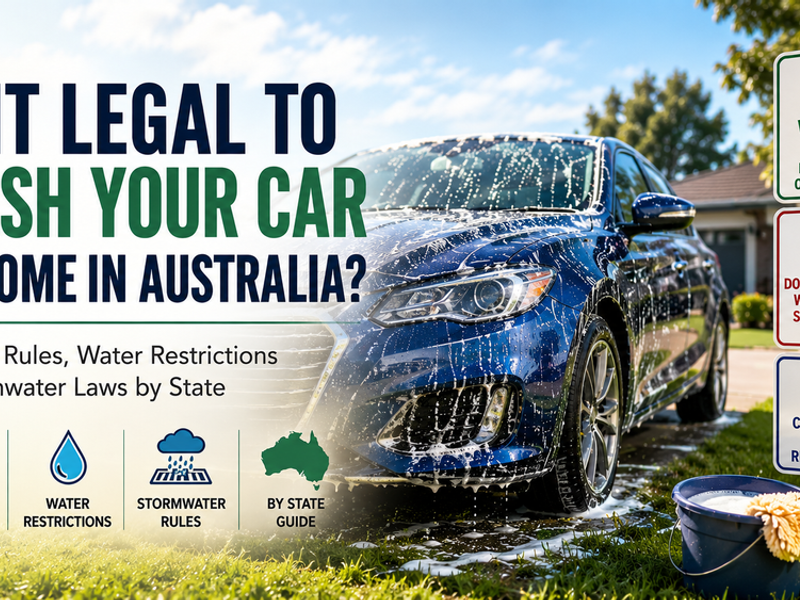
Yes, it is generally legal to wash your car at home in Australia, provided you follow your local council’s water restrictions and environmental protection laws. The primary legal issue is not whether you can wash your car, but ensuring contaminated wash water and soap suds do not flow into public stormwater drains.
Washing your vehicle in a paved driveway might seem harmless, but the runoff carries detergents, heavy metals, road grime, oil, and brake dust directly into local waterways. Because stormwater receives no water treatment before reaching rivers and oceans, state Environment Protection Authorities (EPAs) and local councils strictly enforce pollution regulations.
Understanding both local water-use guidelines and environmental runoff laws is essential before picking up the hose.
The Golden Rule: Prevent Stormwater Drain Pollution
The main environmental concern with DIY car washing is managing wastewater destination. Unlike household sinks and toilets that route to wastewater treatment facilities, stormwater systems discharge directly into local creeks, rivers, lakes, and beaches.
State environmental guidance explicitly advises against letting dirty, soapy water hit the gutter. Contaminants washed off paintwork, wheels, and underbodies threaten aquatic ecosystems and coastal habitats.
-
Environmental Impact: Car wash runoff introduces phosphates, petroleum hydrocarbons, and toxic heavy metals into natural water systems.
-
Regulatory Stance: EPA Victoria and NSW EPA require residents to minimise pollution risks entering stormwater. Both authorities strongly recommend washing vehicles on lawn areas or using water-recycling commercial facilities.
-
Legal Consequences: Discharging pollutants into stormwater systems violates state environmental protection acts and can result in significant on-the-spot council or EPA fines.
For step-by-step guidance on selecting safe, effective cleaning methods on private property, consult Gleamoo's Ultimate Hand Car Wash Guide and the Two-Bucket Wash Method Guide.
State-by-State Rules for Washing Your Car at Home
Car washing regulations differ across Australian states, water authorities, and local council areas. Always check your local supplier's current water restriction stage before washing.
New South Wales (NSW)
New South Wales has no single statewide law banning private vehicle washing. However, rules depend heavily on water supplier guidelines and council bylaws.
Under Sydney Water's Water Wise Guidelines in Greater Sydney, washing vehicles with a bucket and sponge, trigger-nozzle hose, or high-pressure cleaner is permitted. Water must not be wasted, and runoff onto hard surfaces must be strictly controlled. Regional councils like Coffs Harbour enforce local rules requiring all wash runoff to remain on the property boundaries.
Victoria (VIC)
Victoria’s Permanent Water Saving Rules permit home vehicle washing using a bucket, watering can, high-pressure cleaner, or a hose fitted with a leak-free trigger nozzle.
However, stormwater pollution rules are enforced independently of water restrictions. EPA Victoria actively prosecutes cases where contaminated car-wash water enters street gutters, treating runoff discharge as a severe environmental breach.
Queensland (QLD)
Queensland regulations vary by local council area and drought severity levels. State environmental guidelines recommend using minimal water and washing vehicles over grass or permeable gravel so wastewater absorbs naturally into the soil.
During active water restrictions, councils place tight limits on home car washing. Certain restriction tiers restrict hose use entirely, allowing only buckets or watering cans.
South Australia (SA)
South Australian water guidelines permit home vehicle washing provided residents use a bucket, watering can, trigger-nozzle hose, or high-pressure low-volume cleaning unit.
Commercial car washes are also permitted under applicable restriction tiers. Residents must verify current regional restriction statuses before cleaning their vehicles.
Western Australia (WA)
In Western Australia, Water Corporation advises filling a bucket and parking vehicles on lawns so wash water soaks into the roots rather than running down the street gutter.
Note that general garden sprinkler roster days do not apply to hand vehicle washing. Check with local water providers if temporary regional supply restrictions are active.
Tasmania (TAS)
TasWater enforces a four-stage water restriction framework:
-
Stage 1 Restrictions: Home vehicle washing is restricted to a bucket or watering can. A trigger-nozzle hose may only be used briefly for rinsing after washing.
-
Higher Restriction Stages: Further limit or entirely prohibit domestic car washing.
Tasmania’s stormwater legislation strictly prohibits discharging any non-stormwater substance into public drainage networks.
Australian Capital Territory (ACT)
Canberra’s stormwater network flows directly into urban catchments including Lake Burley Griffin. The National Capital Authority advises ACT residents to wash vehicles on grassy surfaces to prevent soap from reaching stormwater drains, or to utilize water-recycling commercial wash bays.
Northern Territory (NT)
Northern Territory requirements depend on local council rules and water supply conditions. Residents should verify current Power and Water Corporation restrictions, particularly during tropical wet-season events or supply interruptions.
Where Should You Wash Your Car? (Detailer’s Advice)
From a professional car detailing perspective, the ideal DIY setup is a flat grass lawn or permeable gravel driveway where wash runoff stays within property lines and naturally filters into the soil.
Avoid Washing Vehicles in These Locations:
-
Directly adjacent to or upstream from a street stormwater drain
-
On public roads, street shoulders, or council kerbs
-
On steep concrete or paved driveways sloping toward the gutter
-
Where runoff drains into adjoining neighbouring properties
-
During heavy rain events when fast-flowing runoff carries suds into street drains
Vehicles carry road film, brake dust, mud, and oily residues on lower panels and wheels. Allowing this concentrated waste to reach stormwater infrastructure causes avoidable environmental harm.
How to Wash Your Car Responsibly at Home (Step-by-Step)
Estimated Time: 45–75 minutes
Required Tools & Materials
-
Two clean wash buckets (with grit guards)
-
Dedicated wheel bucket
-
pH-neutral car shampoo
-
Microfibre wash mitt
-
Microfibre drying towels
-
Wheel cleaning brushes
-
Garden hose with an automatic trigger nozzle
-
Permeable grass or gravel washing area
Step 1: Position the Vehicle Correctly
Park your vehicle on a flat grassy area or gravel surface where wastewater can absorb naturally into the ground. Confirm local council rules and active water restriction levels before starting.
Step 2: Rinse Efficiently
Pre-rinse the vehicle briefly using a trigger nozzle only when necessary. Avoid letting the hose run continuously. Sydney Water reports that traditional running hoses use significantly more water than bucket-based washing methods.
Step 3: Wash Using the Two-Bucket Method
Work from the top of the vehicle downward using a high-quality pH-neutral shampoo and microfibre wash mitt. Leave heavily soiled lower rocker panels and wheels for last to avoid transferring dirt.
Step 4: Monitor and Contain Wastewater
Observe the direction suds flow throughout the process. If soapy water trends toward a paved driveway edge or gutter, pause immediately and reposition your setup or adjust water volume.
Step 5: Rinse Using Controlled Water Flows
Rinse paintwork methodically using a trigger-nozzle hose or pressure washer to minimise total water output.
Step 6: Dry Paintwork Thoroughly
Dry the surface using clean microfibre towels to prevent mineral water spots and eliminate the need for secondary re-washing.
Professional Environmental Tip
Do not assume "biodegradable" car soaps are automatically safe for stormwater drains. While biodegradable products break down faster in soil, they still lift heavy oils, metals, and brake dust from the vehicle surface. Controlling where the wastewater drains is what matters legally and environmentally.
For properties without suitable grass areas, Gleamoo's Ultimate Waterless Car Wash Guide explains when water-free washing methods are ideal—and when standard washing is necessary.
Frequently Asked Questions
Is it illegal to wash my car in my driveway in Australia?
Washing a car on a driveway is not automatically illegal, but allowing soapy water, dirt, and chemicals to run into a street stormwater drain violates state environmental protection laws and local council regulations.
Can I wash my car during water restrictions?
Yes, but you must strictly follow the rules of your local water authority's current restriction stage. Many restriction tiers allow bucket washing or trigger-nozzle hoses while prohibiting standard running hoses.
Is washing my car on the lawn better for the environment?
Yes. Washing over a lawn allows dirty water to filter naturally through soil and root systems, preventing harmful chemicals and pollutants from entering raw stormwater drains and rivers.
Professional Car Wash Alternatives
DIY vehicle washing works well when your property has the right layout, containment options, and equipment. However, if your home lacks a suitable area to contain suds—or if local water restrictions are tight—professional cleaning services provide a safe, fully compliant solution.
At Gleamoo, we help vehicle owners maintain their cars using environmentally responsible detailing practices. You can learn more about Gleamoo and our professional vehicle care standards.
-
Routine Cleaning: Our Traditional Wash offers an efficient, thorough maintenance clean.
-
Water Conservation: If water saving is your priority and paintwork condition permits, opt for our Waterless Wash.
-
Heavy Soiling: For vehicles with heavy road grime, paint contamination, or prolonged neglect, professional Deep Detailing safely restores vehicle appearance without runoff concerns.
Maintaining a clean car should never come at the expense of local environmental health or water compliance.
About the Author
Tipsy Batta is an automotive care specialist dedicated to helping Australian drivers maintain their vehicles responsibly. Through Gleamoo, Tipsy provides practical, high-quality car care advice tailored to everyday driving conditions and environmental standards across Australia.