
Author: Tipsy Batta
Estimated Read Time: 4 minutes
A clean car always feels better to drive, but choosing the wrong wash method can slowly damage your exterior paintwork without you even noticing. Many Australian drivers want an exterior cleaning solution that is quick, affordable, and convenient. However, nobody wants to deal with permanent swirl marks, dull clear coats, fine scratches, or missed grime around wheels and door jambs.
So, when it comes down to a hand wash vs automatic car wash, which option is actually better for your vehicle's long-term paint protection?
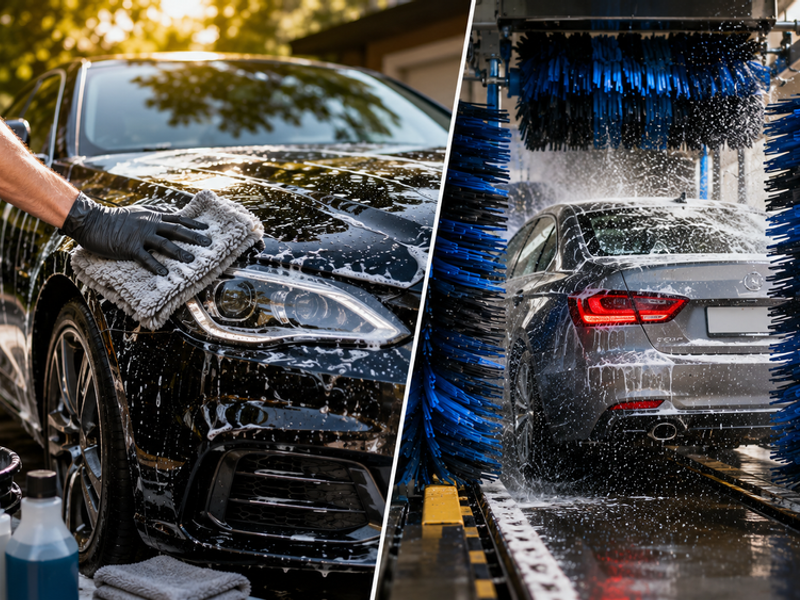
The honest answer is that while both methods can remove surface dust, they do not protect your paint the same way. A professional hand wash protects your paint by safely lifting abrasive dirt away from the surface, whereas an automatic car wash relies on high-speed mechanical friction that often inflicts micro-marring and spiderweb paint defects.
Hand Wash vs Automatic Car Wash: The Real Difference
To understand which method provides the best paint protection, you have to look at how each system handles abrasive surface dirt. An automatic car wash is engineered solely for speed and volume. You drive into a bay, a automated machine activates, and you leave with a cleaner-looking car within a few minutes. For busy drivers, this speed is highly tempting.
The underlying issue is that automatic car washes often rely on heavy rotating brushes, recycled water filtration systems, harsh high-pH chemical strip washes, or extreme high-pressure water systems that are fundamentally aggressive on automotive clear coats. Even modern “soft touch” or "brushless" automatic systems are not entirely safe. Soft-touch foam bristles collect mud, grit, and sharp debris from the commercial 4WDs and dirty work utes that went through the machine right before you. When those brushes spin against your car, they drag that trapped grit directly across your panels, creating fine scratches.
A proper hand wash is entirely different because it centers on controlled, low-friction cleaning. A professional detailer can safely pre-rinse heavy mud, apply a thick lubricating foam layer, use dedicated plush wash mitts, clean body panels from top to bottom, wash wheels independently, and dry the vehicle carefully using pristine microfiber towels.
If you want to understand exactly what a safe, paint-conscious wash process should look like, read Gleamoo’s detailed guide here.
Why Clear Coat and Paint Safety Matter for Your Car
Your vehicle's factory paint job consists of multiple layers, topped with an incredibly thin clear coat. This clear coat layer is what gives your car its deep glossy reflection while sealing the pigmented color coat from structural degradation. When road film, iron brake dust, acidic bird droppings, squashed bugs, and coastal salt air are allowed to bake onto the surface, they slowly etch into this clear coat finish.
The primary risk associated with a drive-through automatic car wash is not a single, massive scratch. Instead, it is the cumulative micro-marring that happens over months of repeated automated washing. This damage is highly visible under direct sunlight, appearing as circular spiderweb patterns or swirl marks that make the paint look dull, hazy, and neglected. This paint fading is especially obvious on black, dark blue, charcoal grey, and metallic red vehicles.
As a mobile detailer operating across Sydney, I routinely inspect vehicles that look clean from a distance but are completely covered in micro-swirls up close. This clear coat dullness is remarkably common on daily commuters taken through quick automated wash stations after dusty weeks, coastal weekend drives, or long periods parked under sappy trees.
When an Automatic Car Wash Might Be Acceptable
An automatic car wash can be an acceptable choice for a quick clean if your vehicle is already reasonably clean, you are not concerned about maintaining a flawless paint finish, or you are managing an older work vehicle where extreme convenience outvalues cosmetic presentation.
However, you should avoid automatic car washes entirely if your car fits any of the following categories:
-
The vehicle is brand new or recently resprayed.
-
The car features a dark or sensitive paint colour finish.
-
The panels have been treated with a professional ceramic coating.
-
The vehicle is a premium luxury, classic, or exotic sports car.
-
The clear coat has recently undergone professional machine polishing.
If your car is protected by a ceramic layer, safe washing techniques are paramount. Automated mechanical brushes can degrade the top layer of the coating, reducing its gloss and hydrophobic water-beading performance over time. To learn how to care for coated vehicles properly, read Gleamoo’s Ultimate Ceramic Coating Guide for Australian Cars.
Why Hand Washing Wins the Paint Protection Debate
A meticulous hand wash wins the debate because it grants the operator complete control over the wash environment. A human detailer can adjust their washing pressure, swap to clean microfiber towels instantly, avoid dragging surface grit across clean sheet metal, and dedicate extra attention to complex body areas that automated machines completely miss.
A systematic hand wash is highly superior for:
-
Protecting clear coats from swirl marks and wash-induced scratches.
-
Deep cleaning complex wheel faces, brake calipers, and tyre walls.
-
Safely dissolving bonded bug splatter and bird droppings without marring paint.
-
Thoroughly cleaning side mirrors, grilles, intricate badges, and hidden door jambs.
-
Preserving the longevity of ceramic coatings, paint sealants, and premium waxes.
-
Maintaining maximum paint gloss depth and vehicle resale value over time.
If you live in an apartment complex or face strict regional water restrictions, a low-moisture waterless wash can also serve as an excellent option for lightly dusty vehicles. Because technique is critical when washing without a hose, check out Gleamoo's Ultimate Waterless Car Wash Guide for Aussie Drivers to understand when that specific method is safe to use.
Complete DIY Hand Wash Step-by-Step Guide
If you prefer to care for your vehicle on your driveway, use this professional multi-bucket workflow to minimize the risk of scratching your paintwork.
Essential Tools Needed
-
Two heavy-duty wash buckets equipped with grit guards
-
A premium, pH-neutral car wash shampoo
-
A plush microfiber wash mitt or microfiber pad
-
A dedicated wheel brush and a separate wheel wash mitt
-
Ultra-absorbent microfiber drying towels or a premium chamois
-
A garden hose or a high-pressure rinse unit
-
Non-acidic tyre cleaner and a quality water-based tyre shine
-
Ammonia-free automotive glass cleaner
-
An optional quick detailer spray for added lubrication
Estimated Time Required
Expect to spend roughly 45 to 75 minutes, depending on the physical size of your vehicle and how much road dirt has accumulated on the panels.
Safe Hand Washing Steps to Follow
1. Setup in a Shaded Area
Always park your car in the shade before starting. Washing under direct, hot Australian sun causes your car shampoo and rinse water to dry far too quickly on the panels, leaving behind stubborn, unsightly hard water mineral spots.
2. Perform a Thorough Pre-Rinse
Blast the entire vehicle thoroughly with water, starting from the roof and working down to the wheel arches, lower rocker panels, and wheels. This critical step flushes away loose surface grit, dust, and mud before you ever physically touch the paintwork with a mitt.
3. Deep Clean the Wheels First
Wash your wheels, tyres, and inner wheel arches before moving to the paintwork. Brake dust is highly abrasive and metallic. By using a separate wheel brush and wheel mitt, you ensure you never accidentally transfer sharp metallic brake dust onto your paintwork later in the wash process.
4. Wash from Top to Bottom
Fill one bucket with clean water and shampoo, and fill the second bucket with pure water to act as your rinse bucket. Dip your mitt in the soap, wash a panel, and rinse the mitt in the pure water bucket to release trapped dirt before dipping back into the soap. Always wash from top to bottom: start with the roof, move to the windows, down across the bonnet and boot, and finish with the lower doors and bumpers.
5. Rinse Section by Section
If you are working in warm weather, rinse the soap off section by section. Never allow car shampoo to dry or haze on your clear coat finish.
6. Hand-Dry the Panels Immediately
Dry the entire vehicle immediately using clean, plush microfiber drying towels or a chamois. Allowing tap water to air-dry on your car will leave behind mineral deposits, especially in Australian suburbs dealing with harder water tables.
7. Final Finishing Touches
Complete your wash by cleaning the exterior glass windows to a streak-free finish, wiping down the interior door jambs, and applying a thin coat of satin tyre shine to the sidewalls.
Insider Pro-Tips for Safe Car Maintenance
The bottom third of your vehicle is always the dirtiest section. It acts as a collection point for oily road film, heavy mud, tar, and coarse road grit kicked up by the front tyres. Always leave these lower rocker panels, side skirts, and rear bumpers until the absolute end of your wash. If you wash these areas first and then move back up to your bonnet or doors, you will drag heavy grit directly across your highly visible upper panels.
Additionally, never use old household bath towels or old shirts to dry your paintwork. While they might feel soft to your hands, their woven cotton fibers are far too stiff for delicate clear coats and act like fine sandpaper, instilling thousands of micro-scratches over time. Always opt for dedicated, edge-less automotive microfiber towels.
Don't Forget the Cabin: Total Vehicle Presentation
Commercial automatic car washes focus almost entirely on the outside sheet metal. However, a comprehensive car clean should always address the interior cabin environment. Dust, food crumbs, pet hair, beach sand, and body sweat build up rapidly inside your vehicle, particularly within heavily utilized family SUVs and rideshare vehicles.
If your cabin requires more than a simple, superficial vacuuming session, look over Gleamoo’s Ultimate Interior Detailing Guide for Every Vehicle Owner to discover how professionals deep-clean fabrics and leather surfaces safely. For answers to common car care inquiries, you can also browse our comprehensive Hand Car Wash FAQs.
Professional Assistance & Call to Action
DIY car washing is an incredibly rewarding hobby if you have the time, the proper equipment, and a shaded workspace. However, if you are short on time, do not want to risk scratching a brand-new vehicle, or simply want a showroom-grade clean without the physical effort, professional assistance is the safest choice.
At Gleamoo, we provide premier mobile detailing services across Australia that deliver a pristine, scratch-free finish directly in your own driveway.
For routine car care, our best-suited option is our dedicated hand-wash service, which utilizes safe wash methods and clean microfibers without ever relying on harsh mechanical brushes:
If your vehicle has collected heavy mud, interior stains, or you are actively preparing it to be listed on the used car market, our deep reconditioning package is the perfect selection:
To discover more about our mobile service areas, our scratch-free washing standards, and our professional detailing crew, visit our official Gleamoo About Us page.
Frequently Asked Questions
Is hand washing always better than using an automatic car wash?
Yes, for long-term paint protection, clear coat gloss, and overall wash quality, a proper hand wash is significantly better. It allows for advanced pre-rinsing, safe two-bucket washing techniques, pristine microfiber towels, and focused attention to detail on areas that automated machines completely miss, such as door jambs and wheel barrels.
Will running my vehicle through a single automatic car wash cause permanent damage?
A single trip through an automatic car wash may not cause massive, immediately obvious damage to a standard vehicle. However, the rotating brushes will inject thousands of microscopic swirl marks into the clear coat that accumulate over time. This repeated friction slowly robs your car of its original gloss and reflections, making the paint look dull under direct sunlight.
How often should Australian drivers hand wash their cars?
For most drivers in Australia, hand washing your vehicle every two to four weeks is an excellent maintenance routine. However, if your car is parked outdoors under trees, driven frequently along coastal beach roads, exposed to heavy highway bugs, or targeted by acidic bird droppings, you should wash the panels as soon as possible to prevent clear coat etching.
About the Author
Tipsy Batta is deeply passionate about helping everyday vehicle owners protect their investments using practical, honest, and paint-safe car care advice. As the Lead Detailer at Gleamoo, Tipsy focuses on executing scratch-free hand-washing workflows, applying durable paint protection layers, and making elite automotive care simple and convenient for busy drivers across Australia.